Jewel’s ‘Youth Serum’ Moment: What Her Bikini Photos Reveal About Age, Activism, and Fan Purity Politics

Sarah Johnson
December 12, 2025
Brief
Jewel’s viral bikini photos and RFK Jr. controversy reveal a deeper story about ageism, fan-driven purity politics, and the struggle to advance mental health advocacy in a hyper-polarized media culture.
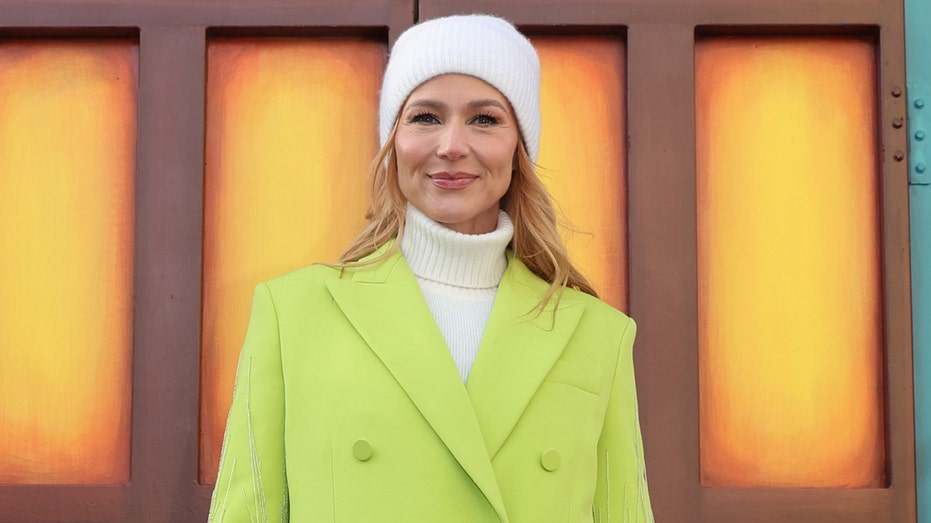
Jewel’s Bikini Photos, ‘Youth Serum’ Comments, and the Politics of Women’s Bodies in Midlife
On the surface, this is a light entertainment story: a 51-year-old singer posts bikini photos from Barbuda, the internet gushes about “youth serum,” and everyone moves on. But underneath the glossy Instagram filters is a revealing snapshot of how American culture treats aging women, celebrity activism, and political crossfire.
Jewel’s Caribbean photos went viral at the same moment she is still navigating backlash for performing at Robert F. Kennedy Jr.’s MAHA Inaugural Ball and publicly defending her decision in the name of mental health advocacy. Put together, these stories expose two intertwined pressures on female celebrities in midlife: look ageless, and stay politically pure. Both are nearly impossible standards—and both say far more about us as a culture than they do about Jewel.
The Bigger Picture: From ‘Who Will Save Your Soul’ to Midlife Scrutiny
Jewel Kilcher emerged in the mid-1990s as the anti-glamour star: a singer-songwriter who grew up in rural Alaska, once lived out of her car, and built a career on vulnerability and poetic lyrics rather than image-first pop spectacle. Her debut album "Pieces of You" (1995) sold more than 12 million copies worldwide and positioned her as a thoughtful, slightly outsider voice in mainstream music.
Fast-forward nearly three decades, and the same artist who once embodied authenticity is now being judged in two very 2020s ways:
- By her body—via fans’ breathless admiration that she looks “younger and younger” in a bikini.
- By her political proximity—via fans’ fury that she would perform at an event linked to RFK Jr., a deeply polarizing figure in today’s political and public health debates.
In the 1990s and early 2000s, celebrity coverage certainly objectified women, but the social media layer was missing. Today, the feedback loop is instant and hyper-personal: praise (“Fine wine, you look amazing!”) mixes with moral judgment (“You are a huge disappointment”) on the same platform, often within the same week.
What’s shifted most is not just our access to celebrities, but the expectations we place on them: women are supposed to age without looking like they’re aging, and activists are expected to work only with ideologically pristine partners—even in areas like mental health that cross party lines.
What This Really Means: Age, Gender, and the Economics of Looking ‘Ageless’
The fan comments on Jewel’s bikini photos follow a familiar script: shock at her age, comparisons to “Benjamin Button,” and speculation about “youth serum.” On one level, they are meant as compliments. But embedded in those comments is a cultural equation: aging + woman + public eye = problem to be solved or miracle to be explained.
Two dynamics are at work here:
- The ‘ageless’ ideal as a new job requirement: For women in entertainment, maintaining a body that doesn’t conform to visible aging has effectively become part of the job description. Research by USC’s Annenberg Inclusion Initiative has repeatedly found that women over 40 are massively underrepresented in film and music visibility compared to men in the same age bracket. Those who remain visible are often those who appear “ageless.”
- A double bind around transparency: If a woman acknowledges the work—diet, training, surgery, or wellness regimens—behind her appearance, she risks backlash for inauthenticity or vanity. If she doesn’t, she becomes the subject of speculation: “What’s her secret? Youth serum?” Either way, her body becomes public property.
Jewel’s trajectory is especially striking because her public brand has long emphasized emotional authenticity and mental health. When that same figure is celebrated for looking decades younger than her age, it shows how deeply—even in ostensibly “wholesome” fandom spaces—ageism remains normalized. We praise her not just for looking good, but for not looking 51.
When Body Coverage Masks a Deeper Story: Mental Health Activism in a Polarized Era
The bikini story doesn’t exist in a vacuum; it follows months of controversy over Jewel’s decision to perform at RFK Jr.’s MAHA Inaugural Ball, and her subsequent defense of working with whatever administration is willing to address mental health. Her response is notable:
“If I wait to try until I agree 100% with the people that might be willing to help me, I’d never get off the bench… It’s actually because things are so imperfect that we have to find ways to engage.”
This framing puts her in a long line of artists who have tried to separate issue advocacy from partisan identity. Historically, celebrities who engage across political lines tend to face intense blowback from their own base. Think of musicians who played at presidential inaugurations or events and were labeled “sellouts” by segments of their audiences—even when the cause they cited was nonpartisan (HIV/AIDS, veterans, disaster relief).
What’s different now is the intensity and speed of punishment. Social media users can rapidly revoke a kind of moral “fan license.” One commenter wrote they would never listen to Jewel again. This is a textbook example of moral sorting—the idea that our cultural consumption must align perfectly with our political and ethical values. It’s not enough to like Jewel’s music; fans increasingly expect her to behave as an extension of their worldview.
Jewel’s argument—that mental health transcends party lines—is empirically true. According to the National Institute of Mental Health, nearly one in five U.S. adults lives with a mental illness. The CDC reports that youth sadness, anxiety, and suicidal ideation have surged in the past decade. These trends cut across red and blue states alike.
The tension lies here: Jewel is attempting issue-based pragmatism in a tribe-based political culture. Her critics interpret participation at an RFK Jr.–adjacent event as an endorsement of all of his views, particularly around vaccines and public health. She frames it as using any available channel to push mental health forward. Both interpretations coexist—and clash—within the same digital ecosystem.
Expert Perspectives: Ageism, Celebrity Activism, and Fan Expectations
Gender and media scholars have been warning for years that social platforms intensify scrutiny on women’s appearance and politics simultaneously.
Media studies professor Susan Douglas has written about what she calls the “enlightened sexism” of the post-feminist era: women are told they can “have it all,” but the cultural rewards still flow disproportionately to those who look young, thin, and camera-ready. Men in midlife can go “distinguished”; women are praised when they “defy age”—the compliment that encodes the prejudice.
On the activism front, political communication researcher Professor Jennifer Stromer-Galley has found that polarization increasingly turns any public appearance into a perceived political signal. The ambiguity that once allowed celebrities to float above partisan lines has largely evaporated. Fans read choices—events attended, people stood next to, songs performed—as endorsements, even if the celebrity frames them as issue-driven engagement.
Jewel’s own language about activism—“we cannot wait another four years”—reflects a sense of crisis that aligns with current mental health data. But it also risks being interpreted as implicitly political timing, given electoral cycles. That ambiguity is part of the challenge: in a polarized public, even urgency around broadly accepted crises gets filtered through electoral lenses.
Data & Evidence: The Mental Health Emergency Behind the Headlines
Jewel’s insistence that the statistics are “bleak” isn’t rhetoric. Consider a few key data points:
- The CDC reported in 2023 that nearly 42% of high school students felt persistently sad or hopeless, up sharply from a decade earlier.
- The National Institute of Mental Health estimates nearly 58 million U.S. adults experience a mental illness in a given year.
- Suicide rates in the U.S. have risen roughly over 30% since 2000, with some of the largest increases among middle-aged adults.
Jewel’s involvement in organizations like the Inspiring Children Foundation and Innerworld attempts to respond to this crisis with a mix of mentorship, digital tools, and therapeutic practices. That work, however, struggles to compete for public attention against bikini photos and click-friendly controversies over who she chooses to perform for.
This is another revealing layer: our media architecture rewards visuals (a bikini in Barbuda) and outrage (backlash over RFK Jr.) far more than complex, structural conversations about mental health systems, access to care, or cross-partisan policy solutions.
Looking Ahead: What to Watch Beyond the Bikini Photos
Jewel’s current moment is less about one Instagram post and more about three larger shifts that will continue to shape celebrity culture:
- The normalization of midlife visibility: As more women remain in the spotlight past 40 and 50, we’ll see ongoing tension between celebrating their continued careers and putting them under age-based scrutiny. The key question: will we learn to praise women for their work and contributions rather than their ability to “not look their age”?
- Activism vs. purity politics: Celebrities working on cross-cutting issues like mental health will increasingly face demands to choose sides, not just causes. The success of their advocacy may depend on whether they can persuade audiences that engagement with imperfect partners is a feature, not a bug, of real-world change.
- Platform dynamics: As long as algorithms prioritize engagement, the most visual and controversial aspects of Jewel’s life—her body, her associations—will overshadow her actual policy or program contributions. The coverage of her Caribbean photos alongside a passing mention of her mental health advocacy is a microcosm of that distortion.
For Jewel, the long-term impact will hinge on whether she doubles down on her mental health message and finds ways to keep that work visible, even when it doesn’t come with dramatic imagery or a political flashpoint attached.
The Bottom Line
Jewel’s bikini snapshots and the fan frenzy they triggered are not just a celebrity fluff story. They’re a lens into how we handle aging, gender, and activism in a hyper-visual, hyper-polarized culture. The same singer praised for looking “ageless” is condemned for refusing to draw partisan lines around her mental health work.
Underneath the youth-serum jokes and Caribbean sunsets is a more serious question: can a woman in midlife be seen fully—for her body as it is, her politics as they are, and her advocacy as she intends it—or will she always be flattened into the most clickable version of herself?
Topics
Editor's Comments
What stands out in Jewel’s story is the quiet violence of low-stakes coverage. On one side, you have a celebrity trying—imperfectly, perhaps controversially—to use her platform to address a genuine national emergency in mental health. On the other, you have a media and platform ecosystem that awards far more attention to a flattering bikini photo and a polarizing guest list than to underlying policy or programmatic work. It’s easy to dismiss this as just another celebrity story, but it’s really a case study in distorted priorities: our clicks help decide which parts of a person’s public life become ‘real’ in the cultural record. The more we flatten women in midlife into ageless bodies and purity-tested activists, the less room we leave for them to be complex humans—capable of both missteps and meaningful contributions. The harder question isn’t whether Jewel made the perfect choice; it’s whether our current media habits allow for any form of principled, cross-partisan engagement without immediately demanding exile.
Like this article? Share it with your friends!
If you find this article interesting, feel free to share it with your friends!
Thank you for your support! Sharing is the greatest encouragement for us.