Trump’s Kennedy Center Honors Overhaul: How a Cultural Institution Became a Political Stage
Sarah Johnson
December 8, 2025
Brief
Trump’s Kennedy Center Honors overhaul isn’t just aesthetic; it’s a power play that reshapes America’s arts canon, injects ideology into honoree selection, and turns a national institution into a culture-war stage.
Trump’s Kennedy Center Power Play: Culture War, Brand Strategy, and the Future of America’s Arts Canon
Donald Trump’s aggressive overhaul of the Kennedy Center Honors is not just about a new medallion design or a more star-studded lineup. It’s a test case for something larger: whether a once broadly bipartisan cultural institution can survive being turned into a stage for explicit partisan identity and entertainment-as-politics.
What’s unfolding at the Kennedy Center is a collision of three forces that have been building for years: the politicization of cultural institutions, the transformation of awards shows into ideological battlegrounds, and Trump’s long-standing effort to recast elite cultural spaces in his own image — populist in rhetoric, celebrity-driven in execution, and deeply anchored in grievance politics.
The Bigger Picture: From Bipartisan Prestige to Culture-War Battlefield
When the Kennedy Center Honors were created in 1978, the concept was deliberate: a national, bipartisan seal of respect for artists whose work transcended partisan divisions. For decades, the honoree lists read like an evolving canon of American and global artistry — classical musicians such as Mstislav Rostropovich, opera legends like Leontyne Price, choreographers like Twyla Tharp, alongside popular figures like Lucille Ball or Paul McCartney.
Presidents played a ceremonial, not curatorial, role. They hosted receptions, sat in the box, applauded the honorees. Crucially, they did not pick them. That distance was part of the point: it protected the Honors from becoming a political favor factory.
Trump has shattered that norm. Saying he was “about 98% involved” and that honorees “all came through me,” he has turned the selection process into an extension of his own political and cultural persona. His openly ideological litmus test — rejecting candidates for being “too woke” — is unprecedented in the program’s history.
This is happening against a longer backdrop:
- Politicized entertainment: The Oscars, Grammys, and Emmys have increasingly featured speeches about race, gender, and Trump himself, fueling conservative claims that Hollywood has become hostile to half the country.
- Culture-war arts battles: From school-library book bans to fights over drag performances and public arts funding, cultural institutions are now front-line terrain in partisan identity struggles.
- Trump’s long feud with ‘elite culture’: Trump’s presidency was marked by artists declining to perform at his inauguration, honorees threatening boycotts, and his own decision to skip the Honors during his first term to avoid visible protest.
His return to the White House and rapid move to fire Biden-era trustees, dismiss long-serving president Deborah Rutter, and install loyalists including Richard Grenell and Lee Greenwood is less a gentle course correction than a hostile takeover of the arts equivalent of the Supreme Court: a long-term power center that helps define legitimacy and prestige.
What This Really Means: Rewriting the Arts Canon in Real Time
Underneath the headlines about KISS, Sylvester Stallone, and a Tiffany & Co. medallion lies the central question: Who gets to define American cultural greatness?
Three major shifts stand out.
1. From cross-disciplinary excellence to pure pop spectacle
For decades, the Honors balanced mainstream and high art: a soul legend alongside a classical pianist; a Broadway titan alongside a jazz innovator. Even as the program broadened in the 1990s and 2000s to include more rock, pop, and film icons, at least one honoree typically represented classical music, jazz, dance, opera, or composition.
The 2025 list — KISS, Gloria Gaynor, George Strait, Sylvester Stallone, Michael Crawford — consciously abandons that balance. It is entirely anchored in mass entertainment and recognizable brand names. These are not fringe figures; they are widely beloved, commercially successful, and deeply embedded in popular culture. But the omission of any artist from classical or avant-garde disciplines is a symbolic rupture.
That matters because the Kennedy Center Honors have historically functioned not just as a mirror of popularity, but as a statement about the breadth of American artistic achievement — including forms that rarely top the charts or trend on streaming platforms.
2. Explicit ideological vetting of honorees
Trump’s admission that he rejected artists as “too woke” formalizes something that was once only whispered: that politics could quietly influence who was considered “safe” enough for the nation’s highest arts honor. In his framing, “woke” is an all-purpose label for artists associated with progressive politics, diversity-centered work, or public criticism of him.
That means future artists may be evaluated as much for their public posture and perceived alignment with Trump-era cultural narratives as for their body of work. It also creates a chilling effect: outspoken critics may assume they are effectively disqualified for as long as Trump or his allies control the board.
3. Turning a national institution into a personal stage
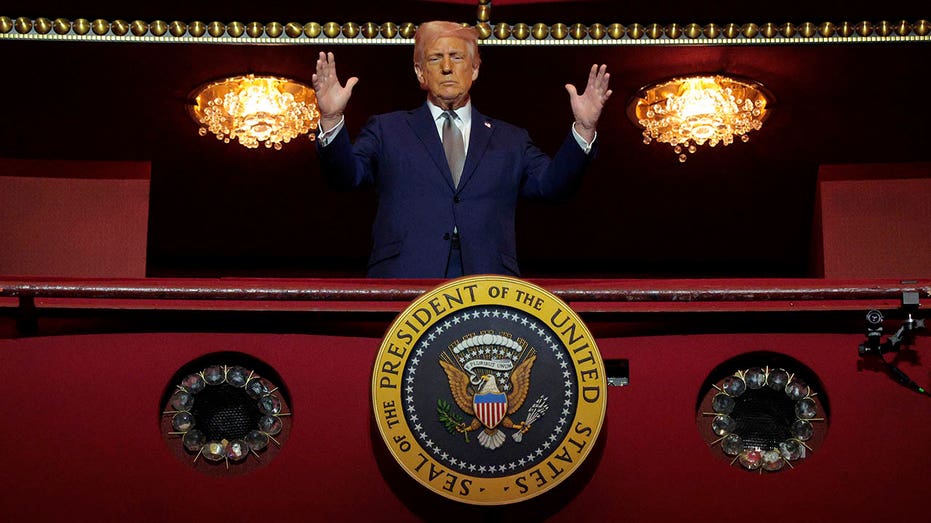
Trump’s decision to host the gala himself — something no modern president has done — is more than a ratings stunt. It blends his reality television identity with the presidency and with a federal cultural institution. The line between national recognition and personal brand expansion becomes blurred.
When he jokes about hosting like “The Apprentice” finale and insists he didn’t want the job but was begged, he’s returning to a familiar script: reluctant star, ultimately doing what “the people” want for the sake of ratings and greatness. The subtext is that the Kennedy Center, like network television, needed Trump’s showman touch to become relevant again.
Expert Perspectives: Institutional Independence, Soft Power, and Culture Wars
Cultural policy scholars and arts leaders see the developments at the Kennedy Center as part of a wider trend in democracies where political leaders try to reshape cultural bodies in their own ideological image.
In countries like Hungary and Poland, governments have used appointments, funding, and board purges to steer arts institutions away from liberal or critical content and toward nationalist narratives. The U.S. has stronger legal and funding firewalls, but Trump’s moves rhyme with those patterns: replace leadership, redefine the mission, and use cultural prestige to validate a particular political vision of the nation.
Internationally, the Kennedy Center Honors have functioned as soft power — showcasing American creativity in forms both popular and experimental. Narrowing the spectrum to safe, patriotic, or nostalgia-heavy mainstream acts risks flattening that story into something closer to a branded entertainment special than a broad reflection of American artistic complexity.
Data & Evidence: Ratings, Representation, and Political Polarization
Trump’s critique of “woke” award shows hinges on one measurable metric: ratings. Major live award shows have indeed seen declining viewership over the past decade, driven by cord-cutting, fragmented media, and political fatigue.
- The Oscars slipped from over 40 million U.S. viewers in the early 2000s to under 20 million in several recent years.
- The Grammys and Emmys show similar declines, though not always synchronized with the level of political content.
But research suggests the causes are multivariate: audience migration to streaming, younger viewers’ disinterest in traditional broadcast events, and a general decline in appointment TV. Political rhetoric may alienate some viewers, but it is not the sole or even primary driver.
On the representation side, the long-term trend at the Kennedy Center prior to this overhaul was toward greater racial, gender, and genre diversity. Artists like LL Cool J, Earth, Wind & Fire, and Debbie Allen signaled an expanding definition of the canon. Trump’s stated rejection of “woke” nominees could slow or reverse that trajectory, especially if “woke” is used as shorthand for artists of color, LGBTQ+ creators, or socially engaged work that challenges traditional narratives.
Looking Ahead: What to Watch
The Kennedy Center Honors are now a bellwether for how cultural power will be contested in the Trump era. Several fault lines bear watching:
- Future honoree lists: Will there be any return to including classical, jazz, or experimental artists, or will the Honors harden into a pure pop-and-patriotism brand?
- Artist participation and boycotts: During Trump’s first term, some honorees threatened to skip White House receptions. Now that Trump controls both the board and the gala, will artists decline the honor altogether, or will the lure of recognition override political reservations?
- Institutional pushback: Congress provides significant federal support to the Kennedy Center. If the Honors become explicitly partisan, lawmakers could face pressure to revisit funding structures or governance norms.
- Copycat moves: Other cultural institutions — museums, orchestras, national theaters — may face pressure from politicians to “de-woke” programming, especially around drag, LGBTQ+ content, or race-related work, citing the Kennedy Center as precedent.
The medallion redesign by Tiffany & Co. encapsulates the paradox. On the surface, it’s a tasteful modernization: a navy ribbon for “dignity and tradition,” a gold disc with a stylized Kennedy Center. But it also moves the symbol closer to luxury branding and away from the handmade, family-crafted tradition that quietly represented a different vision of American artistry — local, artisanal, less corporate.
The Bottom Line
Trump’s Kennedy Center overhaul is not a mere rebranding exercise. It’s a declaration that the nation’s premier arts honor will be curated, framed, and performed according to a specific cultural ideology: anti-“woke,” ratings-conscious, celebrity-forward, and personally associated with Trump himself.
For some Americans, this will feel like overdue retribution against an arts establishment they perceive as sneering at conservative audiences. For others, it will look like the politicization and narrowing of what should be a wide-angle celebration of American creativity in all its forms — including those that challenge or discomfort whoever happens to be in power.
The deeper question is whether any cultural institution that depends on presidential participation and federal oversight can truly remain nonpartisan in an era when culture itself has become partisan currency. The Kennedy Center Honors are now the test case — and the 2025 gala, with Trump as host, will be less a ceremony than a referendum on who gets to define American art.
Topics
Editor's Comments
One under-examined dimension of this story is what it signals to younger and emerging artists. The Kennedy Center Honors have traditionally functioned as a kind of distant North Star: few artists realistically expect to receive them, but the existence of a relatively apolitical, cross-genre, lifetime recognition sends a message about what the nation values at its artistic summit. By recasting the Honors as explicitly anti-‘woke’ and tightly aligned with a particular president’s brand, the institution is quietly shifting the incentive structure. Artists who build careers around challenging power, experimenting with form, or centering marginalized perspectives may now assume they are outside the realm of future recognition, at least under certain administrations. That doesn’t mean they will stop creating, but it may deepen a bifurcation between a government-endorsed canon and a counter-canon thriving in independent and digital spaces. The risk for the Kennedy Center is that, over time, it might end up honoring only one side of America’s cultural conversation while some of the most influential and innovative work migrates to venues that deliberately avoid official validation.
Like this article? Share it with your friends!
If you find this article interesting, feel free to share it with your friends!
Thank you for your support! Sharing is the greatest encouragement for us.