Kelsey Grammer, Trump, and the Kennedy Center Honors: How a Cultural Institution Became a Political Stage

Sarah Johnson
December 7, 2025
Brief
Kelsey Grammer’s Trump praise at the 2025 Kennedy Center Honors exposes how a once-bipartisan arts institution is becoming a new front in the culture wars and a vehicle for political rebranding.
Kelsey Grammer’s Trump Praise at the Kennedy Center Honors: What It Reveals About Culture, Power, and a Politicized Arts World
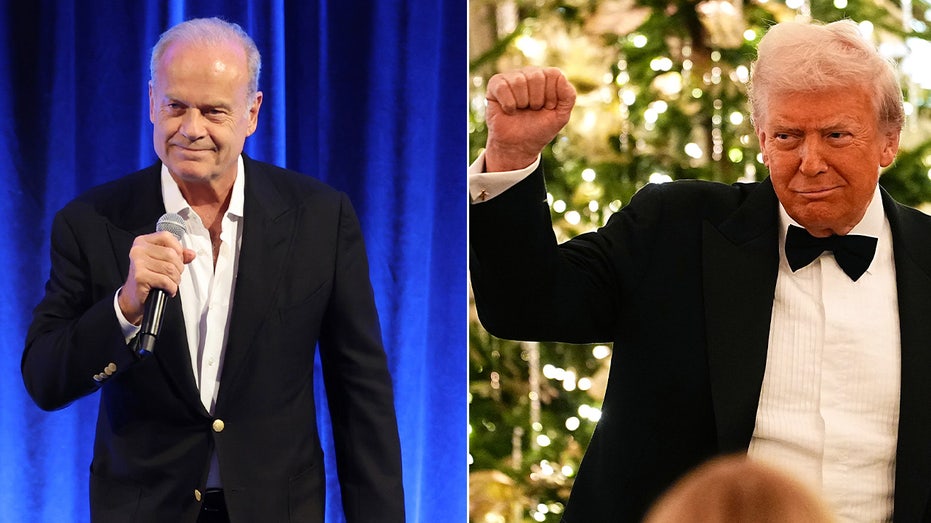
Actor Kelsey Grammer calling Donald Trump “one of the greatest presidents we’ve ever had” at the 2025 Kennedy Center Honors is not just a celebrity soundbite. It’s a window into how American cultural institutions – from award shows to legacy arts programs – are being reshaped by partisan identity, grievance politics, and a long‑running conservative critique of the cultural establishment.
Grammer’s comments, delivered on the red carpet at an event historically framed as above the political fray, underscore three overlapping trends: the deepening fusion of politics and entertainment, the ongoing conservative fight to gain validation within elite cultural spaces, and the transformation of presidential symbolism in an era where norms have largely given way to political loyalty tests.
The Kennedy Center Honors: From Bipartisan Ritual to Culture War Arena
To understand why Grammer’s praise matters, you have to see the Kennedy Center Honors not as a mere gala, but as a barometer of American cultural legitimacy.
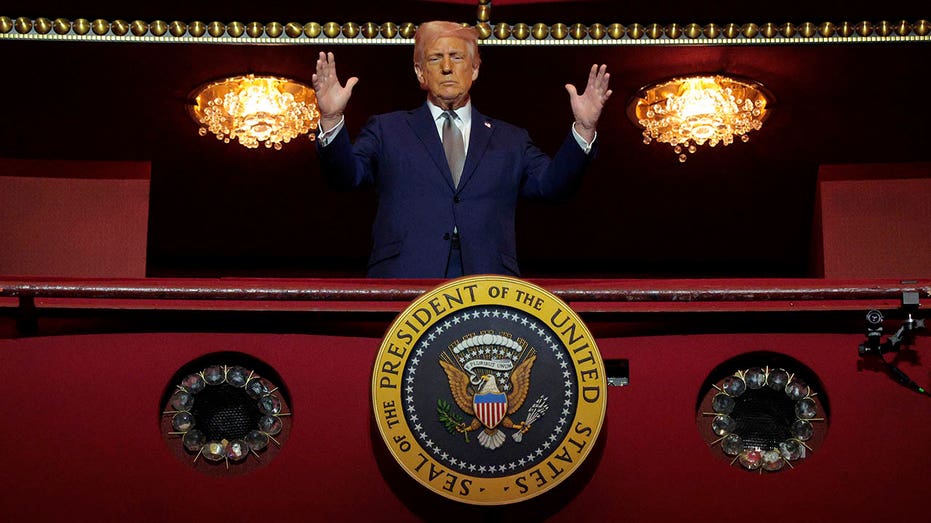
Launched in 1978, the Honors were designed as an annual, bipartisan celebration of artists who made significant contributions to American culture. Presidents from both parties traditionally presided over the ceremony, hosting honorees at the White House and attending the performance at the Kennedy Center. For decades, the event symbolized a shared, if imperfect, consensus about what counted as “American culture” – and who deserved to be celebrated for it.
That consensus has fractured. Under Trump’s earlier tenure, several honorees publicly distanced themselves from the White House events, citing political and ethical concerns. In 2017, at least three honorees said they would skip the traditional pre‑event reception; the White House then announced the president and first lady would not attend the event at all, breaking with decades of precedent.
Fast forward to 2025, and the dynamic is flipped: instead of artists avoiding Trump, we see a prominent, long‑established television star praising him in superlative terms at the very institution that once symbolized a kind of polite, centrist cultural consensus. That reversal is key. It suggests not just normalization, but integration of Trumpism into the mainstream narrative of American cultural prestige.
Why Kelsey Grammer’s Voice Carries Weight
Grammer is not just another Hollywood figure sounding off about politics. He occupies a specific symbolic role:
- Legacy credibility: As the face of “Frasier” and a central figure in “Cheers,” he’s embedded in American television history, particularly within middle‑class and older demographics that grew up with network sitcoms.
- Open conservative identity: He has long identified as a conservative or right‑leaning, in an industry perceived – often accurately – as dominated by liberal politics. That lends his praise a narrative power: he’s the conservative insider in a liberal town.
- Institutional role: He wasn’t just attending; he mentions serving on the selection committee that helped choose honorees like Sylvester Stallone. That situates him not only as a guest, but as part of the decision‑making apparatus of this prestigious institution.
Put together, this is not simply “celebrity praises politician.” It’s a culturally embedded, institutionally involved figure using a historically bipartisan platform to declare Trump potentially “the greatest” U.S. president – while standing in the heart of a revered arts institution that has been a symbolic front in the culture wars.
Conservative Validation in Elite Culture
Grammer’s comments tap into a longstanding conservative grievance: that elite culture – from Hollywood to university arts programs to major museums – is shaped by liberal values, and that conservative artists are sidelined, mocked, or punished.
Over the last decade, that grievance hardened into a central plank of conservative politics. We’ve seen it in battles over “wokeness” in Hollywood scripts, fights over diversity in casting, and backlash to artists who publicly criticize Republican leaders. Trump made this theme core to his political identity, repeatedly framing himself as a warrior against a “liberal cultural elite” that he claimed disdained ordinary Americans.
So when Grammer, a conservative actor with mainstream credentials, praises Trump as “extraordinary” in this setting, it functions as a kind of symbolic payback: the conservative outsider standing inside the gates of cultural legitimacy, declaring his political hero not just acceptable but historically great.
There’s a feedback loop at work: Trump’s presence and willingness to flatter artists (“incredible people,” “icons,” “the very best in American arts and culture”) offers the validation many performers crave; in return, figures like Grammer publicly validate him as statesman and historical figure. It’s a mutually beneficial exchange of prestige – political capital traded for cultural capital.
The Subtext: Who Decides What Counts as ‘American Culture’?
Trump’s remarks about the honorees are worth reading alongside Grammer’s praise: he calls the 2025 class “perhaps the most accomplished and renowned” ever, and emphasizes that they “unified millions and millions of Americans.” Those are carefully chosen words in a polarized era.
On paper, honoring figures like Sylvester Stallone, Gloria Gaynor, George Strait, Michael Crawford, and KISS looks ideologically neutral. But the selection tells its own story:
- Stallone – Conservative‑friendly icon of rugged individualism, patriotism, and redemption narratives in franchises like “Rocky” and “Rambo.”
- George Strait – A country music legend, resonating with rural and suburban audiences often aligned with conservative politics.
- KISS – A band associated with spectacle, entrepreneurial branding, and a distinct kind of unapologetic showmanship.
- Gloria Gaynor – A symbol of resilience and empowerment (“I Will Survive”), beloved across racial and political lines, but especially powerful in LGBTQ and civil‑rights histories.
- Michael Crawford – A theater legend whose work centers on classic musical theater rather than overtly political content.
These honorees offer a narrative of American culture that is accessible, populist, and deeply rooted in mass entertainment. In itself, that’s not new. But in the Trump era, emphasizing this kind of canon – especially with Grammer on the selection committee – aligns with a subtle repositioning: celebrating forms of culture that conservatives often see as “theirs,” or at least not part of the more overtly progressive art world.
The redesign of the medal – from the iconic rainbow ribbon to a gold disc on a navy ribbon – adds another layer. Officially, it’s a modernization. Symbolically, it streamlines and de‑emphasizes a visual element (the rainbow) that, fair or not, has been culturally associated with LGBTQ identity and broader notions of diversity. The Kennedy Center insists on its longstanding rainbow branding, but changing how it sits on honorees’ bodies is not just aesthetic; it subtly shifts the visual language of the event from flamboyant to more militaristic and formal – especially when paired with the language of “medals,” “appointments,” and a White House backdrop.
Red-Carpet Politics: Normalizing Hyperbolic Praise
Grammer’s language – “one of the greatest presidents we’ve ever had. Maybe the greatest.” – follows a pattern of political discourse increasingly shaped by loyalty signaling rather than measured assessment. In earlier eras, artists might privately admire a president or praise a specific policy, but public statements at non‑political events tended to be restrained.
In the Trump era, extremes became the norm: opponents called him the worst president in history; supporters countered with “greatest ever.” These are not historical evaluations so much as tribal declarations. What’s telling is where Grammer chose to make this declaration: at a supposedly unifying cultural event, talking to an outlet whose audience is heavily conservative and pro‑Trump.
This is a reminder that the red carpet is no longer a “soft” space. It has evolved into a stage where cultural and political identity are performed simultaneously. Public figures understand that political statements made in these contexts travel farther and faster than most policy speeches – and shape the way audiences interpret the entire event.
What Mainstream Coverage Often Misses
Most coverage of moments like this falls into one of two traps: treating it as celebrity gossip (“Actor X praises Politician Y”) or as another entry in the “Hollywood is divided” narrative. What gets lost is the institutional angle: how endorsements like Grammer’s function to:
- Rehabilitate or reinforce a controversial political figure’s stature in non‑political settings.
- Shift the perceived politics of a major arts institution without any formal rule change.
- Redefine what kinds of artists and aesthetics are framed as emblematic of “American culture.”
Focusing on the quote alone misses the strategic interaction between Trump, the honorees, the Kennedy Center, and the media ecosystem broadcasting all of this to highly segmented audiences.
What This Means Going Forward
If this moment is a data point, what trends does it point toward?
- Further politicization of arts institutions: Expect more overt alignment of certain cultural honors with particular political narratives or constituencies, even if the institutions themselves cling to claims of neutrality.
- Increasingly partisan consumption of culture: Viewers who like Trump may embrace institutions like the Kennedy Center more readily if they see their heroes celebrated and their politics echoed. Critics may further disengage or frame the event as compromised.
- More celebrities as political validators: Figures like Grammer, who can bridge elite institutions and conservative audiences, will become even more valuable as symbolic validators in future campaigns or political battles.
- Norm shifts around presidential prestige: Statements about “greatest” and “worst” presidents, detached from serious policy analysis, risk turning historical evaluation into pure brand loyalty. That has long‑term consequences for how citizens understand governance.
Looking Ahead: What to Watch
Several key questions will determine how important this moment ultimately becomes:
- Will more high‑profile conservative‑leaning artists speak this openly in elite cultural settings, or will backlash keep these statements relatively rare?
- Do future Kennedy Center Honors lineups and design choices (from honoree selection to visual branding) continue in a more populist, conservative‑friendly direction?
- Will Democratic or more progressive administrations, when in power, respond by subtly re‑politicizing the event in the opposite direction, creating a political pendulum effect?
- How will audiences, especially younger ones increasingly skeptical of institutions, interpret these gestures – as meaningful, or as mere spectacle?
The Bottom Line
Kelsey Grammer’s enthusiastic praise of Donald Trump at the Kennedy Center Honors is not an isolated outburst. It’s a symptom of a deeper shift: the erosion of supposedly neutral cultural spaces and the rise of awards ceremonies as contested ground in America’s never‑ending culture war. Behind the medals, gowns, and photo‑ops, a more consequential battle is being waged over who gets to define “American culture,” whose politics are welcome in elite institutions, and how presidential legacy is constructed in real time – not by historians, but by entertainers on red carpets.
Topics
Editor's Comments
What’s striking here isn’t that a conservative actor praised a conservative politician; that’s almost mundane in our polarized media environment. The deeper story is about institutional drift. The Kennedy Center Honors were built as a symbolic bridge—between political parties, between ‘high culture’ and mass entertainment, between Washington and the broader country. Moments like this suggest that bridge is becoming a lane of a partisan highway. That has consequences we rarely discuss. If cultural institutions are widely perceived as belonging to one political tribe, their ability to serve as sites of national storytelling—and of necessary friction between competing narratives—shrinks. A contrarian question worth asking is whether both sides are now more invested in claiming these institutions than in preserving any semblance of neutrality. If so, we may end up with dueling canons of ‘American culture,’ each with its own honors, heroes, and presidents, and ever fewer spaces where those stories intersect.
Like this article? Share it with your friends!
If you find this article interesting, feel free to share it with your friends!
Thank you for your support! Sharing is the greatest encouragement for us.