T.J. Watt’s Collapsed Lung and the Hidden Risks Inside NFL Sports Medicine

Sarah Johnson
December 13, 2025
Brief
T.J. Watt’s collapsed lung isn’t just a freak accident. It exposes hidden risks in NFL sports medicine, the gray zone around dry needling, and the pressure-cooked system governing player health.
T.J. Watt’s Collapsed Lung Exposes a Hidden Risk in NFL Sports Medicine
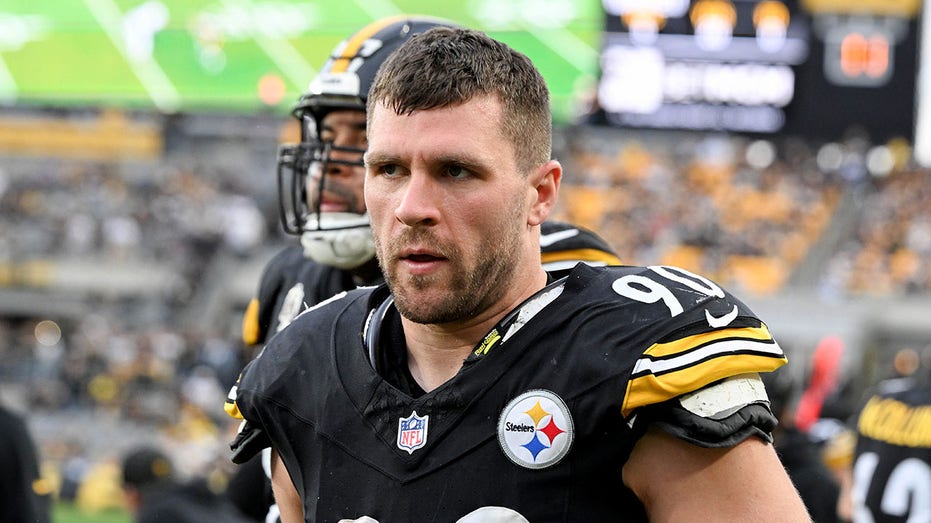
Pittsburgh Steelers star T.J. Watt’s partially collapsed lung — reportedly caused by a dry needling treatment gone wrong — is being framed as a one-off medical mishap. It isn’t. It’s a flashing red light on the growing, largely unregulated ecosystem of alternative and adjunct therapies inside elite locker rooms, where performance pressure, medical gray areas, and billion‑dollar incentives collide.
This story matters less because a single player will miss a crucial game, and more because it forces a basic question: who is really in control of player health in the modern NFL — science and regulation, or a patchwork of techniques racing ahead of oversight?
The Bigger Picture: From Tape and Ice to the Wild West of “Recovery”
Thirty years ago, the treatment toolkit in the NFL was relatively narrow: ice, rest, anti‑inflammatories, surgery when necessary, and a lot of painkillers. Today’s stars live in a radically different world. Teams and private trainers deploy:
- Dry needling and acupuncture
- Cupping, scraping (gua sha), and manual therapy tools
- PRP (platelet‑rich plasma) injections and biologics
- Cryotherapy chambers and hyperbaric oxygen
- Wearable sensors tracking sleep, strain, and recovery
Much of this has emerged faster than medical standards, licensing clarity, and long‑term research. Dry needling in particular sits in a contentious space. Some states treat it as a physical therapy technique requiring specific training; others restrict or prohibit it; in some jurisdictions, regulations are vague or evolving. That ambiguity becomes magnified inside pro sports, where the stakes are higher, the schedules are relentless, and the biggest stars are too valuable to sit.
When this kind of procedure leads to a partially collapsed lung — a known but rare risk — it reveals how thin the margin is between cutting‑edge therapy and serious harm.
What Actually Went Wrong? Dry Needling’s Known but Underplayed Risks
A partially collapsed lung, or pneumothorax, can occur when a needle accidentally pierces the pleura, the thin membrane around the lung. Dry needling around the upper back, shoulder, or chest wall, especially near the ribs or upper trapezius, can carry this risk if the needle goes too deep or is mis‑directed.
Published medical literature has documented pneumothorax as a complication of both acupuncture and dry needling for decades. In a 2011 review in the journal Chest, pneumothorax was one of the most serious reported complications of acupuncture, albeit rare relative to the total number of procedures. The risk is low — but never zero — and it rises when practitioners are:
- Insufficiently trained in anatomy and technique
- Working quickly in high‑pressure settings
- Treating muscular structures that lie directly over the lungs
In other words, the setting of an NFL training complex — where time is tight, pressure is intense, and the margin for player unavailability is razor thin — is precisely where rare risks are most likely to surface.
Why This Happened in the NFL, Not a Random Clinic
T.J. Watt isn’t just another patient. He is the central pillar of a playoff‑contending defense, a perennial All‑Pro, and a face of the franchise. That status creates a unique risk environment:
- Performance at all costs: Star players often push for anything that might speed recovery or relieve pain, especially late in the season with playoff spots on the line.
- Blurring roles between team and private staff: Athletes frequently work with a mix of team doctors, physical therapists, chiropractors, and personal trainers. Coordination isn’t always seamless.
- Competitive pressure on medical staff: There’s an unspoken expectation that doctors and trainers “get players back” quickly. That can tilt decision‑making toward aggressive intervention.
In that context, dry needling is attractive: low cost, quick, and marketed as effective for muscle tension and pain. But it’s also a procedure that can cause major harm if something goes wrong — which is exactly what happened here.
What This Really Means: Beyond One Player’s Lung
Watt’s injury exposes three bigger systemic issues the league will struggle to ignore.
1. The Regulatory Gray Zone of Sports Medicine Techniques
Unlike surgery, which is tightly regulated, many recovery modalities fall into a patchwork of state rules and professional turf battles. Dry needling is a prime example: in some states, physical therapists can perform it after short continuing‑education courses; in others, it’s restricted to physicians or acupuncturists; in some, it sits in a murky in‑between.
Inside the NFL, where team facilities cross multiple state boundaries, this can lead to inconsistent standards. A technique that’s supervised one way in Pennsylvania might be governed differently in Florida or California. Without a league‑wide best‑practice standard, the quality of care can vary dramatically — even for franchise players.
2. Hidden Injury Risk Stacking on Top of Football Itself
Football’s inherent risks — concussions, ligament tears, chronic pain — are well known. What’s less visible is the added layer of risk from the treatments meant to mitigate those injuries. From Toradol injections that mask pain and may lead to further damage, to experimental therapies with limited long‑term data, players often trade one set of risks for another.
A collapsed lung from dry needling illustrates how “supportive care” can become its own hazard. For a star like Watt, the question becomes: how much additional risk should a player reasonably assume from a treatment that is supposed to keep him on the field?
3. The Power Imbalance Between Players and Medical Decision‑Makers
Even for superstars, there is a structural imbalance. Team doctors are employed, directly or indirectly, by the club. Trainers answer to coaches as well as medical staff. Players often feel pressure — explicit or implied — to consent to interventions they don’t fully understand.
When something goes wrong, as in Watt’s case, it raises the question: was he fully briefed on the risk of a pneumothorax? Was there a clear consent process? Or was this framed as a routine, near‑risk‑free treatment in the context of just another workday at the facility?
Expert Perspectives: What Specialists Worry About
Sports medicine and player‑safety experts have long warned about this convergence of cutting‑edge treatment and incomplete oversight.
Dr. Thom Mayer, long‑time medical director for the NFL Players Association, has previously emphasized that “the first obligation is to the long‑term health of the player, not his availability on Sunday.” Incidents like this test whether that principle is practiced or merely preached.
Meanwhile, physical therapy organizations have split internally over dry needling, with some advocating for broader use and others urging caution, particularly in high‑risk anatomical zones. A 2020 systematic review in Physical Therapy in Sport noted that while dry needling can reduce pain and improve function in certain conditions, serious but rare complications — including pneumothorax — must be part of informed consent and practitioner training.
Player‑advocacy voices add a different angle: they argue that stars often become early adopters of high‑risk techniques because everyone around them — agents, trainers, teams — is incentivized to maximize their short‑term availability, not their long‑term lungs, knees, or brains.
Data & Evidence: How Rare Is This, Really?
Reliable numbers inside NFL facilities are hard to come by, but broader medical literature provides some clues:
- Incidence: Published rates of pneumothorax from acupuncture or dry needling are very low, generally estimated in the range of 1 per tens or hundreds of thousands of treatments.
- Severity: When it does happen, it’s serious enough to require emergency evaluation, imaging, and sometimes surgical intervention — as in Watt’s case.
- Trend: Use of dry needling has sharply increased over the past decade in outpatient and sports settings, multiplying the absolute number of potential adverse events even if the relative risk per procedure remains small.
In plain terms: this is rare, but not freakish. It’s a known complication of a technique increasingly used on elite athletes, now made visible because it sidelined one of the NFL’s most recognizable defenders.
Looking Ahead: What Could Change After the Watt Incident
Several ripple effects are likely over the coming months and years.
1. NFL and NFLPA Policy Reviews
The NFL Players Association has historically used high‑profile injuries to push for reforms — from concussion protocols to independent neuro‑consultants. A pneumothorax caused by a therapeutic procedure opens a new front: standards for non‑surgical interventions inside team facilities.
Expect calls for:
- Clear league‑wide credential requirements for anyone performing invasive techniques (needles, injections, etc.).
- Standardized informed consent procedures, documenting risks that include organ injury.
- Independent review of medical incidents involving non‑game injuries at team facilities.
2. Team‑Level Risk Management Shifts
Front offices hate unpredictable risk, especially involving their best players. A star missing a pivotal December game because of a preventable medical complication is the kind of event that triggers internal memos and quiet policy changes. Some clubs may:
- Restrict where and how dry needling can be performed (e.g., avoiding thoracic regions).
- Require physician presence or direct oversight for high‑risk regions.
- Move more aggressively toward evidence‑based, lower‑risk modalities.
3. Player Behavior and Private Practitioners
Ironically, increased team caution could push some players further into the private market — seeking out independent therapists who may or may not be well regulated. That shift has already occurred with off‑season training; this incident could accelerate it in the treatment realm, unless the league and union craft policies that build trust in in‑house medical standards.
4. Career and Legacy Implications for Watt
From a purely medical standpoint, many athletes recover fully from a pneumothorax with appropriate care. The bigger question is psychological and cultural: how will this affect Watt’s willingness to undergo invasive or adjunctive treatments in the future?
For a player with Defensive Player of the Year credentials and Hall of Fame trajectory, anything that interrupts continuity of availability can reshape narratives around durability and value, especially in contract negotiations and late‑career decisions. Even if he returns at full strength, this incident becomes part of his injury history — a data point that teams, agents, and analysts will quietly track.
The Bottom Line
T.J. Watt’s partially collapsed lung is not just a medical oddity. It’s a window into how far the modern sports world is willing to go in the name of marginal gains — and how far behind the oversight, regulation, and player‑protection systems have lagged.
As the NFL pushes for an ever‑longer season and ever‑greater global reach, the league can’t afford to treat this as mere bad luck. The Watt case is a warning shot: when the tools of recovery themselves become sources of serious harm, it’s time to redraw the line between innovation and recklessness.
Topics
Editor's Comments
Two threads in this story deserve closer scrutiny going forward. First, the opacity surrounding who exactly performs these procedures inside NFL buildings. Public statements typically refer vaguely to ‘the medical staff’ or ‘trainers,’ but accountability depends on knowing whether a physician, physical therapist, chiropractor, or another provider held the needle. The league and union have both touted expanded medical oversight in recent years, yet incidents like this expose the limits of that oversight when it comes to non‑surgical interventions. Second, there’s an underexplored cultural element: the normalization of invasive treatment as part of everyday maintenance for elite athletes. When needles, injections, and aggressive manual therapy become routine rather than exceptional, players may experience subtle pressure to consent simply to keep pace with their peers. That culture makes truly informed consent harder to achieve, no matter what forms are signed. If the Watt case is treated as an isolated mishap, little will change. If it prompts a broader interrogation of how and why these modalities are embedded into daily practice, it could mark a turning point in how professional sports balance innovation with genuine respect for player autonomy and long‑term health.
Like this article? Share it with your friends!
If you find this article interesting, feel free to share it with your friends!
Thank you for your support! Sharing is the greatest encouragement for us.