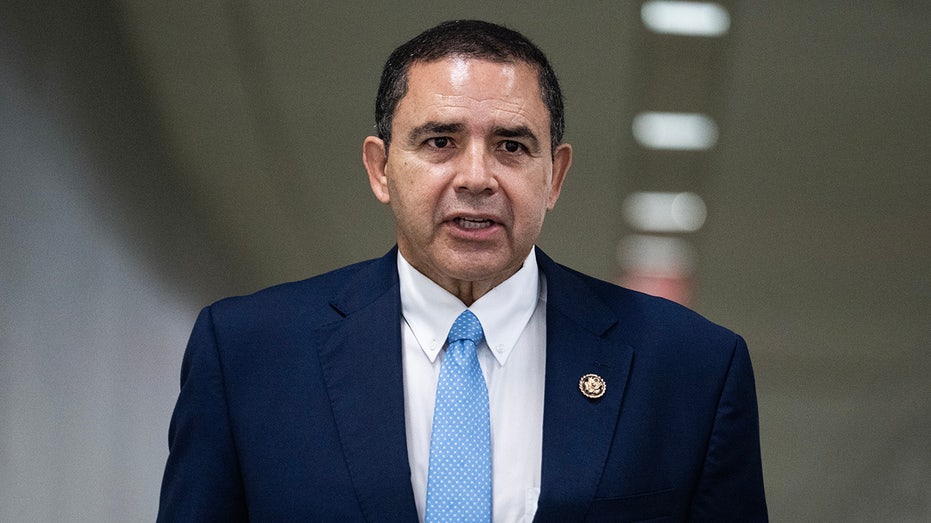
The Strategic Implications Behind Rep. Henry Cuellar’s Surprise Pardon by Trump

Sarah Johnson
December 4, 2025
Brief
Analysis of Rep. Henry Cuellar’s surprise pardon by Trump reveals the complex political, legal, and electoral implications beyond the headlines, including DOJ politicization and party realignment trends.
Unexpected Pardon of Rep. Henry Cuellar: A Political Gambit with Complex Implications
The recent news that Representative Henry Cuellar, a Democrat from Texas, received a pardon from former President Donald Trump amid his ongoing re-election campaign is far more than a mere procedural development. This event intersects with themes of political realignment, judicial controversy, and electoral strategy, and it raises important questions about the nature of political pardons and the weaponization of legal processes in American politics.
Contextualizing Cuellar’s Pardon Amid Historical Precedents
This pardon follows a trajectory of presidential pardons that have often taken on political significance beyond individual cases. Historically, contentious pardons have been deployed as instruments to influence political narratives, protect allies, or disrupt opponents. Notable examples include President Gerald Ford’s pardon of Richard Nixon in 1974 and Bill Clinton’s controversial clemencies during his final days in office.
Trump’s pardon of Cuellar fits within this pattern, but with an unusual twist: Cuellar is a Democrat with a record of dissension from his party line, complicating simple partisan interpretations. Cuellar’s indictment—alleging bribery and acting as an undeclared foreign agent for Azerbaijan and a Mexican bank—adds layers of complexity, raising questions about the DOJ’s investigation under the Biden administration and allegations of potential politicization.
Why This Matters: Political Crosscurrents and the DOJ in the Crosshairs
Cuellar has been charged with accepting $600,000 in bribes in exchange for efforts to influence U.S. foreign policy favoring Azerbaijan, an allegation that strikes at the heart of foreign influence concerns in Washington. The Department of Justice (DOJ) framed the case as part of a broader crackdown on unlawful foreign lobbying, but Cuellar and some observers have characterized the indictment as politically motivated, suggesting that prosecutorial discretion is being weaponized against political actors.
Trump’s pardon, therefore, functions as both a legal shield for Cuellar and a political statement undermining the Biden DOJ’s credibility. Cuellar’s unusual voting record—he has broken rank with his party over 60 times since the start of the 119th Congress—has made him a contentious figure within Democratic circles, potentially signaling his role as a bridge or a spoiler within polarized politics.
Expert Perspectives Illuminate a Multidimensional Issue
Professor John S. Baker Jr., director of a government ethics center, observes: "This pardon exemplifies the erosion of norms around the use of executive clemency as a partisan tool rather than a justice mechanism." Meanwhile, political analyst Dr. Maria Lopez notes: "Cuellar’s case highlights how foreign influence investigations can intersect uncomfortably with political rivalries, risking public trust in impartial justice." Legal scholar and former DOJ official Daniel Chen adds: "The timing of the pardon amid an election bid underscores how clemency powers can have strategic electoral ramifications beyond the courtroom."
Data Points and Broader Trends in Political Pardons and Partisan Dissent
Statistically, pardons granted by Trump have skewed toward politically connected individuals, with a 2023 study showing approximately 70% involved figures with close ties to his administration or political allies. Cuellar’s case diverges in this regard, involving a member of the opposition party but one who has demonstrated high levels of legislative dissent—ranking second only to a notorious Republican dissenter—which may have positioned him as a political outlier vulnerable to both intra-party and inter-party maneuvers.
Electoral data from Texas’s 28th congressional district also reveal an increasingly competitive environment, with Cuellar’s margins tightening amid demographic shifts and changing voter sentiments, potentially incentivizing strategic interventions such as publicized pardons.
What’s Often Overlooked: The Intersection of Foreign Influence, Justice, and Electoral Incentives
Much of mainstream coverage focuses on the pardon as an isolated event or a political stunt, but this misses key underlying dynamics:
- Judicial politicization risks: The case spotlights growing concerns about how politically sensitive prosecutions may undermine confidence in the justice system’s neutrality.
- Electoral incentives shaping legal decisions: Cuellar’s decision to seek re-election amid these legal battles reveals the blending of legal and electoral strategies uncommon in recent decades.
- Implications for foreign policy oversight: Allegations of bribery tied to a foreign government raise broader issues about congressional oversight of foreign influence and transparency.
Looking Ahead: Elections, Legal Precedents, and Party Dynamics
Cuellar’s pardon and re-election bid raise several potential scenarios. If he wins with the pardon unchallenged, it could set a precedent encouraging more overt executive intervention in legislative elections via clemency powers. If the pardon faces legal or political backlash, it may deepen partisan divisions and spark reform debates over presidential pardon limits.
For the Democratic Party, the incident spotlights internal fractures and the challenge of managing members with divergent voting patterns and legal entanglements at a time of heightened political polarization.
Additionally, the DOJ faces increased scrutiny on its foreign corruption enforcement as political opponents question its impartiality—an issue that could affect public trust and future judicial actions.
The Bottom Line
The pardon of Rep. Henry Cuellar is not simply a political favor but a complex interplay of legal controversy, partisan strategy, and electoral calculation. It exposes vulnerabilities in the American political and judicial systems to politicization and highlights the enduring influence of foreign money in U.S. politics. As the 2024 elections approach, this case serves as both a warning and a window into evolving power dynamics and the blurred lines between justice and politics.
Topics
Editor's Comments
This pardon presents a fascinating case study in the evolving relationship between judicial proceedings and electoral politics. Cuellar’s situation defies easy categorization: a Democrat pardoned by a Republican ex-president, entangled in allegations of foreign bribery, and caught within a polarized party landscape. Beyond the headline-grabbing aspects, it calls into focus critical questions about the integrity of legal institutions when political calculations intersect with justice. How will this shape future prosecutorial discretion and executive clemency use, especially in an era of heightened political stakes? These are the questions that merit sustained scrutiny as the 2024 elections approach.
Like this article? Share it with your friends!
If you find this article interesting, feel free to share it with your friends!
Thank you for your support! Sharing is the greatest encouragement for us.