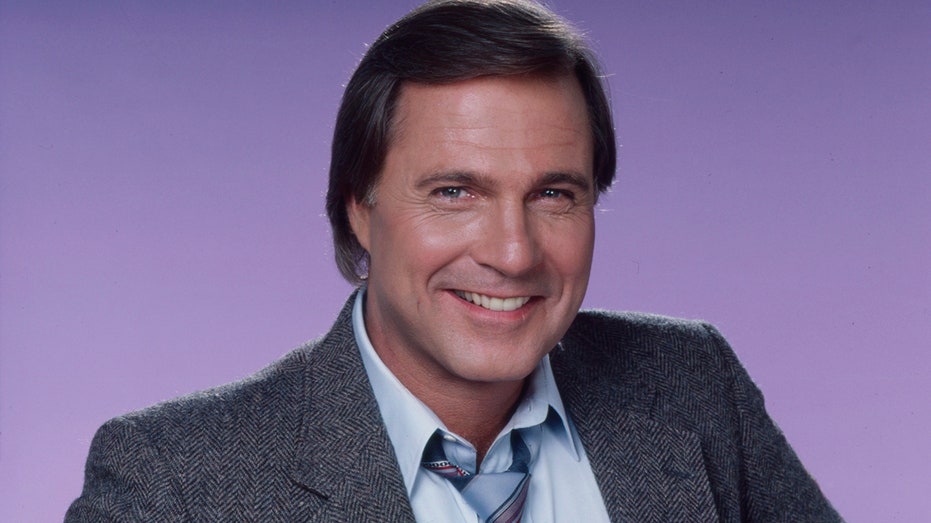

Rob Reiner’s Death and the End of a Certain Kind of American Storytelling

Sarah Johnson
December 15, 2025
Brief
Rob Reiner’s death at 78 marks more than the loss of a beloved actor-director. This analysis unpacks how his work quietly reshaped U.S. debates over class, gender, power, and authority.
Rob Reiner’s Death at 78: What Hollywood’s ‘Nice Guy’ Reveals About a Changing America
Rob Reiner’s death at 78 is being widely covered as the loss of a beloved actor, director, and avowed liberal. That’s true—but it’s also incomplete. His career, from “All in the Family” to “When Harry Met Sally…” and “A Few Good Men,” tracks a 50-year story about how television and film shaped—and often softened—America’s most polarizing debates about class, gender, race, and power.
Reiner wasn’t just in the culture; he helped write its emotional grammar. Understanding why his passing feels like the end of an era means looking at the political and social work his “entertainment” quietly performed, and why it may be harder to make another Rob Reiner in today’s media ecosystem.
From Archie Bunker’s Couch to America’s Living Rooms
Reiner’s breakout as Michael “Meathead” Stivic on “All in the Family” (1971–1979) coincided with one of the most turbulent decades in U.S. history: Vietnam, Watergate, the civil rights backlash, the women’s movement, economic stagflation. The show, adapted from a British series, placed those fault lines inside a working‑class Queens living room and asked families to sit with them week after week.
Reiner’s character was crucial to that experiment. Michael Stivic wasn’t just the “liberal” to Archie Bunker’s bigot; he embodied a new, college‑educated, anti‑war, pro‑civil‑rights sensibility that was beginning to challenge traditional hierarchies. Archie’s racism, sexism, and reactionary attitudes were often played for laughs, but Michael’s presence gave progressive arguments a steady, credible voice at a time when they remained deeply contested.
Historically, the series arrived at a moment when network television still had enormous unifying power. In 1973, “All in the Family” was drawing 20–25 million viewers weekly in a country of about 211 million people. The fact that Reiner’s character could argue against the Vietnam War, defend women’s rights, or challenge racist language on prime‑time network TV meant those battles were no longer confined to campuses or protest marches; they were happening in the cultural mainstream.
Reiner’s death reminds us of that lost shared public square. Today’s media landscape, fragmented across streaming, social media, and partisan ecosystems, rarely forces Americans of wildly different views to sit through each other’s arguments at 8 p.m. on a Thursday night.
How Reiner Helped Mainstream “Soft” Politics Through Story
After “All in the Family,” Reiner could easily have remained a sitcom icon. Instead, his move behind the camera quietly extended the show’s political and social project—this time through commercially irresistible stories that smuggled in sharp commentary.
- “This Is Spinal Tap” (1984) dissected American celebrity culture and the absurdity of ego with such precision that it became a cultural reference point for satire itself.
- “Stand by Me” (1986) used a nostalgic coming‑of‑age story to meditate on class, childhood trauma, and the fragility of male friendship.
- “When Harry Met Sally…” (1989) helped redefine cinematic romance, normalizing frank conversations about sex, female desire, and emotional labor in relationships.
- “Misery” (1990) anticipated toxic fandom and the darker side of celebrity long before social media supercharged it.
- “A Few Good Men” (1992) was not just a legal thriller; it was a moral inquiry into obedience, institutional secrecy, and the costs of American militarism.
None of these films are “issue movies” in the obvious sense. That was Reiner’s genius: he trafficked in popular genres—rom‑com, thriller, coming‑of‑age—while embedding questions about power, ethics, and identity. He made the medicine go down with quotable lines and memorable performances.
In an era when streaming platforms increasingly chase global, algorithm‑tested properties, Reiner’s career shows the power of mid‑budget, adult‑oriented features to shape how a society thinks about relationships, authority, and justice. The decline of that kind of film is not just an industry story; it’s a civic story, because it narrows the cultural spaces where complex moral arguments can be entertained by mass audiences.
Rob Reiner as a Bridge Between Hollywood Liberalism and Middle America
In later decades Reiner became an outspoken political activist: campaigning for Democratic candidates, backing gun control and voting rights, and taking a vocal anti‑Trump stance. On social media, he was sometimes caricatured as the archetypal “Hollywood liberal.” Yet that label misses how unusual his trajectory really was.
Unlike many political celebrities whose influence never extends beyond the already‑converted, Reiner brought with him decades of goodwill from viewers who had grown up with his work. For many older Americans, he was not an abstract coastal elite but “Meathead,” or the director who gave them the films they watched on dates or on cable reruns with their kids.
This matters because the trust gap between cultural elites and much of the country has widened dramatically since the 1970s. Reiner’s career began in a three‑network universe where creative voices could earn broad, cross‑class legitimacy over time. That legitimacy later allowed him to take unabashedly partisan positions without becoming instantly dismissible to everyone outside his base. In the current attention economy, where figures emerge from niche audiences and polarization is baked into the business model, building that kind of cross‑cutting credibility is harder.
What Mainstream Obituaries May Miss
Much early coverage of Reiner’s death understandably centers on his resumé: Emmy‑winning actor, box‑office hit‑making director, son of comedy legend Carl Reiner. What gets less attention is how his body of work helped normalize certain social values and emotional norms that now feel “obvious” but were contested when he put them on screen.
- Emotional literacy for men: Films like “Stand by Me” and “When Harry Met Sally…” helped make male vulnerability, emotional confession, and introspection more acceptable in mainstream culture.
- Interrogating authority: From arguing with Archie to challenging Colonel Jessup in “A Few Good Men,” Reiner’s best work returns to a central question: When do we owe obedience to institutions, and when is dissent a moral obligation?
- Gender and sexual politics: The famous diner scene in “When Harry Met Sally…” did more than create a meme; it foregrounded women faking pleasure as a social critique, wrapped in comedy that made audiences comfortable enough to laugh at it.
- Class and resentment: “All in the Family” captured white, working‑class anxiety about social change in ways that resonate strongly with the political realignment we see today.
These contributions aren’t just artistic; they helped recalibrate the emotional and political vocabulary of everyday conversation. Reiner’s death offers an opportunity to reassess how much of what now feels like “common sense” about relationships, authority, and social norms was, in fact, argued into being by storytellers like him.
Data Points: The Cultural Reach of a Single Career
To grasp the scale of Reiner’s influence, it’s worth looking at some numbers:
- Television reach: At its peak, “All in the Family” was the most‑watched show in America for five consecutive seasons (1971–72 through 1975–76). Episodes frequently surpassed 20 million viewers.
- Box office impact: “A Few Good Men” (1992) grossed over $240 million worldwide on a reported $40 million budget. “When Harry Met Sally…” took in nearly $93 million worldwide on a roughly $16 million budget—robust figures for adult‑oriented, dialogue‑driven films.
- Awards and recognition: Reiner’s films earned dozens of Oscar and Golden Globe nominations. Even where he didn’t win, they entered the canon of endlessly replayed, quoted, and referenced works.
These aren’t just metrics of success; they’re proxies for how frequently his stories were repeated, imitated, and absorbed into day‑to‑day cultural reference. For decades, you couldn’t go more than a few weeks without hearing a Reiner‑adjacent line quoted—from “You can’t handle the truth!” to “I’ll have what she’s having.”
Why Reiner’s Era May Be Hard to Recreate
Reiner’s career flourished in a set of conditions that no longer exist in quite the same way:
- A concentrated mass audience: Three broadcast networks and a handful of major studios meant the same work reached viewers across class, region, and ideology.
- Creative latitude in mid‑budget filmmaking: Studios routinely backed talky, adult‑focused movies without franchise hooks. Today, those mid‑budget films are squeezed between cheap streaming fare and massive tentpoles.
- Slower media cycles: Reiner’s projects had time to find their audience and become shared cultural touchstones. Now, even acclaimed works can flash through the discourse in weeks.
- Less brutal polarization: “All in the Family” could tackle race and gender politics in front of a mass audience that didn’t yet self‑sort its entertainment by ideology.
That doesn’t mean artists today have less power; if anything, the reach of a single hit can be global. But the kind of long‑term, cross‑demographic influence Reiner accumulated—first as a family‑room regular, then as a fixture of movie nights and cable reruns—is structurally harder to build.
Looking Ahead: What Reiner’s Legacy Means for Future Storytelling
Reiner’s death will spur tributes and film retrospectives, but the deeper question is what future creators might learn from his specific approach:
- Make the argument, then hide it in a great story. Reiner never foregrounded ideology. He foregrounded character and conflict. The politics were baked in, not pasted on.
- Respect the audience’s intelligence. Neither “All in the Family” nor “A Few Good Men” talked down to viewers. They assumed people could handle ambiguity and moral gray zones.
- Use humor and emotion as bridges. Reiner consistently led with empathy and comedy, making it harder for viewers to dismiss his implicit messages as mere “preaching.”
As the industry confronts AI‑generated content, algorithmic curation, and increasingly siloed audiences, the question is whether upcoming storytellers can recreate Reiner’s ability to reach people who don’t already agree with them—and whether studios and platforms will give them the space to try.
The Bottom Line
Rob Reiner’s death is not just the loss of a beloved performer and director. It marks the fading of a particular model of cultural influence: one where a single, trusted figure could, over decades, guide audiences through evolving debates about power, identity, and morality—without calling it a civics lesson.
In a fragmented media age, his career doubles as a reminder and a challenge. Stories still shape how societies argue and make peace with change. The open question is whether anyone—and any platform—will be able to play the patient, bridging role Reiner did, from Archie Bunker’s living room to the courtroom of “A Few Good Men.”
Topics
Editor's Comments
One underexplored angle in the immediate reaction to Rob Reiner’s death is how “All in the Family” inadvertently forecast our current political realignment. The show captured a white, working‑class patriarch feeling left behind and mocked by rapid social change, squaring off against a younger, educated liberal in his own home. Half a century later, that tension maps eerily onto the divide between non‑college and college‑educated voters, and between media‑savvy progressives and voters who feel culturally alienated by them. Reiner, as Michael Stivic, occupied a position that would later be filled by pundits, podcasters, and Twitter activists—but with one critical difference: he had to coexist with Archie in the same narrative space. Today’s media structure encourages those two archetypes to separate into different ecosystems entirely, reinforcing mutual incomprehension instead of dramatizing it. Reiner’s legacy quietly raises a disquieting question: have we lost not only a storyteller, but also a narrative format that forced Americans to stay in the room with people they disliked, at least for 22 minutes at a time?
Like this article? Share it with your friends!
If you find this article interesting, feel free to share it with your friends!
Thank you for your support! Sharing is the greatest encouragement for us.