
Ohio Somali Medicaid Fraud Allegations Expose a National Weakness in America’s Safety Net

Sarah Johnson
December 12, 2025
Brief
An in-depth analysis of Ohio Medicaid fraud allegations tied to Somali providers, explaining systemic vulnerabilities, historical context, and how this scandal fits into national debates over welfare, immigration, and oversight.
Ohio Medicaid Fraud Allegations: What a Somali Whistleblower Story Reveals About a National System in Crisis
The emerging allegations of large-scale Medicaid fraud tied to members of Ohio’s Somali community are not just another localized scandal. They are a stress test for how the U.S. manages hundreds of billions of dollars in safety-net spending, how it talks about immigrant communities, and how quietly systemic failures can be racialized and weaponized in political debates.
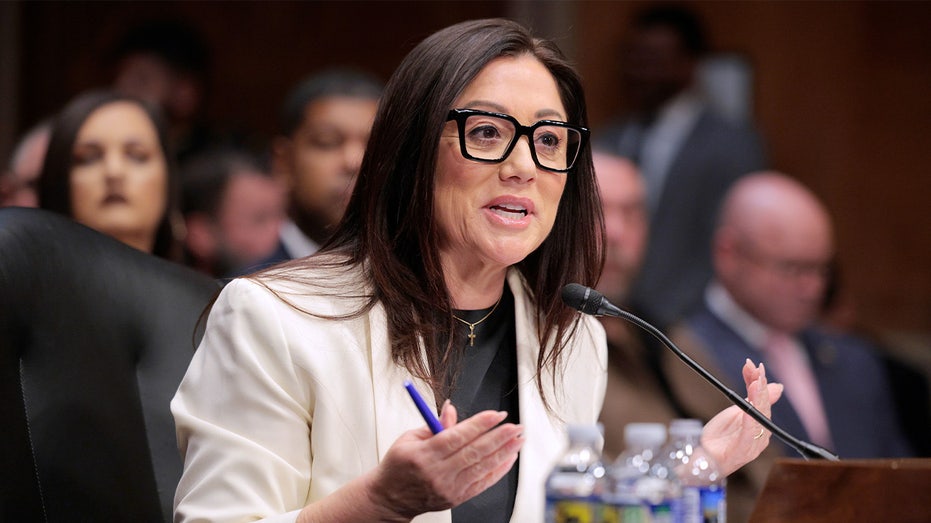
Whether every detail alleged by attorney Mehek Cooke ultimately proves accurate is, at this stage, an investigative question. But the underlying pattern she describes—home health waivers with weak oversight, doctors rubber-stamping care plans, relatives paid to provide questionable care—is remarkably familiar to anyone who has followed public benefits fraud over the past two decades.
A familiar scheme in a new setting
The core claim is straightforward: some providers and families are allegedly exploiting Ohio’s Medicaid waiver system, which allows home-based care for elderly or disabled individuals, by fabricating or exaggerating medical needs. Doctors sign off on care plans; family members enroll as paid home health aides; state money flows—up to about $91,000 a year per beneficiary, according to Cooke—while the supposed patient shows no visible impairment in everyday life, sometimes even appearing active on social media.
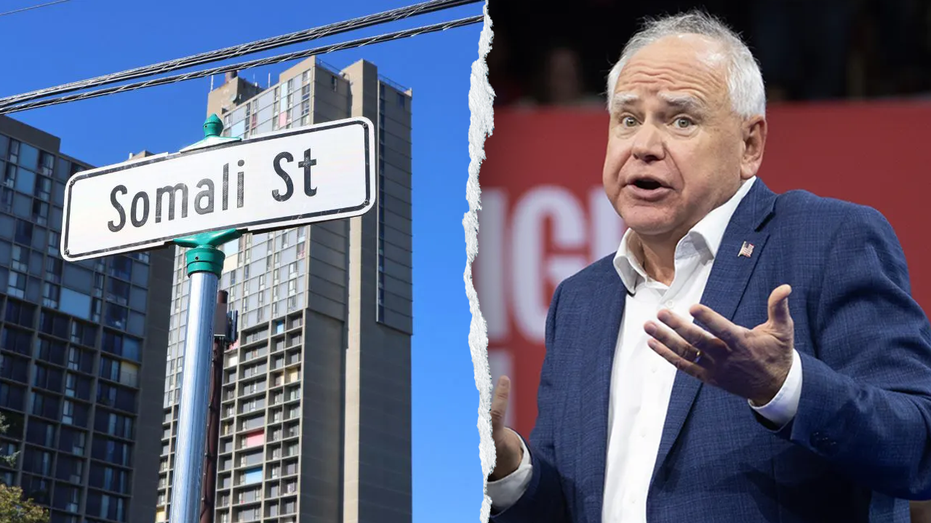
What makes this story politically potent is the linkage to a specific ethnic community and to the recent high-profile fraud scandal in Minnesota, where federal prosecutors charged dozens of mostly Somali defendants in a $250 million food-aid scheme. Cooke’s line that “Minnesota was just the tip of the spear” invites a narrative of coordinated, community-based exploitation of U.S. welfare programs.
Yet, historically, fraud in Medicaid personal care, home health, and waiver programs has been broadly distributed—ranging from Florida to Texas to New York—often involving a mix of small family-run operations and large corporate providers, and cutting across racial and ethnic lines. The novelty here is less the alleged misconduct and more the political framing and the vulnerabilities it exposes in state-level oversight.
How we got here: a system built on trust, then stretched thin
To understand why waiver-based home care programs are so susceptible, it helps to recall why they exist. Beginning in the 1980s, states increasingly turned to Medicaid “waivers” to move away from expensive institutional care (nursing homes, hospitals) and toward home- and community-based services. The logic was humane and fiscal: keep people in their homes, preserve dignity, and save money.
But to make that work, states had to:
- Rely heavily on provider attestations and physician certifications
- Allow family members to be paid caregivers, especially in communities where formal caregiving networks are weak
- Delegate oversight to underfunded state Medicaid agencies with limited staff
Over time, the sheer growth of these programs outpaced the capacity to monitor them. In 2022, Medicaid spending topped $800 billion nationally, with home- and community-based services accounting for a large and growing share. The U.S. Government Accountability Office (GAO) has repeatedly labeled Medicaid a “high-risk” program for improper payments, estimating tens of billions yearly in erroneous or fraudulent payouts.
Within that context, Ohio is not unique. The state has expanded home health and waiver services, often contracting with smaller agencies, including those serving immigrant communities with language and cultural expertise. That model can be both an asset—improving access—and a vulnerability when oversight and data analytics lag behind the growth of such networks.
Fraud or design failure? The structural incentives at work
The allegations described by Cooke point to three structural weaknesses common in state Medicaid systems:
1. Physician gatekeeping without real verification
When a physician’s signature is treated as sufficient proof of medical necessity—without systematic audits, in-home reassessments, or digital tracking of visits—rubber-stamping becomes a predictable risk. Doctors facing time pressures, potential kickbacks, or cultural/community pressures may sign off with minimal scrutiny.
2. Family caregivers plus cash = moral hazard
Paying relatives to care for loved ones is both compassionate and pragmatic, especially in immigrant or tight-knit communities. But it blurs the line between genuine care and income generation. When a benefit can reach $91,000 a year per case, the temptation to stretch eligibility or exaggerate needs increases—especially in low-income communities facing limited economic opportunities.
3. Weak enforcement & fear-based silence
Cooke’s description of providers warning they could be “stoned to death” if exposed should be read less literally than as a signal of intense intra-community pressure and fear of reprisal. In such environments, whistleblowers are rare; state agencies often rely on algorithms or random audits instead of community reporting. The absence of frequent unannounced home visits or independent functional assessments, as Cooke highlights, compounds the problem.
Race, scapegoating, and the politics of fraud narratives
One of the most delicate aspects of this story is the focus on the Somali community. Cooke is careful to insist that “the problem today is not the community; it’s actually the criminals within the Somalian community.” That distinction is important—but it doesn’t erase the risk that the entire Somali population in Ohio (and nationally) will be painted as suspect.
Historically, fraud scandals tied to specific ethnic groups have often been used to argue against immigration, refugee resettlement, or social safety nets more broadly. The Minnesota food-aid case has already been framed by some political actors as evidence that refugee resettlement brings organized exploitation of American generosity.
Yet the empirical record on benefits fraud consistently shows that:
- Fraud exists in every major public benefits program, across communities.
- Most improper payments stem from administrative errors or eligibility confusion, not deliberate schemes.
- Large-scale, organized schemes are relatively rare but highly damaging, both fiscally and politically.
The danger with the Ohio case is that it could encourage a simplistic narrative: immigrant community = fraud hotspot. What’s largely missing from mainstream coverage so far is scrutiny of state-level choices—how Ohio designs and oversees its waiver system, funds its Medicaid integrity unit, and deploys data tools to detect anomalies. Those are policy decisions, not cultural traits.
What’s being overlooked: the state’s accountability problem
Cooke emphasizes that Ohio’s waiver system was “built with compassion” but is now being “looted.” That framing underlines a crucial, underreported point: fraud is not just about bad actors; it’s about fragile systems.
Questions that deserve more attention than the ethnic angle include:
- How often does Ohio conduct independent, in-person reassessments of waiver beneficiaries?
- Does the state cross-check medical claims with non-medical data (e.g., employment records, social media, travel histories) in high-dollar cases?
- What share of Medicaid’s budget is devoted to fraud control and program integrity—and how does Ohio compare to peer states?
- Are there specific oversight gaps tied to small, culturally specific agencies that lack robust compliance infrastructure?
In previous national audits, the Centers for Medicare & Medicaid Services (CMS) and GAO have recommended exactly the safeguards Cooke says are missing: randomized home visits, independent assessments, and stronger pre-approval processes for high-cost plans. If Ohio indeed has one of the “easiest” systems to game in the Midwest, as she claims, the story is as much about state governance as it is about alleged community-level misconduct.
Expert perspectives: fraud, culture, and policy design
Health policy experts often warn against conflating fraud narratives with cultural stereotypes. Professors studying Medicaid integrity point to three key lessons:
- Target behavior, not ethnicity. Oversight should be data-driven—flagging unusual billing patterns, excessive hours, or clusters of high-dollar cases—rather than focused on particular communities.
- Engage communities as partners. Immigrant and refugee groups can be crucial allies in designing culturally competent compliance training and in encouraging responsible whistleblowing mechanisms that protect insiders.
- Invest upfront in program integrity. Every dollar spent on effective fraud prevention often saves multiple dollars in avoided improper payments. But those investments are politically invisible until scandals erupt.
Experts also caution that aggressive crackdowns, if poorly designed, can push legitimate providers out of the system, reducing access to care for vulnerable patients. That’s especially true in communities where language barriers make large mainstream providers less accessible than smaller, community-based agencies.
Data points that put this in perspective
To gauge the scale of what’s being alleged, it helps to juxtapose some known benchmarks:
- Nationally, improper Medicaid payments were estimated in recent years at over $80 billion annually, though that figure includes paperwork errors.
- Home health and personal care have repeatedly ranked among the highest-risk service categories.
- In prior state and federal crackdowns, individual schemes have ranged from tens of thousands of dollars to tens of millions.
If even a modest fraction of the alleged $91,000-per-person benefits in Ohio are being diverted improperly across hundreds of cases, the cumulative impact could reach many millions—significant for a state budget, and potent fuel for a wider political narrative that public programs are “out of control.”
Looking ahead: what this could trigger
Cooke’s call for audits of Medicaid systems “in every state” is likely to resonate with lawmakers, especially as states grapple with post-pandemic budget pressures. Several potential developments are worth watching:
1. Multi-state audits and federal pressure
In the wake of Minnesota’s scandal and now Ohio’s allegations, CMS and federal inspectors general may push for more aggressive, coordinated audits of home health and waiver programs, particularly where family caregivers are involved.
2. Policy shifts on paid family caregiving
States may revisit rules that allow relatives to serve as paid caregivers—tightening eligibility, capping hours, or requiring more frequent third-party verification. That could reduce fraud but also risk harm to legitimate families depending on this support.
3. Political weaponization
The combination of “fraud,” “taxpayer dollars,” and “immigrant community” is politically explosive. Expect these cases to be invoked in debates about immigration, refugee resettlement, and the future of Medicaid itself, even if the actual systemic failures are more about oversight than origin.
4. Community consequences
Somali communities in Ohio and elsewhere may face increased stigma, closer scrutiny from law enforcement, and potential chilling effects on legitimate providers. Community leaders will likely need to balance defending their broader community against blanket accusations while cooperating with investigations into genuine wrongdoing.
The bottom line
The Ohio whistleblower story is not just about whether individuals faked medical conditions or whether particular doctors signed questionable forms. It is about whether a Medicaid system built on trust, compassion, and home-based care has evolved faster than the safeguards meant to protect it—and how quickly that gap can be reframed as a problem of culture or immigration rather than one of policy design.
What happens next in Ohio will send a wider signal: will policymakers respond with targeted, evidence-based reforms that strengthen oversight without demonizing entire communities? Or will the story be flattened into another headline about fraud and foreigners, leaving the deeper structural flaws untouched?
Ultimately, taxpayers—and legitimate beneficiaries who depend on Medicaid—have the most to lose if the response is more political theater than systemic repair.
Topics
Editor's Comments
One of the most critical questions largely missing from early coverage is: why did it take a politically connected attorney, rather than state auditors or data analysts, to raise alarms about alleged large-scale fraud? If the scheme is as pervasive as described, basic anomaly detection—such as cross-checking high-cost care plans with minimal prior medical history, or flagging physicians whose approval rates vastly exceed peers—should have produced red flags years ago. That suggests an underlying reluctance, perhaps driven by budget constraints or political risk aversion, to invest meaningfully in Medicaid oversight. It’s more comfortable to point to a discrete group of scammers than to acknowledge that state and federal leaders have underfunded integrity systems for decades. Until that calculus changes, we are likely to see the same pattern repeat: humanitarian programs expand rapidly, oversight lags, scandals erupt, and the resulting backlash threatens the very people those programs were designed to help.
Like this article? Share it with your friends!
If you find this article interesting, feel free to share it with your friends!
Thank you for your support! Sharing is the greatest encouragement for us.