
Ohio’s Firing of Brian Smith Exposes a New Era of Risk and Power in College Coaching

Sarah Johnson
December 18, 2025
Brief
Ohio University’s firing of football coach Brian Smith exposes how “for cause” clauses, financial pressure, and secrecy are reshaping college coaching, institutional power, and due process in modern college sports.
Behind Ohio’s Firing of Brian Smith: How “For Cause” Terminations Are Quietly Reshaping College Sports
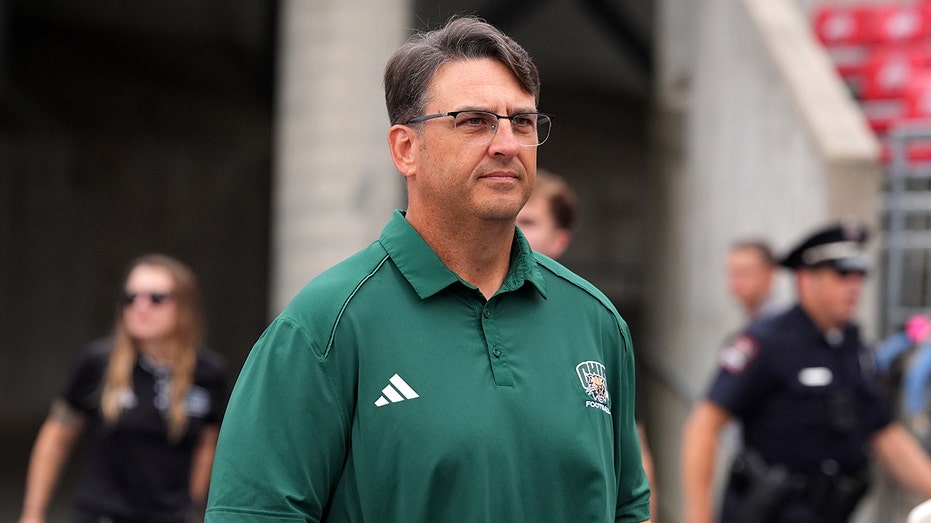
Ohio University’s abrupt decision to fire head football coach Brian Smith for “serious professional misconduct” is about much more than one coach, one school, or one bowl game. It sits at the intersection of money, power, reputation management, and a rapidly shifting legal landscape in college sports. The details of Smith’s alleged misconduct remain undisclosed, but the way this is happening—and the language being used—fits a growing pattern that deserves far more scrutiny.
At stake is not only Smith’s career and a $2.5 million contract, but also the evolving balance of power between athletic departments and coaches, and the increasingly aggressive use of “for cause” clauses to protect universities financially and reputationally in an era of nonstop scandal, social media outrage, and tightening budgets.
The bigger picture: Why this kind of firing is becoming more common
To understand Ohio’s move, it helps to zoom out.
Over the last decade, Division I programs have dramatically toughened language in coaching contracts, especially around:
- Morals clauses and standards of conduct
- Title IX and harassment/abuse obligations
- Reporting requirements for NCAA violations or off-field issues
- Reputation and “embarrassment” clauses that cover behavior reflecting poorly on the institution
These clauses are not just boilerplate anymore; they are strategic tools. When a coach is fired “for cause,” the university can typically avoid paying remaining guaranteed salary—which in Smith’s case is reported to be around $2.5 million. That’s a powerful financial incentive, especially for a mid-major program with tighter budgets than Power Five schools.
Historically, major public controversies drove this evolution. High-profile scandals involving coaches at places like Baylor (Art Briles), Louisville (Rick Pitino), and Michigan State (Larry Nassar’s wider institutional failures) made it clear that universities could not afford to be seen as slow, lenient, or opaque when it comes to allegations of misconduct. The reputational and legal costs became enormous.
The result: universities are moving faster, using broader definitions of “misconduct,” and increasingly invoking “for cause” firings even before full details are public.
What this really suggests about Ohio’s decision-making
Ohio’s statement is carefully lawyered: Smith allegedly violated his employment agreement by engaging in “serious professional misconduct” and in activities that “reflect unfavorably on the University.” That phrase—“reflect unfavorably”—is crucial. It signals a shift from clear-cut legal violations (like criminal activity or NCAA violations) to something more subjective: reputational risk.
Several dynamics likely collided here:
- Risk management and liability
Public universities live under the threat of lawsuits—from students, employees, alumni, and occasionally the state itself. If allegations involve potential harassment, discrimination, player treatment, or workplace culture, legal counsel increasingly urges swift, decisive action. Removing the coach and invoking a “for cause” clause can be framed as the institution protecting students and the campus environment. - Financial pressure
Ohio is not a football powerhouse with a nine-figure athletic budget. Saving $2.5 million in guaranteed salary is nontrivial. Across the country, we’ve seen schools explore any contractual angle to avoid buyouts, particularly after COVID-era budget hits and in the current NIL/transfer portal environment where costs are rising faster than some revenue streams. - Reputational calculus
Once a coach is placed on leave—as Smith was on December 1—the university is already thinking public optics: What does it look like if he returns? Will players, parents, and donors accept that? Will journalists and watchdogs treat reinstatement as a sign of institutional weakness? In some cases, even if the conduct is in a gray zone, administrators conclude it’s simpler to cut ties and manage the fallout in court rather than in public. - Changing expectations in player-coach relationships
What constituted “hard-nosed coaching” twenty years ago is increasingly seen as abusive or unacceptable today. Universities are reassessing what they tolerate in terms of language, discipline, practice methods, and personal boundaries. A coach might genuinely not recognize that behavior considered normal a decade ago now falls under “serious professional misconduct.”
Smith’s attorney, Rex Elliott, is clearly signaling a battle ahead, calling the firing a “wrongful termination” and emphasizing that Smith is “ethical” and “exemplary.” That language sets up a likely legal narrative: Ohio stretched or misapplied the “for cause” clause to escape a buyout.
The silence problem: secrecy, trust, and due process
The most striking aspect of this case is what we do not know. The school has not disclosed the nature of the alleged misconduct. From a legal standpoint, that’s predictable: universities are constrained by employment law, privacy considerations, and real fear of defamation claims if allegations are unproven.
But this creates a serious trust issue:
- The public can’t evaluate whether the firing was just or opportunistic.
- The coach can’t fully defend himself in the court of public opinion without discussing sensitive or confidential details.
- Players are caught in the middle, asked to trust a process they never see.
This is becoming a recurring pattern in college sports: internal reviews, vague press releases, and contested “for cause” firings followed by confidential settlements. It’s a model that minimizes institutional exposure but leaves the public—and often the people most directly affected—with more questions than answers.
The financial and power dynamics behind “for cause” clauses
On paper, “for cause” clauses exist to give universities protection against egregious behavior. In practice, they’ve become a powerful bargaining chip in a high-stakes money game.
Typical “for cause” language in coaching contracts now covers:
- Criminal acts or indictments
- Major NCAA violations
- Harassment, abusive conduct, or discrimination
- Failure to report known violations or misconduct
- Conduct that brings the university into “public disrepute”
The last category is the most flexible—and the most dangerous. What counts as “public disrepute”? Is it a criminal charge? A viral social media clip? A complaint by a player? A conflict with staff? This elasticity gives universities leverage but also invites claims of misuse or selective enforcement.
For mid-major programs like Ohio, the temptation is obvious. Where a Power Four school may grudgingly swallow an eight-figure buyout to avoid a lawsuit, a MAC program may have far more incentive to lean on “for cause” as a cost-cutting mechanism, especially if the coach is relatively new, the legal risk is manageable, and the public details can be kept ambiguous.
Impact on players, recruiting, and program stability
For the athletes, the timing could hardly be worse. Ohio is preparing for the 2025 Scooter’s Coffee Frisco Bowl, and now the team must adjust to an interim coach, John Hauser, while fielding media questions and internal uncertainty.
The longer-term consequences are even more serious:
- Recruiting hits: Competing schools will quietly weaponize this situation in negative recruiting: “Do you really want to go to a place that just fired its coach right after his first 8–4 season?”
- Transfer portal churn: In the NIL and transfer portal era, sudden instability makes it easier for players to justify leaving. A new coach—whenever hired—will inherit a roster in flux.
- Staff uncertainty: Assistant coaches and support staff may not know if they’ll be retained, affecting game prep, recruiting visits, and long-term planning.
It also raises an uncomfortable question: if the misconduct was serious enough to warrant termination for cause, what protections and transparency are owed to the athletes who were under that coach’s authority? A purely internal process might protect the university, but it doesn’t necessarily protect players from similar issues in the future, especially if other schools unknowingly hire the same coach.
What mainstream coverage is mostly missing
Most immediate coverage frames this as a personnel move: coach fired, interim named, bowl game still on, legal fight likely. But several deeper themes are being underexplored:
- The normalization of opaque “for cause” firings: We’re seeing more cases where coaches are removed under broad misconduct claims but the specifics never become fully public. That’s a trend, not an outlier.
- The financialization of discipline: Discipline decisions are now tightly intertwined with financial engineering. Whether behavior is labeled “for cause” often determines whether millions change hands.
- The asymmetry of reputational risk: Universities can hide behind institutional statements and confidentiality. Coaches often cannot, and their reputations may be permanently damaged even if they later prevail in arbitration or court.
- The lack of independent oversight: Internal reviews rarely have independent, transparent oversight. They are run by entities with a strong incentive to protect the institution rather than seek full public clarity.
Looking ahead: What to watch in the Ohio case
Several telltale signs over the next 6–18 months will clarify what really happened here:
- Legal filings
If Smith sues for wrongful termination or files a grievance/arbitration, the complaint may lay out specific allegations and counterclaims. Often, the first real details surface in legal documents, not university press releases. - Settlement patterns
If the case quietly settles and the school agrees to pay some portion of the contract, it could indicate Ohio’s confidence in its “for cause” basis was limited—or that it wanted to avoid discovery and public testimony. - Future hiring
Where Smith lands next, and how quickly, will be revealing. If another FBS or FCS program hires him after due diligence, that suggests the underlying issues may be seen by peers as less severe than the phrase “serious professional misconduct” implies. - Contract language in Ohio’s next hire
It will be worth examining how Ohio structures the next coach’s deal. Expect even more robust “for cause” language and possibly compensation terms that reflect the risk of rapid separation.
More broadly, this case is part of a multi-year shift: as coaching salaries rose to CEO-level figures, universities responded by writing contracts that gave them CEO-level exit tools. The friction we’re seeing now is the inevitable outcome of that arms race.
The bottom line
Ohio University’s firing of Brian Smith is not just about one coach’s alleged misconduct. It’s a window into how college sports are quietly changing—in their legal frameworks, their financial incentives, and their approach to reputational risk.
We are entering an era where:
- “For cause” language is used more aggressively and more strategically.
- Universities prioritize institutional protection and cost avoidance, often at the expense of transparency.
- Coaches, even successful ones, operate under increasingly fragile job security when accused of behavior that can be framed as reputationally damaging.
Until there is more independent oversight and more standardized disclosure practices, these cases will continue to unfold in the shadows—decided in private conference rooms and arbitration hearings, while players, fans, and sometimes the coaches themselves are left to navigate the fallout without a clear public record of what actually happened.
For Ohio fans, the immediate question is who leads the Bobcats next season. For the rest of college sports, the deeper question is whether this model of opaque internal justice—expedient for institutions, devastatingly murky for individuals—is becoming the new normal.
Topics
Editor's Comments
The most troubling element of the Brian Smith firing isn’t the allegation of “serious professional misconduct” itself—those claims need to be taken seriously—but the structural incentives that now shape how universities respond. Athletic departments have layered together three powerful forces: heightened public sensitivity to misconduct, complex legal exposure, and enormous guaranteed coaching salaries. The result is a system where institutions are rewarded for acting decisively and quietly, even if the underlying facts are contested, while coaches may be punished in the court of public opinion without any transparent adjudication. This dynamic doesn’t just affect one coach at Ohio; it sets expectations for how similar cases will be handled across the country. If universities continue to rely on opaque internal reviews and expansive “for cause” clauses, the logical next step is a call for independent oversight—whether from conference offices, the NCAA, or third-party bodies—to ensure that protecting institutional reputation doesn’t eclipse fairness, due process, and the genuine safety of athletes and staff.
Like this article? Share it with your friends!
If you find this article interesting, feel free to share it with your friends!
Thank you for your support! Sharing is the greatest encouragement for us.