Minnesota's $1 Billion Somali Welfare Fraud: Media Bias and Political Accountability Under Scrutiny

Sarah Johnson
December 6, 2025
Brief
An in-depth analysis of Minnesota's $1 billion Somali welfare fraud exposes media bias, political accountability gaps, and the challenges of integrating immigrant communities with effective governance.
Why Minnesota's $1 Billion Somali Welfare Fraud Exposes Gaps in National Media and Political Accountability
The uncovering of a massive welfare fraud ring within Minnesota’s Somali community—allegedly involving over $1 billion in stolen taxpayer funds—has stirred controversy far beyond the state’s borders. Yet, in stark contrast to fierce national media scrutiny of President Donald Trump’s rhetoric on the issue, coverage of the underlying fraud case and its political implications remains strikingly subdued on major broadcast networks. This disparity offers a window into how media framing, political alliances, and identity politics intersect to shape what stories gain prominence and how public discourse unfolds.
The Broader Context: Minnesota’s Somali Community and Political Landscape
Minnesota is home to the largest Somali-American population in the United States, concentrated largely in Minneapolis and surrounding areas. Over the past two decades, this community has become an important—and sometimes contentious—political and social constituency. Local and state leadership, including Democratic Governor Tim Walz and prominent Representative Ilhan Omar, have forged deep ties, highlighting immigrant integration and social justice initiatives.
However, these communities have also faced serious challenges including economic hardship, social isolation, and, more recently, allegations of systemic abuses of welfare programs. The reported fraud involves intricate schemes exploiting social service benefits—intended for vulnerable children and families—that were fraudulently diverted to illicit actors, including those linked to al-Shabaab, a recognized terrorist group. This connection heightens the stakes and raises questions about oversight failures stretching across multiple layers of government.
Media Coverage and Political Narratives: What’s Driving the Disparity?
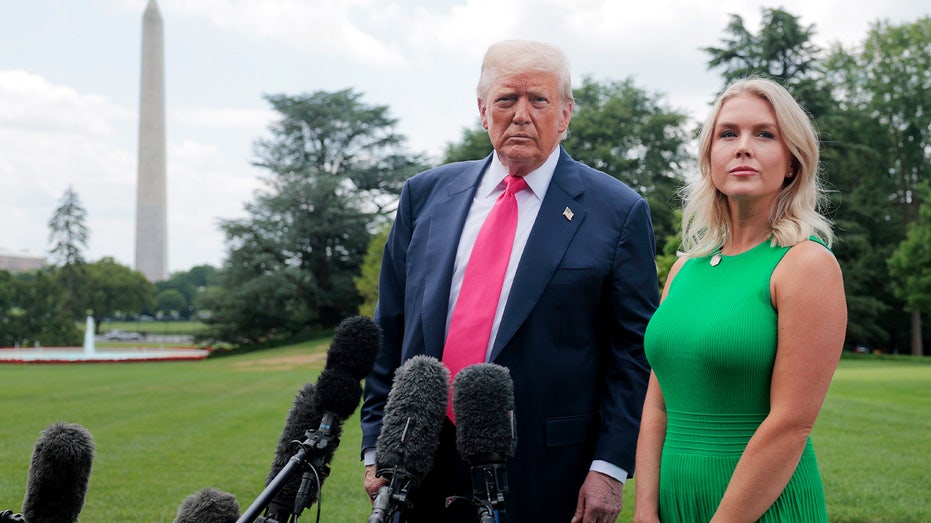
National broadcast media have largely downplayed the fraud story’s urgency, choosing instead to frame subsequent political reactions—especially from Trump—as problematic "tirades." This bifurcated attention pattern reflects longstanding tensions in mainstream media’s approach to complex, politically sensitive stories. Media outlets often portray Trump’s blunt commentary on Somali fraud as a primary public concern, while providing minimal context or scrutiny of the fraud itself or the efficacy of state leadership.
This selective coverage serves several functions. First, it protects key political figures aligned with the Democratic Party and its immigrant constituencies, arguably to avoid inflaming racial or ethnic tensions. Second, it aligns with broader media trends that emphasize conflict-driven narratives (e.g., Trump’s provocative statements) over systemic institutional failures. Third, it illustrates how identity politics and perceived community sensitivities can constrain investigative reporting, limiting critical examination of fraud allegations within minority communities.
Implications for Governance and Social Cohesion
Governor Walz’s administration has been sharply criticized—both by opposition politicians and by state employees—over a perceived lack of accountability and proactive action. Official responses have largely been reactive, with federal law enforcement taking primary responsibility for investigations and prosecutions. This diffusion of accountability weakens democratic oversight, as local elected officials avoid direct responsibility.
Moreover, this scandal risks deepening divisions within Minnesota’s social fabric. The Somali community, a vital part of the state’s diversity and economy, is grappling with stigmatization derived from the actions of a criminal subset. Political actors, such as Representative Ilhan Omar, have condemned Trump’s rhetoric as bigoted but have been less forthcoming about the fraud links involving individuals connected to their political network. This tension between defending immigrant communities and acknowledging internal problems complicates efforts to rebuild trust and effective governance.
Expert Perspectives Illuminate the Stakes
Experts in media studies and public policy note that the Minnesota case is emblematic of broader challenges at the intersection of immigration, race, and fiscal governance. Dr. Laila Abdi, a scholar in immigrant integration and social policy, observes, "The reluctance to fully confront fraud within minority communities stems from fears of fueling xenophobia, but without transparency and accountability, it undermines the social contract and trust in public institutions."
Media analyst Jonathan Stein adds, "Broadcast networks’ framing choices reflect institutional biases that favor controversy over nuanced examination—Trump’s ‘tirade’ is headline-grabbing, but the underlying systemic fraud is the more significant story with real implications for policy and public trust."
Data and Evidence Underscore the Gravity
According to court documents and official reports, more than 59 individuals connected to Minnesota’s Somali community have been convicted related to the fraud schemes, involving social service funds designed for child and family welfare. The estimated loss exceeds $1 billion, significantly surpassing annual state spending on critical programs like Corrections, revealing a staggering scale of abuse.
Furthermore, internal whistleblower accounts reveal early warnings went unheeded by state officials, highlighting potential administrative negligence or political shielding. Nearly 500 state employees reportedly voiced frustration over halted investigations and a lack of collaboration from Governor Walz’s office.
Looking Ahead: Challenges and Opportunities for Reform
The current scandal offers Minnesota a painful but important opportunity. Policymakers must strengthen oversight mechanisms over social programs to prevent future fraud without jeopardizing access for legitimate beneficiaries. Enhanced transparency and community engagement will be essential to rebuilding trust, particularly with the Somali and broader immigrant populations.
Media institutions face their own reckoning about equitable coverage—balancing the risk of inflaming prejudice with the public’s right to comprehensive, accurate information. Efforts to diversify newsroom perspectives and emphasize systemic policy analysis over sensationalism are critical steps forward.
On the political front, all actors bear responsibility to avoid weaponizing identity or deflecting accountability. Constructive dialogue on reform and integration is vital to moving beyond polarization toward shared solutions.
Bottom Line
The Minnesota Somali welfare fraud scandal is more than a local scandal—it is a prism reflecting complex challenges of immigration, governance, media framing, and political accountability. Addressing these intertwined issues head-on is necessary to restore public trust and ensure that social safety nets serve those truly in need, free from exploitation and political obstruction.
Topics
Editor's Comments
This story reveals a complex fault line where media bias, political calculations, and ethnic identity intersect in ways that obscure fundamental accountability questions. The reluctance to probe deeply into the mechanics and enablers of fraud within vulnerable immigrant communities, often out of fear of appearing racially insensitive, ultimately harms those communities by allowing malpractice to persist unchecked. Conversely, the tendency to fixate on incendiary rhetoric—particularly from polarizing figures like Trump—shifts focus away from enduring systemic challenges. True reform requires that we confront uncomfortable truths transparently, holding all political actors accountable regardless of affiliation, and demanding that media move beyond simplistic narratives. As this scandal unfolds, the vital questions will be whether Minnesota’s leadership takes meaningful steps to repair governance gaps, and whether national media can rise to covering such stories with the nuance and rigor they deserve.
Like this article? Share it with your friends!
If you find this article interesting, feel free to share it with your friends!
Thank you for your support! Sharing is the greatest encouragement for us.