Machado, Trump, and the Nobel: How Venezuela’s Democracy Fight Became a Test of U.S. Power

Sarah Johnson
December 12, 2025
Brief
María Corina Machado’s Nobel tribute to Donald Trump is less about flattery and more about locking in a hard-line democracy strategy toward Venezuela. Here’s the deeper context and what it means globally.
Why María Corina Machado’s Nobel Tribute to Trump Is Really About the Future of U.S.–Latin America Democracy Policy
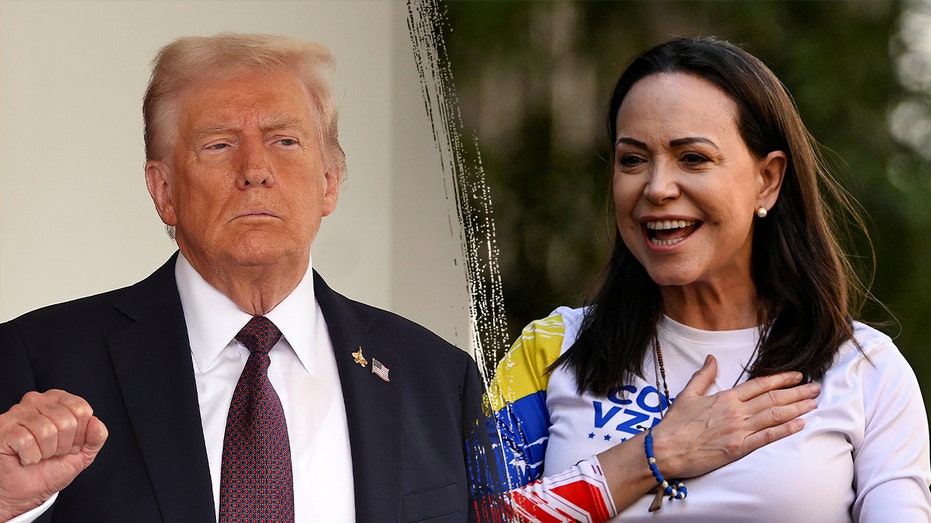
María Corina Machado’s decision to publicly credit Donald Trump for sustaining Venezuela’s democracy movement – and to symbolically dedicate her Nobel Peace Prize to him – is more than a thank-you note. It’s a strategic intervention in three overlapping battles: the fight against Nicolás Maduro’s authoritarian rule, the contest over U.S. foreign policy toward Latin America, and the emerging norm of opposition leaders aligning themselves with specific global political brands.
At first glance, her comments might look like a partisan gesture aimed squarely at U.S. politics. But read against the last decade of Venezuela’s crisis and the longer arc of U.S.–Latin America relations, Machado is doing something more subtle: trying to lock in a muscular, high-visibility form of international backing for democratic movements at a moment when the West is distracted by multiple crises and increasingly skeptical of regime-change narratives.
From Oil Powerhouse to Authoritarian Entrenchment: The Context Machado Is Speaking Into
To understand why Machado’s praise matters, it’s essential to recall the trajectory that brought Venezuela here.
- From Chávez to Maduro: Hugo Chávez’s rise in 1999 fused left-wing populism with oil wealth, enabling expansive social programs and a dismantling of institutional checks. When Nicolás Maduro took over in 2013, the framework for competitive authoritarianism was already in place: weakened courts, politicized military, and eroded electoral independence.
- Economic collapse and mass exodus: Since 2013, Venezuela’s economy has shrunk by roughly three-quarters. Hyperinflation in the late 2010s wiped out savings, and over 7 million Venezuelans have left the country, one of the largest displacement crises in the world.
- Democratic openings, then crackdowns: Opposition surges in 2015 (parliamentary victory), the 2019 Juan Guaidó interim presidency claim, and the 2024 opposition primary that Machado won in a landslide all represented attempts to use electoral paths to challenge Maduro. Each was followed by institutional manipulation, repression, or both.
Within that arc, international support has been inconsistent and often transactional. Machado’s gratitude to Trump is rooted in a period – 2017 to early 2020 – when Washington placed Venezuela unusually high on its foreign policy agenda, with sanctions, diplomatic recognition of the opposition, and vocal denunciations of Maduro. To many Venezuelan activists, that period felt like the rare moment when great-power attention matched the scale of the crisis.
Why a Nobel Laureate Would Publicly Embrace a Polarizing U.S. Figure
For a Nobel Peace Prize laureate, dedicating the award to any sitting or former U.S. president is politically loaded. Doing it for Donald Trump, whose foreign policy has been criticized as transactional and whose domestic politics are deeply divisive, is even more so. Yet from Machado’s vantage point, several calculations are at work:
- Rewarding “visible” support, not just rhetoric: Under Trump, the U.S. ramped up sanctions on Maduro, recognized Juan Guaidó as interim president, and rallied more than 50 countries to challenge the regime’s legitimacy. For Venezuelan dissidents, this was tangible, high-profile backing in contrast to the more procedural and sanction-easing approach that followed under other administrations.
- Creating a reputational cost for abandonment: By publicly tying her Nobel symbolically to Trump, Machado is not just thanking him; she is trying to increase the political cost for any future U.S. administration – regardless of party – that might quietly normalize relations with Maduro in pursuit of oil, migration deals, or regional stability.
- Anchoring Venezuela to Western political narratives: Her statement aligns Venezuela’s struggle with a broader global theme favored by many right-of-center movements: a narrative of fighting socialism and authoritarianism with “strong leadership.” She is essentially branding Venezuela’s democratic fight as part of a wider ideological clash.
- Speaking to exiles and diaspora voters: Millions of Venezuelans now live in the United States, Colombia, Spain and beyond. Many have become politically active, particularly in U.S. swing states like Florida. Machado’s tribute to Trump resonates strongly with segments of the Venezuelan diaspora who already view him as their most reliable ally.
What gets missed in surface-level coverage is that this is not just about personal gratitude; it is an attempt to shape the narrative of how democracy is best defended: via pressure, sanctions, and visible alignment, rather than quiet diplomacy and incremental engagement.
What Machado’s Gesture Reveals About the State of the Venezuelan Opposition
Machado re-emerging publicly in Oslo after 11 months in hiding, just as her daughter accepts the Nobel Peace Prize on her behalf, sends two signals: the Maduro regime still sees her as a genuine threat, and she intends to remain central to the story even when formally sidelined.
Her trajectory illuminates several deeper dynamics:
- Personal popularity vs institutional exclusion: Machado reportedly secured over 90% of the vote in the opposition primary, yet was barred from running in the 2024 presidential election and later disqualified. This is a case study in how modern autocrats allow controlled pluralism while retaining the ability to choose their opponents.
- Delegated leadership: Her endorsement of Edmundo González, widely believed by independent tallies to have won the 2024 election, shows how opposition movements now increasingly operate with proxy candidates when their top figures are legally neutralized. Symbolic leaders and formal candidates are no longer the same people.
- Exile as a political platform: By using Oslo and the Nobel ceremony as a stage, Machado demonstrates how exiled or semi-exiled leaders can leverage international platforms to maintain relevance when physically absent from their home countries.
In this context, crediting Trump is not an isolated statement but part of a broader strategy: keep Venezuela’s crisis framed as a global democratic test case, not a “resolved” domestic issue, and keep pressure on international actors not to normalize Maduro’s rule.
The U.S. Foreign Policy Dilemma: Sanctions, Oil, and the “Authoritarian Stability” Temptation
Machado’s tribute intersects with a real policy debate in Washington and European capitals: Is maximum pressure on regimes like Maduro’s actually effective, or does it entrench authoritarian control while harming civilians?
Three competing logics are in play:
- Pressure & isolation (the Trump-era model): Sanctions, diplomatic isolation, and recognition of alternative leaders are meant to split ruling coalitions by raising the cost of loyalty. Advocates argue that without this kind of pressure, Maduro would have consolidated uncontested authoritarian rule even faster.
- Engagement & conditional relief: The counterargument is that broad economic sanctions have devastated ordinary Venezuelans while leaving regime elites relatively protected. This camp favors gradual sanctions relief in exchange for electoral concessions, hoping to incentivize partial liberalization.
- Stability-first pragmatism: A third, less openly acknowledged logic prioritizes migration control and energy stability. From this vantage point, an authoritarian but predictable Venezuela that cooperates on migration and oil can seem preferable to prolonged crisis or unpredictable transition.
Machado is clearly rejecting the third option and signaling deep skepticism of the second. By praising Trump’s “strong leadership,” she is endorsing a version of foreign policy that treats democratic outcomes as non-negotiable—an uncomfortable stance for governments juggling multiple global crises and domestic priorities.
Expert Perspectives: What Is Really at Stake?
Democracy scholars and regional experts are split on how to interpret Machado’s alignment.
Some see it as a rational choice. Authoritarianism expert Steven Levitsky has previously argued that competitive autocrats respond more to coordinated international pressure than to purely domestic protest when institutions are captured. From that perspective, Machado is signaling that when Western governments go all-in, regimes notice—and so do opposition movements.
Others warn of unintended consequences. Aligning too closely with one political faction abroad can polarize support and make transitions harder. In the U.S., Venezuela policy has already become entangled in domestic culture wars about socialism, immigration, and energy, turning what should be a human-rights-driven agenda into a partisan talking point.
Roxanna Vigil’s observation that Machado is “the most popular political figure in Venezuela” underscores the paradox: a leader with genuine mass backing at home is increasingly dependent on political fortunes abroad. Her Nobel platform amplifies her voice; her legal disqualification shrinks her formal options. The question is whether tying Venezuela’s fate so closely to one foreign leader or party amplifies or ultimately constrains the movement.
What This Means for Other Struggles Against Authoritarianism
Machado’s move also offers a glimpse into a broader 21st-century pattern: dissidents appealing directly to foreign political brands rather than simply to states or institutions. We’ve seen similar dynamics in opposition movements from Belarus to Hong Kong, where activists consciously cultivate relationships with specific Western parties, not just governments.
This has three long-term implications:
- Democratic support becomes more volatile: If a movement is strongly associated with one foreign leader or party, its fortunes can swing dramatically with elections abroad. Support that is institutional and bipartisan is harder to achieve but more durable.
- Authoritarian regimes can weaponize “foreign interference” narratives: Maduro has long portrayed the opposition as pawns of Washington. Public tributes to U.S. leaders risk reinforcing that propaganda, even if they accurately reflect past support.
- The Nobel Peace Prize itself becomes more politicized: When laureates dedicate their awards to polarizing figures, it further blurs the line between human-rights advocacy and ideological alignment, impacting how the prize is perceived globally.
Looking Ahead: What to Watch Next
Machado has indicated she intends to return to Venezuela “when conditions allow” and continues to call for a peaceful transition. Several inflection points loom:
- Will the international community treat the 2024 election as definitively stolen? If major democracies quietly accept Maduro’s continued rule, it will signal that the cost of electoral theft is bearable for autocrats who can weather short-term condemnation.
- How will U.S. policy shift with domestic political cycles? If Trump or Trump-aligned figures regain power, we could see a return to high-intensity pressure. If not, the trend may favor cautious engagement and narrowly targeted sanctions tied to migration and energy priorities.
- Can the opposition maintain unity? Machado’s personal popularity versus González’s status as the blocked “winner” of the 2024 election raises familiar risks of fragmentation. Authoritarian regimes often survive not because they are strong, but because their opponents are divided.
- Will the Nobel Prize translate into leverage? Historically, the Nobel has sometimes protected dissidents (e.g., Lech Wałęsa) and sometimes failed to prevent harsh crackdowns (e.g., Liu Xiaobo). How Maduro responds to Machado’s enhanced international profile will be an important bellwether.
The Bottom Line
María Corina Machado’s dedication of her Nobel Peace Prize to Donald Trump is not just a personal tribute; it’s a deliberate attempt to shape the global narrative about how democracies should confront entrenched authoritarian regimes. She is rewarding a period of maximalist pressure and trying to lock in a precedent: that the world’s leading powers should treat electoral theft and institutional capture as red lines, not negotiable inconveniences.
Whether that strategy ultimately strengthens Venezuela’s path back to democracy—or leaves the opposition tethered to volatile foreign politics—is a question that will be answered not in Oslo, but in Caracas, Washington, and the corridors of power where decisions about sanctions, recognition, and normalization are being quietly made.
Topics
Editor's Comments
What’s striking about Machado’s move is how clearly it exposes the tension between principle and pragmatism in Western foreign policy. Democratic governments say they support free and fair elections, but when confronted with the economic costs of sanctions, the geopolitical pull of cheap oil, or the domestic pressure to reduce migration flows, those principles often become negotiable. By publicly crediting Trump, Machado is, in effect, holding up a mirror and asking: who is actually willing to bear a cost for our freedom? That question is uncomfortable for both right and left in Europe and the U.S., because it forces them to reckon with a trend toward ‘authoritarian stability’—accepting durable autocracies as long as they cooperate on narrowly defined interests. The contrarian angle here is that while many will focus on the partisan optics of her tribute, the more consequential issue is whether democracies are still prepared to treat stolen elections and captured institutions as red lines. If they aren’t, the Venezuelan story becomes less an outlier and more a blueprint for ambitious autocrats elsewhere.
Like this article? Share it with your friends!
If you find this article interesting, feel free to share it with your friends!
Thank you for your support! Sharing is the greatest encouragement for us.