Liz Truss, the ‘Trump-Style Revolution’ and the Fight to Rewrite Britain’s 2022 Meltdown

Sarah Johnson
December 12, 2025
Brief
Liz Truss’s push for a “Trump-style revolution” is more than rebranding. It’s a direct challenge to Britain’s economic institutions, media, and post-2022 consensus on who caused the market crisis.
Liz Truss, ‘Trump‑style revolution’ and the battle to rewrite Britain’s 2022 crisis
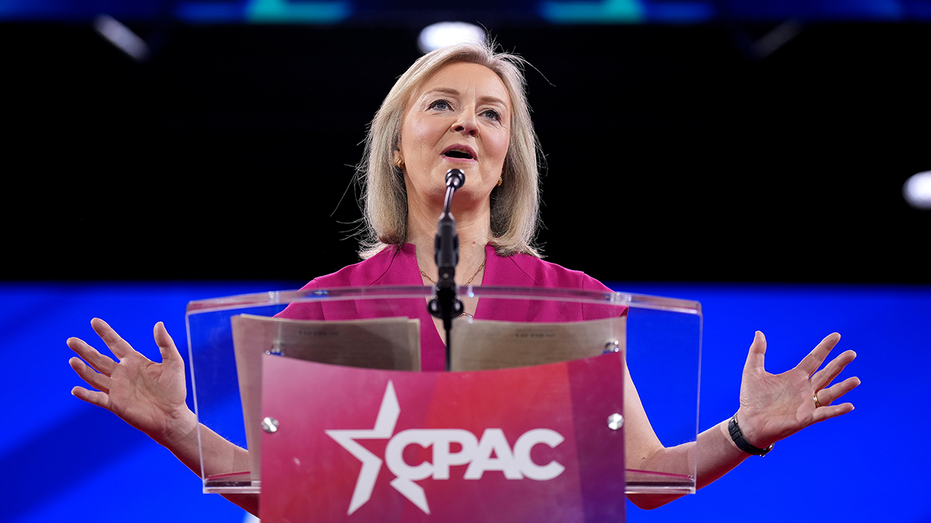
Liz Truss’s new media project and embrace of a “Trump-style revolution” are not just about reputation repair after her 49‑day premiership. They are part of a much larger realignment: the convergence of British and American right‑wing populism, the politicization of central banks and public broadcasters, and a high‑stakes contest over who gets to tell the story of Britain’s 2022 financial crisis.
Why this moment matters
Truss is doing three things at once:
- Reframing the 2022 gilt-market meltdown as sabotage by the Bank of England, not a failure of her economic experiment.
- Explicitly importing Trump-era narratives—“fake news,” “in-name-only” conservatives, and cultural civilizational decline—into British politics.
- Using a direct-to-audience media platform to bypass institutions like the BBC and mainstream newspapers, echoing a broader global shift away from legacy intermediaries.
This isn’t just personal rehabilitation. It is a test case for whether a leader who was decisively discredited by markets and public opinion can, within a few years, rebrand as a visionary martyr to the “deep state” and “globalist” institutions.
The bigger picture: From “mini-budget” to mega culture war
To understand Truss’s current message, you need to revisit the shock of autumn 2022.
In September 2022, Truss and her chancellor Kwasi Kwarteng unveiled a radical “mini-budget”: large unfunded tax cuts, particularly for higher earners and corporations, coupled with a refusal to publish the independent Office for Budget Responsibility (OBR) forecast. The plan rested on supply‑side faith that cutting taxes would boost growth enough to pay for itself.
Markets reacted brutally. The pound dropped to a historic low against the dollar. Yields on UK government bonds (gilts) spiked, threatening the stability of pension funds that had heavily used leveraged liability-driven investment (LDI) strategies. The Bank of England was forced into an emergency gilt‑buying program to prevent a systemic crisis.
The Bank’s own analysis later concluded that the mini‑budget and its lack of fiscal anchor were the trigger that exposed fragilities in the pension system, not the reverse. Truss now argues the opposite: that Bank decisions and regulatory failures caused the crisis and effectively sabotaged her government.
This clash is more than a technical disagreement over bond yields. It goes to the heart of post‑1980s economic governance: the idea that independent central banks and independent fiscal watchdogs constrain elected politicians from making unsustainable promises. Truss is aligning herself with a global movement that sees those constraints as illegitimate.
What this really means: The new right’s three-front war
Truss’s interview sketches a coherent—if highly contested—worldview. It rests on three linked battles.
1. Institutions as political enemies
Truss accuses the Bank of England of “sabotage” and brands key Conservatives as “conservatives in name only,” echoing Trump’s “RINO” label. She also targets the BBC as a purveyor of “fake news.” Together, this constructs a narrative in which:
- The central bank is not a technocratic guardian against inflation and financial instability but a partisan actor blocking “pro‑growth” policies.
- Public broadcasters and mainstream press aren’t imperfect arbiters of fact but ideological opponents aligned with a global progressive elite.
- Internal party critics are not legitimate dissenters but traitors to a true conservative cause.
That framing mirrors dynamics seen in the U.S., Hungary, and parts of Latin America, where populist leaders have sought to delegitimize refereeing institutions—courts, central banks, and public media—by turning them into ideological villains.
2. Economic failure reframed as moral struggle
Truss’s core economic claim—that she was pursuing growth and was undermined by the establishment—matters because it seeks to turn a technical policy debacle into a grand moral tale.
Instead of asking whether markets were rational to doubt unfunded tax cuts amid high inflation, the story becomes: can elected leaders ever push for growth, deregulation and lower taxes if “globalist” institutions are ready to punish them?
This flips the usual lesson of 2022. The widely accepted takeaway across the mainstream policy world was: “Fiscal credibility and institutional independence matter more than ever in an era of high debt and tightening money.” Truss offers an alternative: “Growth‑oriented conservatism is being suffocated by unaccountable technocrats.”
If that narrative gains ground, it could weaken political support for fiscal rules and independent oversight in the UK and beyond—especially as growth remains sluggish and voters grow weary of “austerity by stealth.”
3. Culture war meets geopolitical anxiety
Truss ties domestic culture battles—about migration, free speech, and family structures—to global security threats, from Putin’s Russia to Venezuelan cartels. Her claim that “all of these people hate Western civilization” fuses disparate actors—progressive activists, migration advocates, left-of-center institutions—into a single civilizational enemy.
This is classic 21st‑century right‑populist rhetoric: a story in which domestic cultural change and external security threats are symptoms of one underlying problem—the erosion of a cohesive, Christian-inflected national identity. It’s a powerful frame because it provides emotional clarity in a complex world, but it can flatten important distinctions and crowd out nuanced policy debate.
Expert perspectives: What economists, political scientists and media scholars see
Independent experts generally contest Truss’s version of events while acknowledging that she is tapping into real frustrations.
On the gilt crisis, many economists point to three key factors:
- Timing and communication: Announcing large, unfunded tax cuts during a period of high inflation and rising interest rates signaled fiscal indiscipline.
- Bypassing oversight: Not publishing OBR forecasts unsettled investors used to transparency and external scrutiny.
- Existing fragilities: LDI strategies in pension funds were known to be vulnerable to rapid moves in yields; the mini‑budget shock exposed that fragility.
Political scientists note that Truss’s strategy—building a personal media brand, aligning with transatlantic figures like Steve Bannon, and using a movement vocabulary (“pro‑growth leaders,” “revolution,” “make our countries great again”)—places her firmly in the emerging ecosystem of post‑office right-wing influencers. The office she briefly held becomes a credential to be monetized and weaponized in the culture war, even if her tenure was widely judged a failure.
Media experts, meanwhile, see her attacks on the BBC and “mainstream media” as part of a broader erosion of trust in shared information sources. Direct‑to‑audience platforms like YouTube allow politicians to bypass critical questioning, but they also reduce opportunities for cross‑examination and challenge.
Data & evidence: Beyond the rhetoric
Several empirical points help ground the debate:
- Market reaction in 2022: UK 10‑year gilt yields jumped by more than 100 basis points in the days following the mini‑budget—an extraordinary move for a G7 sovereign—while the pound fell to near parity with the dollar. That scale of reaction is difficult to reconcile with the idea that Bank of England actions were the primary driver.
- European defence spending: Truss urges Europe to “step up.” NATO data show European allies have increased defense spending since 2014, but many still fall short of the 2% GDP target. The UK is one of the few major European countries that consistently meets or exceeds the benchmark, which gives Truss’s call some factual grounding even as U.S. critics often understate recent European increases.
- Ukraine aid: The U.S. has committed over $175 billion to Ukraine, while European countries collectively have committed more, particularly when you include long‑term budgets. Truss’s warning that Europe needs to do more “ourselves” echoes U.S. Republican concerns that America is overextended, but the data show burden‑sharing has improved significantly compared to earlier crises.
- Drug trafficking and Venezuela: U.S. law enforcement data confirm significant cocaine trafficking through routes linked to Venezuela and other Latin American states, but experts caution that militarized responses at sea rarely address the deeper drivers of narcotics markets: domestic demand, corruption, and regional instability.
Looking ahead: Three fault lines to watch
1. The future of central bank independence
Truss’s attack on the Bank of England is not isolated. Across multiple countries, central banks have been blamed for inflation, inequality, and constraining fiscal policy. If her narrative resonates with Conservative grassroots or with similar movements in Europe, we could see renewed efforts to:
- Bring monetary policy more directly under political control.
- Weaken or politicize financial regulation in the name of growth.
- Undermine fiscal watchdogs and independent scoring of budgets.
That would mark a reversal of a 30‑year consensus built after the inflationary 1970s—and would increase the risk that future governments misread market signals, assuming that any negative reaction is “sabotage” rather than a warning.
2. The institutional legitimacy crunch
The BBC, the Bank of England, and comparable institutions rely not just on formal powers but on public legitimacy. When a former prime minister labels them saboteurs and “fake news,” she is drawing on a global playbook that aims to erode that legitimacy and replace it with loyalty to partisan media ecosystems.
In the short term, this could deepen polarization: one part of the electorate trusts the BBC and central bank; another rejects them wholesale and relies instead on partisan outlets and influencer channels. In the longer term, if mainstream institutions lose cross‑partisan trust, it becomes much harder to manage crises—from future financial shocks to public health emergencies—because there is no shared baseline of facts.
3. Transatlantic populism 2.0
By explicitly calling for a “Trump‑style revolution in Britain and Europe,” Truss is attempting to knit together a transatlantic ideological movement with common themes:
- National sovereignty against international institutions and agreements.
- Civilizational rhetoric rooted in Christianity and the nation state.
- Hostility to mainstream media and the creation of alternative information ecosystems.
- Skepticism toward immigration framed as a threat to cultural cohesion and security.
We’ve seen earlier versions of this—Brexit, Trump’s first term, the rise of hard‑right parties in Italy, France, and elsewhere. What’s new is the attempt by a former head of government who was rejected by markets and public opinion to reinsert herself as an ideological vanguard. If she succeeds, it will signal how quickly political failure can be alchemized into martyrdom in the age of social media.
The bottom line
Liz Truss’s post‑premiership project is less about explaining the past than about reshaping the future terrain of political argument. By recasting a market‑driven collapse in confidence as institutional sabotage, and by importing Trump‑style narratives into British politics, she is challenging the pillars of Britain’s post‑Thatcher settlement: independent economic institutions, a broadly trusted public broadcaster, and an acceptance that markets set hard limits on political experimentation.
Whether her narrative takes hold will depend on two things: how painful Britain’s economic stagnation remains, and how effectively mainstream institutions can defend their legitimacy without falling into the culture‑war trap she is setting for them.
Topics
Editor's Comments
What’s striking about Truss’s repositioning is less the content of her arguments than the timing and the chosen battlefield. Two years ago, markets—not left‑wing activists or liberal journalists—dealt the decisive blow to her premiership. Now, she is trying to reframe that as a morality play in which unelected technocrats and a biased media class crushed a democratic growth agenda. This narrative taps into real anger over stagnant wages and mistrust of elites, but it elides a key fact: no institutional conspiracy was needed for investors to balk at unfunded tax cuts in an inflationary environment. The deeper question is whether voters, fatigued by economic drift, will become more receptive to the idea that technocratic checks and balances are the problem rather than the guardrails. If that happens, the UK could find itself replaying a dangerous cycle: radical policy, market shock, blame-shifting to institutions, then renewed pressure to weaken those same institutions. The result wouldn’t necessarily be more growth—but it would certainly be more volatility.
Like this article? Share it with your friends!
If you find this article interesting, feel free to share it with your friends!
Thank you for your support! Sharing is the greatest encouragement for us.