
Trump’s Packed Schedule and the Real Fight Over Presidential Health, Age, and Power

Sarah Johnson
December 13, 2025
Brief
Trump’s leaked December schedule is being used to counter health concerns, but the real story is how aging presidents, partisan media, and weak transparency rules collide in a broken system.
Trump’s Schedule vs. Trump’s Health: What the ‘Stamina’ Debate Is Really About
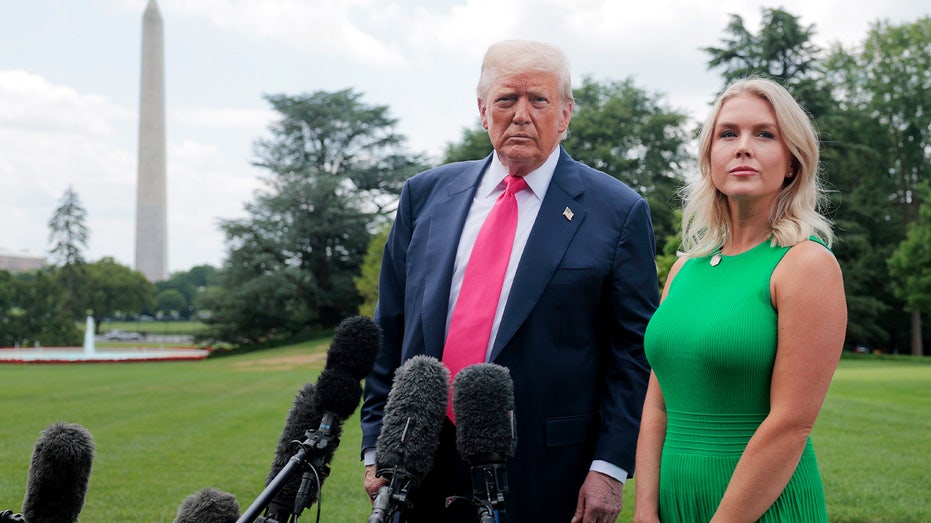
Arguments over Donald Trump’s health and work habits are not really about medicine; they are about legitimacy, power, and who gets to define presidential fitness. The leaked December schedule, showing a 79-year-old Trump averaging roughly 10-hour days with upward of 20–30 meetings and calls, is being used as political evidence as much as workplace documentation. To understand why this matters, you have to look beyond the calendar entries and into the deeper history of how presidents’ bodies are weaponized, protected, and spun.
The bigger picture: Presidential health as a political battlefield
The United States has a long tradition of obscuring, managing, or exploiting presidential health stories:
- Woodrow Wilson suffered a major stroke in 1919; his wife and inner circle effectively ran a shadow regency while the country was kept largely in the dark.
- Franklin D. Roosevelt campaigned and governed with severe heart disease; the extent of his condition was hidden until his death in office.
- John F. Kennedy presented a glowing image of youthful vigor while privately fighting Addison’s disease and chronic pain, masked by heavy medication.
- Ronald Reagan became the focal point of modern age anxiety; questions about his cognitive state, particularly in his second term, never fully faded and were later reframed through the lens of Alzheimer’s.
In every case, health wasn’t just a medical issue—it was a constitutional one. Yet transparency lagged far behind the stakes. What’s new in the Trump–Biden era is that health has shifted from a hushed concern to an explicit partisan weapon.
The current story about Trump’s packed December schedule sits directly in that trajectory. It’s being circulated not merely to inform the public, but to rebut a narrative—the idea that Trump, at 79, is slowing down or physically unfit—and to highlight perceived media double standards, particularly compared with coverage of Joe Biden’s cognitive fitness.
Why a daily schedule became political ammo
The internal schedule obtained by Fox shows:
- On average, about 10 hours per day of scheduled activity over 12 days.
- Roughly 21 separate meetings, calls or events daily, with some days exceeding 30.
- A longest day stretching more than 13 hours, ending near 11 p.m. after travel and a policy speech.
- Frequent engagements on foreign policy and business: 11 meetings or calls with the secretary of state, eight head-of-state interactions, and at least one CEO or business-focused engagement on 10 of the 12 days.
On its face, this is a standard political communications move: use the raw material of governance—schedules, logs, call sheets—to craft a counter-narrative. The implied argument is simple: a man running 10–13 hour days, stacking dozens of calls and meetings, cannot credibly be dismissed as frail.
But there are deeper layers:
- Performance of vigor. In modern politics, stamina itself is part of the product. Trump’s long-cultivated image as tireless—late-night calls, rallies that stretch for hours—is being reinforced here with documentary proof.
- Media trust and grievance. The story explicitly contrasts coverage of Trump’s health with the press’s handling of Biden’s, using the schedule as a visual rebuttal to what conservatives frame as a long-standing double standard.
- Institutional reassurance. For markets, allies, and bureaucracies jittery about presidential instability, the message is: there is a functioning, engaged executive at the center of government.
What the schedule does—and doesn’t—prove
Specialists in aging and occupational health consistently warn that hours worked are a poor proxy for fitness. A packed calendar can mean many things: high energy, yes, but also over-scheduling, delegation gaps, or political theater.
There are three important caveats:
- Schedules are curated documents. Internal calendars often serve political and bureaucratic purposes. They tend to omit unscripted downtime and are shaped by staff who understand that these records may later be scrutinized, leaked, or subpoenaed.
- Quantity ≠ quality. Thirty short meetings could signal effective time management—or a fragmented decision-making environment where little is resolved deeply. Without minutes or outcomes, density alone tells us little about cognitive sharpness or judgment.
- Health is multidimensional. Cardiac metrics, neurological health, emotional stability, and sleep quality are not captured by a sequence of time blocks. A president can be physically resilient and still cognitively impaired, or vice versa.
The administration leans heavily on recent clinical data: an MRI that was described as routine and normal, and an earlier checkup stating Trump remains in “excellent health.” These are not insignificant. But here, too, context matters: presidential medical reports are political documents as much as clinical ones. Historically, White House doctors work under intense pressure to reassure.
The double standard fight: Trump, Biden, and selective scrutiny
The deeper conflict in this story isn’t just about Trump’s veins or Biden’s memory lapses; it’s about who the media chooses to scrutinize, and when.
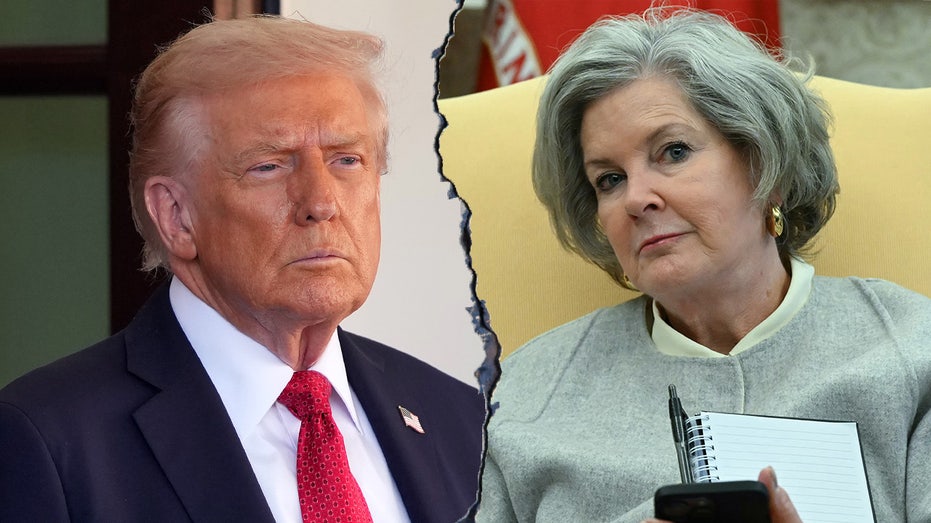
Conservatives spent years highlighting Biden’s verbal stumbles, gait, and apparent confusion, often using clipped video as evidence. Much of the mainstream press initially treated those concerns with caution, framing them as partisan attacks rather than news leads—until a formal proceeding forced the issue. When Special Counsel Robert Hur, in declining to charge Biden over classified documents, described him as “a sympathetic, well-meaning, elderly man with a poor memory,” the question of cognitive decline moved from cable-panel speculation into an official legal document. Coverage changed overnight.
Trump’s allies now point to that shift to argue that the newsroom standard wasn’t “we don’t report on health speculation,” but rather “we don’t report on health speculation until it threatens to damage a Democrat.” The current emphasis on Trump’s MRI, swollen legs, or bruising is framed as proof of this asymmetry.
From a media-ethics standpoint, two things can be true at once:
- The press was too slow and careful in systematically investigating Biden’s health.
- The press can still be entirely justified in pressing for transparency on Trump’s health now.
Health transparency isn’t a finite resource; it should apply to everyone who holds the office, not just the opponent of the moment.
Age, democracy, and the presidency as an endurance test
Trump entered his second term at 78, making him the oldest president ever inaugurated. The country has now normalized a political class in which septuagenarians and octogenarians routinely occupy its most demanding roles. This raises structural questions that are barely being discussed amid the partisan sniping.
Demographically, the U.S. is aging, but not as fast as its political leadership. The median age of Americans is about 39. The median age in Congress has hovered in the late 50s and early 60s in recent sessions, while the last two presidents have been deep into their 70s. That mismatch is not simply cosmetic; it shapes risk profiles, policy preferences, and crisis management.
Most major corporations introduce some form of succession planning, health disclosure requirements for top executives, and boards empowered to act swiftly if a CEO becomes incapacitated. The presidency, by contrast, relies on a combination of:
- Periodic checkups summarized in carefully worded letters
- Informal staff guardrails
- The blunt tool of the 25th Amendment, which has never been fully tested in a modern partisan environment
Instead of debating whether Trump’s 13-hour workday proves vitality, political institutions could be debating whether a nation of 330 million people should have clearer, independent mechanisms to assess and respond to presidential incapacity, regardless of who sits behind the Resolute Desk.
What experts see beneath the optics
Geriatricians, political scientists, and media scholars tend to converge on a few key points:
- Functional capacity matters more than chronological age. An active 79-year-old with strong cognitive scores may be more fit for duty than a 65-year-old with early dementia. Public discussion, however, often collapses everything into age alone.
- Transparency should be structured, not ad hoc. Reliance on occasional MRIs or physician letters released under political pressure creates incentives for spin, not clarity.
- Media coverage is reactive and personality-driven. Health scrutiny tends to spike after visible incidents (a stumble, a slurred line, a special counsel report) rather than as part of a systematic accountability framework.
From that vantage point, the focus on Trump’s December schedule is understandable but incomplete. It gives the public one slice of reality—how often the president is on the clock—without answering the more consequential questions: How are decisions being made? Are staff compensating for any limitations? Is there a tested contingency plan if health suddenly deteriorates?
Looking ahead: The stakes of the health narrative
There are several ways this story could shape the political and institutional landscape:
- Escalating health arms race. If each side uses schedules, footage, and medical summaries to prove their candidate’s vigor and discredit the other’s, health will become an even more central—yet distorted—part of electoral politics.
- Pressure for standardized reporting. The recurring controversy over late-life presidents may eventually push Congress or bipartisan commissions to propose regular, independent cognitive and physical testing, with public summaries similar to central bank transparency norms.
- Public fatigue and cynicism. Voters may increasingly tune out dueling health narratives, assuming that all medical information is spin, further eroding trust even when real red flags emerge.
- Global perception risks. Allies and adversaries watch these debates closely. Persistent speculation about a president’s stamina can affect deterrence, negotiating leverage, and markets—even when the underlying medical reality is benign.
What’s being missed in mainstream coverage
The most overlooked part of this story is not whether Trump’s workday is longer than advertised, or whether Biden was under-scrutinized. It’s that the country still has no depoliticized, robust framework for managing the health of increasingly elderly presidents.
Instead, the system defaults to:
- Partisan surrogates and press secretaries interpreting medical reports
- Newsrooms deciding, case by case, how aggressively to pursue health leads
- Voters trying to infer functional capacity from rally clips, debate performances, and leaked schedules
Trump’s December calendar shows a president who is, at minimum, publicly and intensively engaged in the work of the office. It does not resolve the larger democratic question: Should a 10–13 hour day be the test of presidential fitness—or is that a symptom of a job that has become almost inhumanly demanding, particularly for leaders approaching 80?
The bottom line
The leaked schedule is less a window into Donald Trump’s veins and neural pathways than a mirror reflecting America’s unresolved anxieties about age, power, and trust. It confirms that the president is working long, dense days focused on foreign policy and business. It does not answer the deeper constitutional questions about how a modern democracy should evaluate and manage the health of an aging commander-in-chief. Until those questions are confronted directly, each new MRI, calendar leak, or viral clip will be pressed into service as political evidence, and the public will be left to guess where the medical reality ends and the narrative begins.
Topics
Editor's Comments
What stands out in this episode is how little of the debate is actually about medicine and how much is about narrative control. Trump’s allies are using the December schedule as a visual rebuttal to the idea that he is physically diminished; critics counter with images and incidents that suggest vulnerability. But both sides are operating within a system that has never seriously grappled with what it means to have increasingly elderly presidents in a 24/7, crisis-driven office. It is easier, politically and journalistically, to argue about double standards and rally clips than to confront structural questions: Should there be an upper age limit for the presidency? Should independent cognitive testing be mandatory? How should the 25th Amendment be operationalized in a hyper-partisan environment? Until those issues move from op-ed pages into policy discussions, each new leak or medical report will be consumed as partisan ammunition, not as impetus for reform. The public deserves more than a choice between dueling narratives of vigor and decline; it deserves institutions that acknowledge and manage the real risks of governing through late old age.
Like this article? Share it with your friends!
If you find this article interesting, feel free to share it with your friends!
Thank you for your support! Sharing is the greatest encouragement for us.