Beyond Headlines: How Katy Perry and Justin Trudeau’s Japan Meeting Signals a New Era of Informal Diplomacy

Sarah Johnson
December 5, 2025
Brief
An in-depth analysis of Katy Perry and Justin Trudeau's diplomatic lunch with former Japanese PM reveals evolving informal diplomacy, cultural influence, and future implications for Canada-Japan relations.
Why Katy Perry's Diplomatic Lunch with Justin Trudeau and Former Japanese PM Matters Beyond Celebrity News
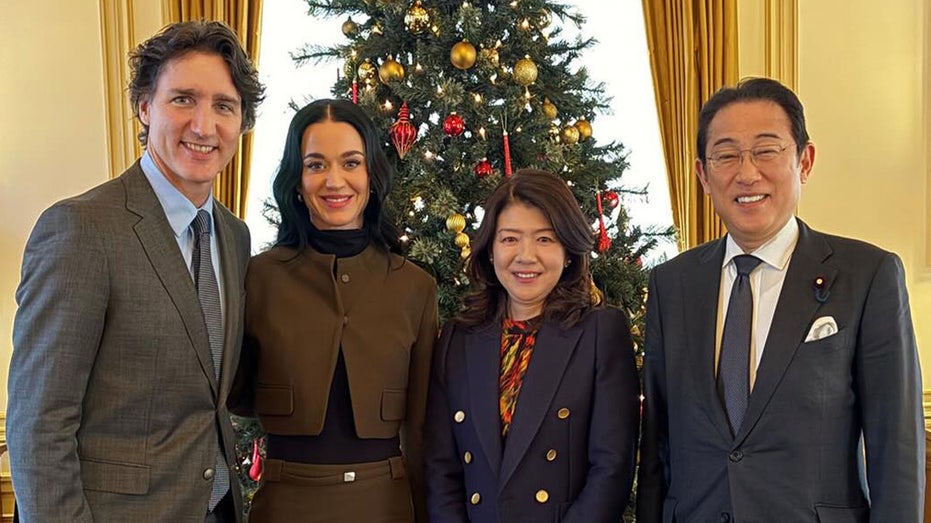
At first glance, the recent lunch meeting in Japan involving pop superstar Katy Perry, former Canadian Prime Minister Justin Trudeau, and former Japanese Prime Minister Fumio Kishida might read like a celebrity gossip story—highlighting romance and style more than substance. Yet, beneath the glossy surface lies a convergence of soft diplomacy, post-political influence, and evolving Canada-Japan bilateral relations with wider implications for global diplomacy and cultural exchange.
The Bigger Picture: Context of Canada-Japan Relations and Post-Political Influence
Canada and Japan have cultivated a strong partnership spanning trade, security cooperation, and cultural exchange for decades. During Kishida’s premiership (2021-2024), these ties were actively reinforced through initiatives like the Nikka Action Plan, which aimed to deepen collaboration across economic and security sectors amid rising geopolitical challenges in the Indo-Pacific region.
Justin Trudeau, now a former PM, was integral to this diplomatic momentum. His visit to Japan after leaving office underscores how former leaders continue to wield soft power outside formal political office—acting as informal ambassadors and leveraging personal relationships to sustain alliances.
The presence of Katy Perry, a globally recognized cultural figure, adds an unexpected but significant layer. Celebrity involvement in diplomatic contexts is an increasingly common practice—leveraging public influence to humanize international relations and broaden appeal beyond traditional political and business audiences.
What This Really Means: The Power of Informal Diplomacy and Celebrity Influence
This lunch meeting symbolizes a shifting paradigm in how diplomacy is conducted post-office and underscores the role of cultural diplomacy. Trudeau’s continued engagement in Japan demonstrates leaders’ ability to influence international affairs beyond their official tenure. The friendship between Trudeau and Kishida signifies personal rapport as a foundation for sustained cooperation.
Katy Perry’s role, albeit less formal, exemplifies how pop culture transcends borders and serves as an unconventional diplomatic asset enriching bilateral narratives—potentially facilitating dialogue, goodwill, and cultural understanding.
This moment also reflects the blurring lines between public and private spheres for modern world leaders who maintain global relevance through media visibility—even while focusing on softer influences rather than hard policy.
Expert Perspectives
Dr. Samantha Reynolds, professor of International Relations: "We are witnessing a growing trend where retired politicians employ informal diplomacy—through personal networks and cultural icons—to maintain influence and support national interests. This underscores a broader evolution in diplomacy where traditional statecraft is complemented by people-to-people and celebrity engagements."
Michael Tanaka, former Japanese diplomat: "Canada and Japan’s relationship thrives on both official policy coordination and mutual cultural outreach. Events like this lunch reinforce that diplomacy extends beyond summits—it permeates daily interactions, and even artistic and personal connections contribute to national diplomacy."
Data & Evidence: The Rise of Cultural Diplomacy and Soft Power
According to the 2024 Soft Power Index by the Institute for Government, global cultural icons contribute significantly to a nation’s soft power scores—sometimes rivaling traditional diplomatic efforts. Canada and Japan consistently rank highly due to their cultural exports and innovation.
Moreover, a 2023 survey from the Pew Research Center highlighted that 68% of Japanese respondents view cultural ties with Canada positively, while 72% of Canadians see Japan similarly—indicating strong public goodwill that can be capitalized on for deeper diplomatic collaboration.
Looking Ahead: Implications for Global Diplomacy and Future Engagements
With geopolitics increasingly complex, informal diplomacy leveraging former leaders and celebrities could become a staple in maintaining alliances and addressing global challenges such as climate change, security, and cultural preservation.
We can anticipate more instances where cross-sector collaborations—between politicians, artists, and civil society—shape diplomatic agendas in subtle yet impactful ways. This lunch meeting may presage new models of engagement that prioritize authenticity, personal relationships, and public diplomacy in tandem.
The Bottom Line
Far from being mere celebrity spectacle, the Perry-Trudeau-Kishida lunch embodies the power of soft diplomacy in today’s interconnected world. It highlights how personalities outside formal political offices contribute to sustaining international relationships, advances cultural diplomacy, and represents a nuanced chapter in the ongoing Canada-Japan partnership of the 21st century.
Topics
Editor's Comments
This seemingly lighthearted meeting carries significant implications for how diplomacy evolves in the 21st century. The intersection of celebrity culture with former political leadership highlights a nuanced shift where soft power and personal influence play an outsized role in international relations. It raises important questions about the sustainability of informal diplomatic channels versus traditional state structures, especially as global challenges demand both flexibility and continuity. This story invites us to reconsider the boundaries of diplomacy — extending beyond stately conferences to include cultural narratives and individual agency. Understanding these dynamics is key to grasping future geopolitical alignments.
Like this article? Share it with your friends!
If you find this article interesting, feel free to share it with your friends!
Thank you for your support! Sharing is the greatest encouragement for us.