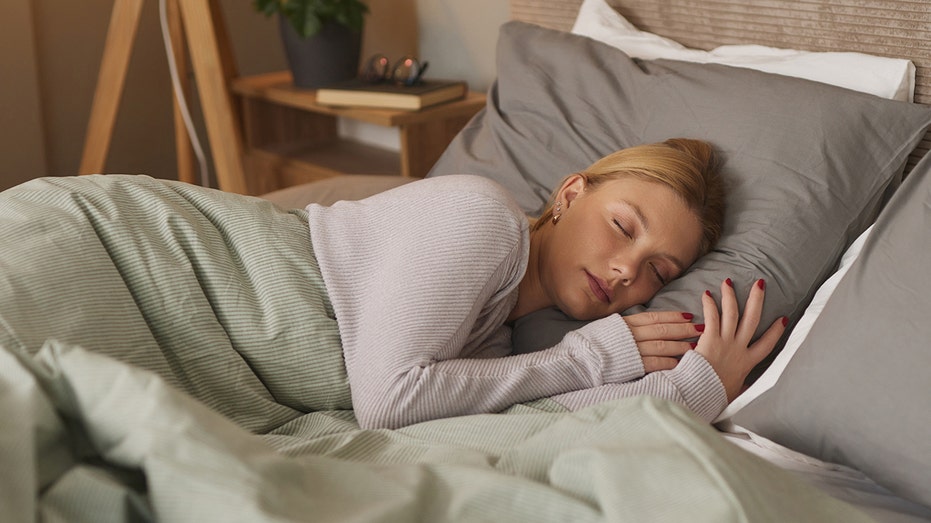

Insufficient Sleep Now Rivals Smoking. That Should Rewrite Our Public Health Playbook.

Sarah Johnson
December 12, 2025
Brief
A new nationwide study finds insufficient sleep rivals smoking as a predictor of early death. This analysis explores the structural, economic, and policy implications of treating sleep as a social determinant of health.
Insufficient Sleep Now Rivals Smoking as a Life-Shortening Risk. That Changes the Health Debate.
When a new nationwide analysis finds that sleeping less than seven hours a night is one of the strongest predictors of shorter life expectancy in the United States — second only to smoking — it’s not just another wellness headline. It’s a quiet revolution in how we should be thinking about public health, work, and inequality.
This study, led by Andrew McHill at Oregon Health & Science University and published in SLEEP Advances, did something deceptively simple but powerful: it mapped self-reported sleep duration against life expectancy across more than 3,000 U.S. counties between 2019 and 2025, while controlling for heavy hitters like smoking, diet, inactivity, and loneliness. The signal that emerged was blunt: communities that sleep less, die earlier.
That finding pushes sleep out of the realm of “nice-to-have self-care” and into the same policy arena as tobacco control. And it raises a harder question: if sleep is this powerful, why does U.S. society still treat it as optional?
The Bigger Picture: How Sleep Became the Missing Third of Public Health
For decades, the public health playbook has revolved around three pillars: don’t smoke, move more, eat better. Sleep was the neglected sibling. Researchers have long known that chronic sleep deprivation is linked to obesity, diabetes, cardiovascular disease, depression, and impaired immune function, but those findings stayed mostly in specialist journals and academic conferences.
Historically, sleep was framed as a personal failing, not a structural or environmental issue. The turning point came in the 2000s and 2010s with several large cohort studies:
- The Nurses’ Health Study and Whitehall II Study linked short sleep (<6 hours) to increased risks of coronary heart disease and stroke.
- Meta-analyses in journals like European Heart Journal and SLEEP showed a U-shaped curve: both very short and very long sleep durations associated with higher mortality.
- Work time trends revealed that average sleep duration in the U.S. has been declining for decades, especially among lower-income workers and those in shift-based jobs.
Yet most of that work used individual-level datasets and often focused on specific populations. What this new county-level analysis adds is geographic and social dimension: sleep isn’t just something individuals do or don’t do. It’s shaped by where you live, what job you have, how safe your neighborhood is, and whether you can afford childcare, healthcare, and housing.
Seeing sleep deprivation cluster in counties with lower life expectancy hints at a broader truth: sleep is not merely a behavior — it’s a barometer of social stress, economic precarity, and policy failure.
What This Really Means: Sleep as a Social Determinant of Health
By controlling for traditional mortality predictors such as smoking, diet, inactivity, and loneliness, the researchers tried to isolate the impact of sleep. The fact that insufficient sleep still emerged as a top predictor of shortened lifespan suggests three deeper implications that basic news coverage tends to overlook:
- Sleep is entangled with inequality. Counties with chronically insufficient sleep are likely to be places where people work multiple jobs, commute long distances, live in noisy or unsafe neighborhoods, or manage unstable schedules. These are classic conditions of economic and racial inequality. The sleep gap is increasingly an inequality gap.
- Sleep reflects cumulative stress load. Sleep disruption is one of the earliest and most sensitive markers of chronic stress and mental health strain. County-level sleep data may function as a real-world “stress index,” capturing everything from job insecurity to climate-related disruptions (like heat waves that make nights unbearably hot).
- Longer life expectancy may require structural sleep reforms, not just individual advice. If sleep deprivation rivals smoking as a driver of premature death, relying on individual willpower and sleep hygiene tips will be as inadequate as telling smokers to just “try harder” without regulating tobacco.
This reframing has profound policy implications. If sleep is truly a core pillar of longevity, then work-hour limits, shift scheduling laws, urban noise regulation, housing quality, and even lighting and transportation policies become part of the sleep — and thus life expectancy — conversation.
Expert Perspectives: From Chronobiology to Labor Policy
Sleep scientists have been warning about this for years. McHill’s own surprise at the strength of the correlation speaks less to the field’s ignorance than to how starkly the data now align with long-standing warnings.
Renowned sleep researcher Dr. Matthew Walker has previously described sleep as the “Swiss Army knife of health,” noting that virtually every major physiological system — immune, cardiovascular, metabolic, cognitive — is degraded by chronic sleep loss. His work has pointed to increased risks of Alzheimer’s disease, cancer progression, and metabolic dysregulation in chronically sleep-deprived populations.
Chronobiologist Dr. Till Roenneberg has added another layer: the mismatch between biological clocks and social clocks. His research on “social jetlag” — the chronic misalignment between our natural circadian rhythms and imposed work/school schedules — is particularly relevant at the county level. Communities with high rates of early-shift, rotating, or night-shift work are likely to be stuck in perpetual social jetlag, amplifying the very risks this study correlates with shorter life expectancy.
From a labor and economic perspective, experts in occupational health point out that sleep deprivation is often baked into business models. Just-in-time logistics, 24/7 service economies, and app-based gig work routinely push people into irregular hours. When employers externalize the health costs of these schedules, counties pick up the tab in the form of higher healthcare use, lower productivity, and reduced lifespan.
Data & Evidence: How Big Is the Sleep Problem?
While the new paper focuses on county-level correlations, we can situate it within broader national patterns:
- CDC data have consistently shown that roughly one-third of U.S. adults report getting less than the recommended seven hours of sleep per night.
- Short sleep is more common among people with lower income, racial and ethnic minorities, shift workers, and those with multiple jobs.
- Studies estimate that insufficient sleep costs the U.S. economy hundreds of billions of dollars annually in lost productivity, accidents, and health care expenditures.
- Even modest sleep deficits matter. Experimental data show that restricting sleep to 6 hours per night for one to two weeks impairs cognitive performance as much as going without sleep for 24 hours — but people often don’t perceive how impaired they are.
The new study’s methodological limitations are real: self-reported sleep can be inaccurate, and correlation can’t prove causation. But the consistency of the pattern across states, years, and diverse communities gives the signal credibility. When converging evidence from experimental, clinical, and epidemiological work points in the same direction, the burden of proof starts to shift: the question becomes less whether insufficient sleep is dangerous, and more how much risk policymakers are willing to tolerate.
What’s Being Overlooked: Beyond Hours to Quality, Regularity, and Power
The study itself notes that sleep duration is only one dimension of sleep health. What’s missing from both the research and most coverage are three critical angles:
- Sleep quality and fragmentation. People may report 7 hours in bed, but frequent awakenings from pain, anxiety, apnea, or environmental noise can drastically reduce restorative sleep. Counties with high rates of untreated sleep apnea, chronic pain, or trauma exposure may show risks that go beyond simple duration.
- Regularity and timing. Irregular bedtimes, rotating shifts, and night work disrupt circadian rhythms, which regulate hormone release, metabolism, and immune function. Two people sleeping 7 hours each might have very different risk profiles depending on when and how consistently they sleep.
- Power and agency over time. Many people aren’t choosing to sleep less — they’re forced to, by irregular shifts, caregiving responsibilities, or economic necessity. Framing sleep purely as an individual choice obscures the power dynamics that allocate time and rest in modern economies.
This is where sleep research intersects with debates about paid family leave, minimum wage, shift notice laws, and unionization. The counties with the worst sleep may also be those with the weakest worker protections and safety nets.
Looking Ahead: Will Sleep Become the Next Tobacco Battle?
If insufficient sleep is now in the same risk neighborhood as smoking, we’re at an inflection point. History suggests that it takes decades for science on a major health risk to translate into serious policy change:
- Tobacco: robust evidence of smoking’s harms emerged in the 1950s and 1960s, but comprehensive policy responses (taxes, bans, marketing restrictions) took decades.
- Seat belts and traffic safety: it took a mix of regulation, infrastructure redesign, and culture change to normalize behaviors that are now taken for granted.
Sleep policy is where tobacco control was in its early days: we have strong evidence but weak political will. Possible next steps include:
- Public health campaigns that treat sleep as a co-equal pillar with diet and exercise.
- Labor reforms limiting extreme overtime, requiring advance notice of shifts, and addressing hazardous rotating schedules in sectors like healthcare, logistics, and manufacturing.
- Urban policy aimed at reducing night-time noise, light pollution, and extreme-heat exposure that can disrupt sleep.
- Healthcare integration, where clinicians routinely assess sleep duration and quality as vital signs, especially in high-risk populations.
There’s also a technological dimension on the horizon. As wearable devices, smartphones, and home sensors increasingly track sleep, policymakers could, in theory, gain more precise, real-time insights into community sleep health. That raises new questions about privacy, consent, and the risk of surveillance or discrimination based on sleep data.
The Bottom Line
This county-level analysis doesn’t just confirm that sleep matters; it reveals how deeply sleep is woven into the health of communities. In practical terms, it suggests that:
- Sleep health should be treated as a core policy issue, not merely a personal lifestyle choice.
- Addressing sleep deprivation will require structural changes in work, housing, and urban environments.
- Life expectancy gaps between U.S. counties may be as much about time — who has enough protected time to sleep — as about traditional risk factors.
If we take the findings seriously, the question isn’t whether individuals should aim for seven to nine hours of sleep. It’s whether our economy and institutions are willing to be redesigned so that they can.
Topics
Editor's Comments
One of the most unsettling aspects of this study is how quietly it reframes the national conversation on life expectancy. For years, we’ve explained U.S. mortality gaps in terms of classic risk factors or healthcare access, while sleep sat in the background as a lifestyle detail. But if insufficient sleep rivals smoking as a predictor of early death at the county level, we’re forced to confront a more uncomfortable reality: the way we structure work, time, and economic survival is fundamentally incompatible with biological health for millions of people. That makes this less a story about better bedtime routines and more about political priorities. Just as tobacco control eventually required major confrontations with powerful industries, tackling the sleep crisis will mean challenging business models built on 24/7 availability, lean staffing, and precarious scheduling. The open question is whether policymakers will treat these findings as a warning signal or simply fold them into another round of individual-focused health advice.
Like this article? Share it with your friends!
If you find this article interesting, feel free to share it with your friends!
Thank you for your support! Sharing is the greatest encouragement for us.