Why Creative Hobbies May Be the Most Underused Tool in Brain Health
Sarah Johnson
December 12, 2025
Brief
A major brain-aging study suggests creative hobbies function more like preventive medicine than leisure. This analysis unpacks mechanisms, inequality, brain-clock tech, and what it means for policy and aging societies.
Creative Hobbies and the ‘Younger Brain’: Why This Study Is Much Bigger Than Lifestyle Clickbait
A new international study linking creative hobbies to a “younger” biological brain will inevitably be framed as feel-good lifestyle news: play more music, paint more, your brain will thank you. But behind the headlines is something more consequential — a potential shift in how we think about aging, public health, and even education policy.
What this research really suggests is that creativity may be moving from “nice to have” to “essential infrastructure” for brain health, on par with exercise and diet. And if that’s true, it raises uncomfortable questions about access, inequality, and how seriously governments are willing to invest in non-pharmaceutical tools to combat dementia and cognitive decline.
From Lifestyle Tip to Public Health Tool
The study, conducted across 13 countries with more than 1,400 adults, used EEG and MEG scans and machine-learning “brain clocks” to estimate biological brain age. People who regularly practiced creative activities — tango dancing, music, visual art, and strategy-based video games — showed brain patterns that looked younger than their chronological age. Importantly, even beginners who trained in the strategy game StarCraft II for roughly 30 hours saw measurable improvements.
On the surface, the message is simple: creative engagement appears to strengthen neural networks involved in attention, coordination, movement, and problem-solving — systems that typically degrade with age. But the deeper story is about timing and context.
We’re entering a demographic era in which aging populations and dementia risk are among the most expensive and destabilizing forces facing health systems. Against that backdrop, anything that plausibly delays cognitive decline — especially low-cost, scalable, non-drug interventions — becomes strategically important, not just personally desirable.
How We Got Here: The Long Road to “Use It or Lose It” 2.0
For decades, the dominant narrative about brain health in older age was fatalistic: neurons die, cognitive function slips, little can be done. That began to change with research on “cognitive reserve” in the 1980s and 1990s, particularly studies of older adults who remained mentally sharp despite significant Alzheimer’s pathology in their brains. Something — education, mentally demanding jobs, intellectually rich environments — seemed to buffer them against symptoms.
Later, large epidemiological studies and randomized trials highlighted the benefits of physical activity, Mediterranean-style diets, social engagement, and lifelong learning. Projects like the FINGER trial in Finland suggested that multidomain interventions could slow cognitive decline in at-risk older adults.
Creative activity was often mentioned, but mostly as an aside or under the broad umbrella of “cognitive stimulation.” This new work is part of a more focused wave of research treating creativity itself as a specific, measurable, and potentially potent determinant of brain aging — not just a proxy for being educated, wealthy, or socially connected.
What’s Actually New Here?
Several aspects of this study push the conversation forward:
- Multiple creative domains, one converging signal: Tango, music, visual art, and strategy gaming are very different activities, yet all were associated with more youth-like brain patterns. That hints at shared mechanisms — perhaps the blend of motor coordination, complex decision-making, and emotional engagement.
- Beginners benefit quickly: Seeing measurable brain-age changes after just ~30 hours of training is crucial. It suggests that interventions don’t have to start in childhood or require years of elite practice to matter.
- Brain clocks as a monitoring tool: Using machine-learning models to estimate brain age opens the door to testing interventions far faster than waiting years to see who develops dementia. Brain clocks are far from perfect, but they’re a step toward a more responsive, feedback-driven approach to brain health.
Still, there’s a gap between “younger-looking” brains and real-world outcomes. This study doesn’t prove that creativity prevents dementia or preserves daily functioning. It suggests we’re building the tools to answer that question more rigorously — and that creativity belongs near the front of the queue for testing.
Why Creativity Might Be So Potent for the Aging Brain
Creativity isn’t just about making art; it’s about integrating multiple systems at once. That’s what makes it neurologically demanding — and potentially protective.
Several mechanisms are likely at play:
- Multisensory integration and motor complexity: Dance, music, and art all depend on fine motor control, timing, and sensory feedback. This recruits widespread brain networks, particularly in the frontal and parietal lobes and cerebellum, which are vulnerable to aging.
- Executive function and problem-solving: Strategy-based video games and composition or visual design require planning, flexible thinking, and rapid decision-making — the same executive functions that tend to erode with age.
- Emotional engagement and reward: Creative activities typically trigger intrinsic motivation and pleasure. That matters, because sustained practice is far more likely when an activity is enjoyable, and dopamine-linked reward pathways themselves play a role in learning and plasticity.
- Social connectivity: Many creative practices — music ensembles, dance classes, art groups — build social ties. Social isolation is a well-established risk factor for cognitive decline.
The tricky part, and the limitation the authors acknowledge, is that these mechanisms are entangled. People who pursue creative hobbies often have higher education, more stable lives, and better access to resources — all independently protective for the brain. Untangling what’s “creativity itself” versus the ecosystem around it will require more controlled, long-term studies.
The Inequality Problem: Who Actually Gets Access to “Brain-Healthy” Creativity?
This is where the story moves from individual advice to systemic critique. If creative activity really is “comparable to exercise or diet,” as the study’s senior author suggests, then we’re forced to confront a reality we usually gloss over: access to creative opportunities is wildly unequal.
In many countries, arts education is the first line item cut from school budgets. Community arts centers and dance studios cluster in affluent neighborhoods. Older adults in low-income or rural areas often lack transport, safe venues, or money for classes and materials. Long-term care facilities frequently operate with minimal programming beyond television and basic activities.
That means the people most at risk of accelerated brain aging — those facing chronic stress, low income, low education, or limited healthcare — are often the least likely to access the very tools that could help them. If creativity is protective, its uneven distribution is not just a cultural loss; it’s a form of health inequity.
Expert Views: From Brain Science to Public Policy
Neuroscientists, geriatricians, and public health experts have been moving toward this conclusion for years, even before brain-age models became fashionable.
Dr. Yaakov Stern, a leading researcher on cognitive reserve at Columbia University, has long argued that “engagement in intellectually, socially, and physically stimulating activities” can delay the clinical manifestation of dementia, even if underlying pathology is present. Creative practice fits squarely into that category, aggregating all three domains.
Meanwhile, geriatric psychiatrist Dr. Helen Lavretsky at UCLA has highlighted in her work that structured creativity-based interventions — such as dance, music therapy, and arts programs — can improve mood, reduce stress, and enhance cognitive performance in older adults. She notes that these benefits often appear even in those already experiencing mild cognitive impairment.
Public health experts see an opportunity and a risk. The opportunity: scalable, low-cost programs that may reduce or delay expensive dementia care. The risk: policymakers grabbing onto a simplified message (“paint and you won’t get dementia”) while ignoring the deeper structural changes required to make creative engagement genuinely accessible across socioeconomic lines.
Brain Clocks: The Promise and the Hype
The use of EEG and MEG-based brain clocks is a key technical piece. These models estimate biological brain age by detecting patterns associated with typical aging. A younger brain age relative to chronological age is associated, in other studies, with better cognitive performance and lower risk of mortality and neurodegenerative disease.
But brain clocks are still an emerging tool with important caveats:
- Population bias: Models trained on relatively healthy, educated populations may not generalize well to diverse or disadvantaged groups.
- Mechanistic ambiguity: A younger-appearing brain is a useful marker, but it doesn’t tell us precisely why it looks younger — or which specific neural systems are most protected.
- Clinical translation: We don’t yet have clear thresholds where a brain-age gap reliably predicts who will or won’t develop dementia.
Still, using brain age as a near-term outcome lets researchers rapidly compare the effectiveness of different interventions — say, dance versus language learning versus digital games — without waiting a decade for clinical events to emerge. That could significantly speed up the design of evidence-based brain health programs.
What’s Being Overlooked: The Design of the Activities Themselves
Most coverage will treat “creative activity” as a black box. But from a policy and product-design perspective, the details matter. A few under-discussed questions:
- Intensity vs. sustainability: Is it better to do short, intense bursts (like the 30-hour game training) or lower-intensity practice over months or years?
- Solo vs. social: Do group-based art or dance classes confer more benefit than solo painting at home, due to added social interaction?
- Digital vs. physical: Strategy games show benefits — but do they match or differ from physically embodied activities like dance, which also recruit cardiovascular and balance systems?
- Challenge level: How critical is the “sweet spot” of difficulty — hard enough to stretch the brain, but not so hard that people quit?
The answers will shape everything from how cities design senior centers to how game developers build “serious games” for cognitive resilience — and whether those tools actually reach the people who need them most.
Looking Ahead: From Individual Hobbies to Collective Responsibility
The next wave of research will need to go beyond brain-age markers and cross-sectional snapshots. Critical steps include:
- Longitudinal tracking: Following participants over years to see whether creativity-linked brain-age differences translate into lower dementia incidence or slower cognitive decline.
- Broader creative domains: Adding writing, theater, crafts, traditional cultural arts, and community-based practices that may be more accessible or culturally relevant in different regions.
- Targeting at-risk groups: Testing whether structured creative programs can meaningfully benefit people with lower education, chronic health conditions, or limited prior exposure to the arts.
- Economic modeling: Quantifying how much healthcare spending could be saved by investing in creative programming at scale.
There’s also a political dimension: if governments accept that creativity is a determinant of brain health, cuts to arts education and community programs become harder to defend purely as budgetary choices; they become public health decisions, with long-term consequences.
The Bottom Line
This study doesn’t offer a magic shield against aging, and it doesn’t justify throwing out established pillars of brain health like exercise, sleep, and cardiovascular risk control. But it does meaningfully raise the status of creative activity from “nice enrichment” to “likely component of a serious brain-health strategy.”
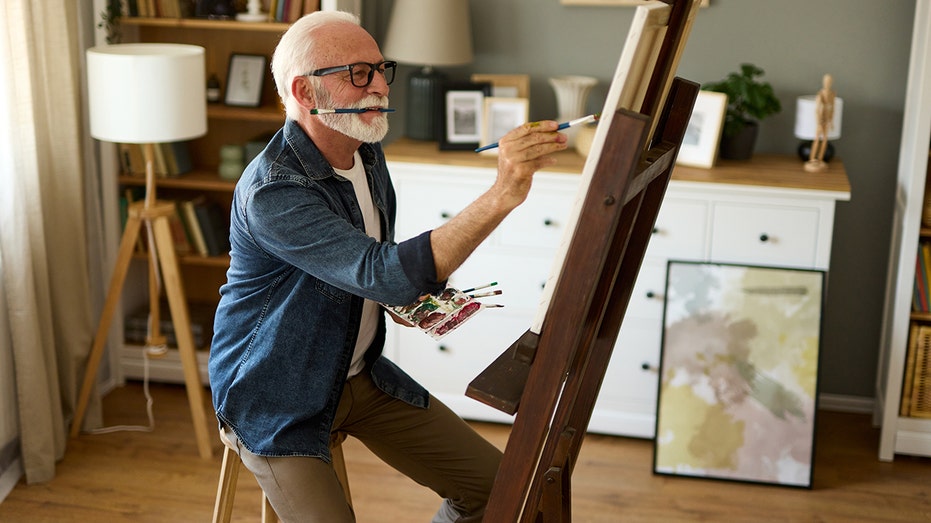
For individuals, the takeaway is practical and modest: choose creative activities you actually enjoy and can stick with — dance, music, art, strategy games, crafts — and treat them as part of your long-term health plan, not just leisure. For policymakers and institutions, the message is more challenging: if creativity protects the brain, then equitable access to it is no longer optional culture spending. It’s preventive medicine.
Topics
Editor's Comments
The most striking aspect of this study isn’t the claim that creative hobbies are good for the brain — that has been intuitively and anecdotally accepted for years. It’s the framing of creativity as a health determinant on par with diet and exercise. That framing, if widely adopted, is disruptive. It challenges budget priorities in education, urban planning, and eldercare, turning arts programming from discretionary spending into something closer to essential infrastructure. Yet there’s a real risk that this message will be absorbed only at the individual level — “pick up a hobby” — while structural barriers to creative engagement go unaddressed. The people most likely to benefit from creative interventions are often those with the least access to them. If we’re serious about brain health, the conversation has to move beyond advising individuals to dance or paint and toward reimagining public spaces, school curricula, and care facilities as environments where creative engagement is built in, not bolted on as an afterthought.
Like this article? Share it with your friends!
If you find this article interesting, feel free to share it with your friends!
Thank you for your support! Sharing is the greatest encouragement for us.