Has Gavin Newsom Really Killed the California Dream? What Brian Deegan’s Revolt Reveals

Sarah Johnson
December 12, 2025
Brief
Motocross star Brian Deegan’s attack on Gavin Newsom isn’t just celebrity noise. It exposes a deeper fight over California’s identity, crime, regulation, and the shrinking reach of the state’s famed dream.
California’s Fractured Dream: What Brian Deegan’s Attack on Newsom Reveals About a Much Deeper Political Realignment
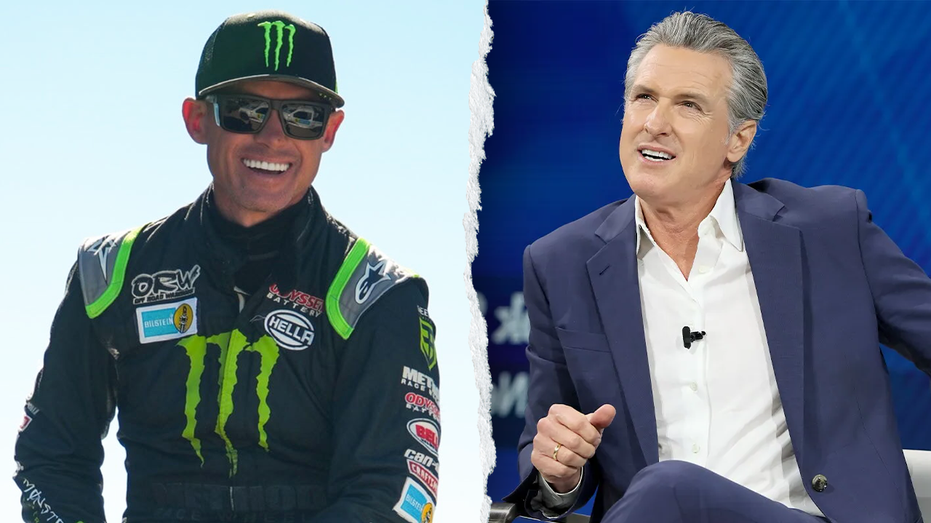
When an extreme sports icon like Brian Deegan publicly denounces California’s governor and backs a law-and-order Republican for the state’s top job, it’s tempting to treat it as just another celebrity soundbite. But underneath the exchange of barbs between Deegan and Gov. Gavin Newsom’s office lies something more consequential: a profound battle over who “owns” the California dream—and whether that dream is even still believable.
Deegan’s criticism—over crime, COVID lockdowns, overregulation, and a fading sense of opportunity—may not be new. What is new is the messenger: a motocross pioneer and action sports entrepreneur, a demographic that historically aligned more with California’s libertarian-flavored, entertainment-driven culture than with partisan crusades. His endorsement of Riverside County Sheriff Chad Bianco, a pro-Trump Republican, signals how cultural and economic frustration are converging in unexpected corners of California’s social fabric.
The California Dream: From Magnet to Cautionary Tale
The phrase “California dream” predates Newsom by generations. Post–World War II, it meant a house with a yard, good schools, and access to booming industries—from aerospace to Hollywood to Silicon Valley. By the 1970s and 1980s, California combined high growth, relatively affordable suburbs, and an ethos of new beginnings.
But several long-running trends have been eroding that image for decades:
- Housing costs: Since 1980, California home prices have steadily pulled away from the national average. By 2023, the median California home cost roughly 2.5 times the national median, according to the Federal Reserve Bank of St. Louis.
- Migration patterns: Once a net importer of Americans, California has experienced sustained net domestic outmigration for more than a decade. Between 2020 and 2023 alone, more than 800,000 residents left for other states, per U.S. Census estimates.
- Regulatory layering: Environmental, labor, and land-use rules have accumulated over decades under both Republican and Democratic governors, making it harder and costlier to build housing or operate certain businesses.
- Urban disorder: Visible homelessness surged, with roughly 28–30% of the nation’s homeless population living in California despite the state having about 12% of the U.S. population.
Newsom did not create these structural problems, but he inherited them—and, crucially, branded himself as the governor who would fix them while positioning California as a model for progressive governance. That makes him uniquely exposed to symbolic attacks like Deegan’s claim that the dream has “declined” under his watch.
Why Deegan’s Critique Hits a Nerve
Deegan’s comments echo a set of recurring grievances that have become almost a parallel narrative about California:
- Safety and enforcement: He describes feeling unsafe letting his kids “roam the streets” and blames “loose” law enforcement and criminals “getting away with almost everything.” This taps into public anxiety about retail theft, homelessness, and high-profile violent incidents—whether or not overall violent crime statistics match public perception in specific neighborhoods.
- Overregulation and business climate: As an entrepreneur who built an “empire” in action sports, Deegan represents the small-to-mid-sized business owner squeezed between high costs and complex compliance. For these operators, it’s not one law that hurts; it’s the cumulative friction—permits, zoning, insurance, environmental rules, labor mandates, and tax exposure.
- COVID and hypocrisy: His reference to strict lockdowns while Newsom “was out partying” is a pointed nod to the 2020 French Laundry scandal, when the governor attended a high-end dinner in violation of his own administration’s guidance. That incident became a cultural touchstone symbolizing perceived elitism and double standards.
- Representation gap: Deegan’s line—“How do they even get in power? They don't really represent the common people”—addresses a broader crisis of political legitimacy. Many Californians believe the political class is insulated from the consequences of its own policies.
What makes this more than partisan theater is that these themes resonate far beyond conservative media. Poll after poll shows Californians consistently ranking homelessness, affordability, and crime at the top of their concerns. Even voters who largely agree with Newsom on issues like climate or LGBTQ+ rights often feel uneasy about governance performance on basics: safety, cost of living, and visible order.
Crime, Perception, and the Law-and-Order Turn
Deegan’s endorsement of Chad Bianco, a sheriff with a tough-on-crime reputation, is part of a larger recalibration. Over the last decade, California pursued a series of criminal justice reforms—Propositions 47 and 57, changes in parole, and local prosecutorial shifts—aimed at reducing mass incarceration and addressing racial disparities.
Those reforms coincided with:
- A rise in property crime in some urban cores, especially visible forms like shoplifting and car break-ins.
- High-profile cases involving offenders with extensive records or immigration violations, including those that critics tie to “sanctuary” policies, like the one referenced in the article.
- Social media amplification of dramatic incidents, which magnifies the perception of chaos even when aggregate data are mixed or localized.
This has produced a backlash, even among some moderates who once supported reforms. Figures like Bianco capitalize on this mood by framing the issue as a return to “common sense”: enforce existing laws, increase accountability, and roll back what critics see as overcorrections in criminal justice policy.
The political significance: if a law-and-order message can win over entrepreneurs and lifestyle influencers in historically blue or culturally liberal circles, it threatens the narrative that California’s creative and entertainment classes are a monolithic progressive bloc.
COVID Lockdowns as a Political Turning Point
Deegan’s remark that California “led the charge on the most extreme lockdowns” is only partly about pandemic health policy. It’s equally about culture and trust. During COVID, California:
- Kept schools closed longer than many other states.
- Imposed extended limits on indoor dining, gyms, and entertainment venues.
- Rolled out dense, sometimes shifting rule sets that small business owners struggled to interpret and implement.
For families and entrepreneurs, these rules weren’t abstractions; they restructured daily life and revenue streams overnight. While some public-health experts defend these measures as lifesaving in a dense, diverse state, others note that the economic and educational costs were heavy—and unevenly distributed. Children of low-income families, small business owners without large capital reserves, and independent performers were hit hardest.
The French Laundry episode didn’t just tarnish Newsom personally. It crystallized a broader suspicion: that restrictions were for “ordinary people,” while elites lived by different rules. Once that narrative settles, it’s exceedingly difficult to shake, regardless of subsequent policy outcomes.
Newsom’s National Ambitions and the Narrative War
It’s no accident that Deegan frames Newsom’s rumored 2028 presidential ambitions as an opportunity for Republicans. Nationally, Democrats promote California as a climate leader, a defender of abortion rights, and an innovation engine. Republicans counter with images of encampments, shuttered storefronts, and high taxes.
Deegan’s story—coming to California to “chase my dreams,” then feeling compelled to look elsewhere—fits neatly into that Republican narrative. For Democrats, the challenge is that while many Californians are thriving in tech, entertainment, and high-end services, the sense of economic and social fragility is widespread.
Newsom’s spokesperson’s one-word dismissal—“Who?”—may play well with partisan loyalists, but it underestimates the risk. Mocking critics, especially those with genuine small-business and cultural credibility, can deepen the very perception gap that Deegan describes: a political class that doesn’t listen and doesn’t care.
What’s Being Overlooked in the Coverage
Most coverage frames this story as yet another culture-war skirmish: conservative-leaning celebrity attacks blue-state governor; governor’s office mocks celebrity. That misses several deeper dynamics:
- The intra-California class divide: The California dream hasn’t vanished; it has bifurcated. For coastal professionals with stock options, the state remains a powerhouse. For mid-tier entrepreneurs—like action sports brands, mechanics, shop owners—margins are thin and the regulatory burden feels oppressive.
- The suburbanization of discontent: Deegan talks about “neighborhoods” and letting kids roam. This is not a downtown-loft conversation; it’s a suburban and exurban one. That’s where statewide elections are often decided.
- Demographic complexity: Some of the communities most affected by crime and high living costs are Latino and Asian suburbs that don’t map neatly onto national partisan stereotypes. Their frustrations may align with aspects of Deegan’s critique even if their voting patterns remain mixed.
- The business flight feedback loop: As more visible entrepreneurs and brands decamp to states like Texas, Nevada, or Florida, it reinforces a narrative of exodus—even if many still stay and succeed. Narrative, in turn, affects investment decisions.
Expert Perspectives
Economists, criminologists, and political scientists offer a more nuanced view than either side’s talking points.
On the economy: California’s GDP topped $3.9 trillion in 2023, making it one of the world’s largest economies. Productivity and innovation remain high. But as UCLA economist Jerry Nickelsburg has argued, the state now functions as a “dual economy” where high-wage sectors flourish while middle- and low-wage workers struggle with housing and living costs.
On crime: Criminologists note that while certain categories of violent crime have not uniformly skyrocketed, visible disorder—street encampments, open-air drug use, property crimes in retail districts—has an outsized impact on how safe people feel. Public safety politics is driven as much by visibility and media amplification as by FBI tables.
On politics: Political scientists highlight that California’s top-two primary system and heavily Democratic legislature can reduce competitive pressure on incumbents. That fosters exactly the sort of distance and insularity Deegan complains about. When the outcome seems predetermined in many races, it’s easier for political elites to ignore dissenting voices until they coalesce into a serious threat—such as a recall or a compelling outsider candidate.
Looking Ahead: What Deegan–Newsom Says About California’s Next Decade
Several key questions will shape whether Deegan’s narrative becomes a fringe grievance or a mainstream turning point:
- Can Democrats deliver on basic governance? Voters may accept aggressive climate goals and progressive social policies, but not if they perceive that the state is failing on fundamentals like public order, schools, and housing supply.
- Will Republicans field viable statewide candidates? California Republicans have often struggled with candidates out of step with the state’s demographic and cultural profile. Bianco’s law-and-order message might resonate, but his Trump-aligned brand could be a liability in a deeply blue state.
- Will the migration narrative become self-fulfilling? If iconic entrepreneurs, athletes, or entertainment figures repeatedly signal that “it’s time to leave,” it can accelerate a talent and capital drain—even if the underlying economic fundamentals remain strong.
- How will Newsom manage his national ambitions? Every problem in California—homelessness, affordability, crime—will be weaponized against him if he runs for president. Dismissing critics with a “Who?” may play differently in a purple Midwestern suburb than in a safe Democratic district.
The Bottom Line
Brian Deegan’s attack on Gavin Newsom is less about celebrity politics and more about who gets to define what California is becoming. On one side is a governor who casts the state as a progressive beacon. On the other is a growing chorus of residents—some wealthy, some not—who believe that the dream they chased here has narrowed to a thin strip of winners.
Whether Chad Bianco or any Republican can harness that discontent into a statewide victory remains uncertain. But dismissing people like Deegan as irrelevant risks missing a crucial warning: when the people who once saw California as the place to build their future start telling others to look elsewhere, the problem is bigger than partisan spin.
Topics
Editor's Comments
One underexplored element in this story is the cultural signaling power of someone like Brian Deegan within California’s broader youth and lifestyle ecosystem. Action sports have historically occupied a quasi-libertarian, anti-authoritarian niche that mixed comfortably with California’s progressive social culture—pro-skate, pro-tattoo, pro-legalization, but deeply suspicious of heavy-handed rules. When figures from that scene pivot from generalized anti-establishment rhetoric to explicit endorsements of law-and-order Republicans, it suggests a shift in which “authority” people fear most: not the cop on the beat, but the regulator, public health official, or disconnected urban policymaker. This doesn’t automatically translate into Republican victories, but it does erode the intuitive association between “creative” and “progressive.” If Democrats ignore this discomfort among creative entrepreneurs and mid-level cultural influencers, they may wake up to find that a key reservoir of soft support has quietly evaporated, especially in swingy suburban and exurban areas that still consume and emulate these subcultures.
Like this article? Share it with your friends!
If you find this article interesting, feel free to share it with your friends!
Thank you for your support! Sharing is the greatest encouragement for us.