
Beyond Venezuela: How Trump’s Strategy Undermines Putin’s Global Client Network

Sarah Johnson
December 6, 2025
Brief
An in-depth analysis of Trump’s Venezuela policy reveals a strategic maneuver to weaken Russia’s global influence by targeting its allies, linking Latin American dynamics to the broader U.S.-Russia geopolitical contest.
Trump’s Venezuela Strategy: A Calculated Move to Undermine Russian Global Influence
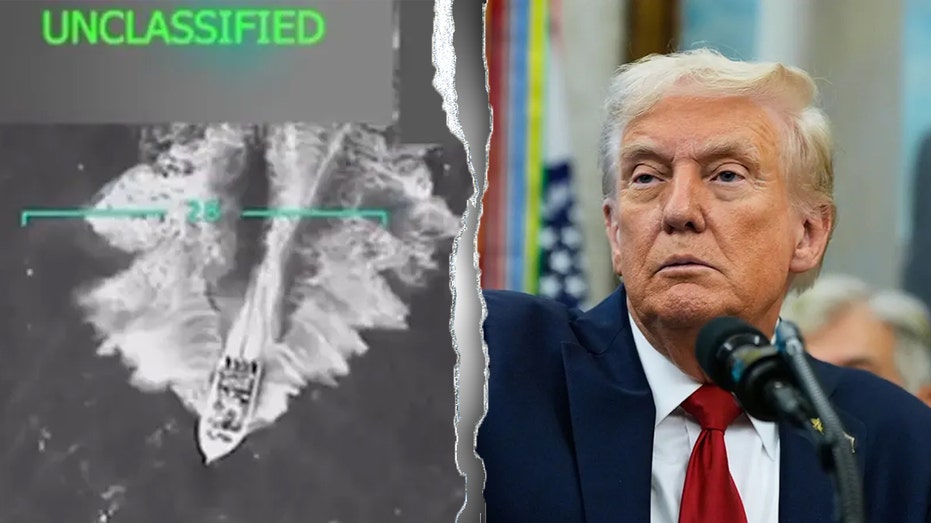
The recent intensification of U.S. actions against Venezuela under former President Donald Trump represents more than unilateral efforts to combat drug trafficking or regional instability. Embedded within this approach lies a strategic gambit aimed at applying indirect pressure on Russian President Vladimir Putin by targeting one of his key client states in the Western Hemisphere. This strategy exemplifies a nuanced pivot in U.S. foreign policy that merges traditional regional concerns with broader geopolitical contestation, with significant implications for the evolving struggle over global influence between Washington and Moscow.
The Bigger Picture: Historical Context of Client States and Hemisphere Security
Venezuela’s longstanding ties to Russia cannot be disentangled from the legacy of Cold War geopolitics and post-Soviet attempts by Russia to reclaim influence globally. Since Hugo Chávez's presidency, Venezuela has been a pivotal ally for Russia in Latin America, offering a foothold near the U.S. that counters American hegemony reminiscent of Soviet-era alignments. Similar to Iran and Syria, Venezuela exemplifies a client relationship where Russia exerts asymmetric support to sustain surrogate regimes aligned against Western interests.
The U.S. focus on Latin America security, echoing the Monroe Doctrine, has historically prioritized the Western Hemisphere as a strategic buffer zone against foreign powers. The Trump administration’s National Security Strategy reinforced this doctrine, signaling a renewed commitment to prioritize America’s backyard, but with a modern twist: employing economic sanctions, covert support for opposition groups, and military intelligence rather than overt military occupations.
What This Really Means: Undermining Putin Through Proxy Pressure
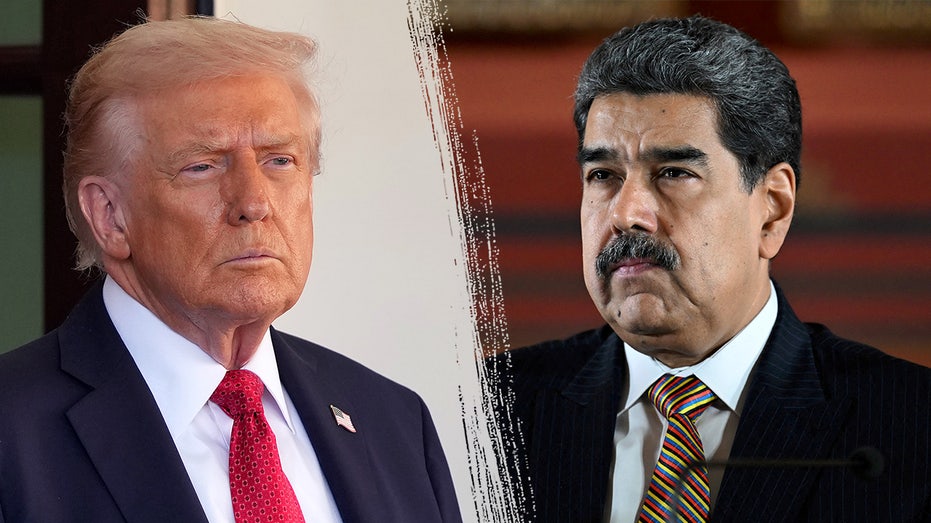
The calculated targeting of Venezuela under Trump can be viewed as a low-cost means to erode Russian influence without direct military confrontation. While Putin invests heavily in the costly and protracted war in Ukraine—employing mercenaries, conventional forces, and economic resources—Washington exploits Moscow's stretched capacities by destabilizing Kremlin-backed regimes abroad. By isolating Maduro, disrupting Russian supply lines via cargo planes, and signaling readiness to oppose Venezuela’s regime changes, the U.S. essentially sends a warning to Moscow: your global patronage provides no ironclad guarantee of security.
This approach capitalizes on Russia’s historical pattern of making rhetorical commitments to allies while providing insufficient practical support, as noted by experts like Peter Duran of the Foundation for Defense of Democracies. It underscores a critical vulnerability in Putin’s global posture—his inability to balance the defense of far-flung client states with the existential demands of the Ukraine conflict.
Expert Perspectives: Lessons from Diplomats and Strategists
Foreign policy analysts have likened Trump’s Venezuela policy to a "supercarrier diplomacy" that opts for strategic pressure rather than direct invasions or gunboat diplomacy of the early 20th century. Marco Rubio's characterization of Trump's foreign policy as "transformational" highlights a pragmatic nationalism that prioritizes American interests while maintaining global assertiveness. Peter Duran’s insights reinforce the idea that weaponizing local conflicts against Russian proxies forms a complementary front in the broader geopolitical chess game with Russia.
Meanwhile, geopolitical observers caution that this approach risks unintended escalation. Deploying military force in Venezuela or provoking regime collapse could destabilize an already fragile region, potentially opening space for other actors (China, Iran) to deepen their involvement. However, the Trump administration's emphasis on overwhelming economic and strategic pressure rather than direct invasion reflects a careful calibration intended to avoid these risks.
Data & Evidence: Measuring Influence and Outcomes
Russia’s financial and military commitment to Venezuela pales in comparison to its Ukraine expenditures, where estimates suggest Moscow has spent over $100 billion without securing decisive gains. Conversely, U.S. sanctions and interdiction efforts have reportedly disrupted significant portions of Venezuelan narcotrafficking routes—estimated at billions of dollars annually—affecting Maduro’s economic base.
Satellite and aviation tracking data confirm an uptick in Russian cargo flights to Venezuela, indicative of supply or contingency evacuation operations, signaling possible Kremlin concerns about Maduro’s viability and the sustainability of Russian presence in Latin America.
Looking Ahead: Potential Scenarios and Global Ramifications
If the U.S. successfully pressures Maduro’s government into collapse or exile as happened with Al-Assad’s relative isolation in Syria, the geopolitical consequence would be the further erosion of Russia’s presence in the Western Hemisphere. Such an outcome would deprive Putin of strategic depth and symbolic client states, compounding the pressure stemming from Ukraine.
However, risks abound. Should Venezuela descend into chaotic power struggles or foreign-backed insurgencies, the region could face prolonged instability. Furthermore, Putin might respond by doubling down on other alliances or adopting more aggressive military postures elsewhere to compensate, raising the risk of global escalation.
The Bottom Line
Trump's aggression toward Venezuela is not merely a regional crackdown; it is a sophisticated maneuver within a broader strategy to confront and constrain Russian global ambitions through indirect means. This approach leverages Washington's substantial advantages—economic power, hemispheric proximity, and intelligence assets—while exposing fundamental weaknesses in Russia’s overstretched client state model. Understanding this dynamic enriches the discourse on U.S.-Russia rivalry and highlights the interconnectedness of local conflicts with great-power competition.
Topics
Editor's Comments
This analysis sheds light on an often-overlooked facet of the U.S.-Russia rivalry: the indirect battleground of client states like Venezuela. While mainstream coverage largely frames Venezuela's crisis as a regional issue or a fight against narcotrafficking, the broader geopolitical stakes are profound. The Trump administration’s strategy deftly uses regional instability as leverage on the global stage, showing that great power competition is increasingly fought through proxy pressures and economic warfare rather than outright military battle. However, the long-term sustainability of this strategy merits scrutiny, given the complex local dynamics in Latin America and the risk of unintended consequences that could degrade regional stability. Future analyses should closely examine how China’s growing role in the region interacts with this U.S.-Russia contest for influence.
Like this article? Share it with your friends!
If you find this article interesting, feel free to share it with your friends!
Thank you for your support! Sharing is the greatest encouragement for us.