
Beyond the Outfit: What Pope Leo XIV’s Plane Attire Reveals About Society’s Search for Civility and Respect

Sarah Johnson
December 3, 2025
Brief
Analyzing the societal significance of respectful attire and civility campaigns in air travel, reflecting broader trends in social norms, leadership influence, and cultural values during times of change.
Opening Analysis
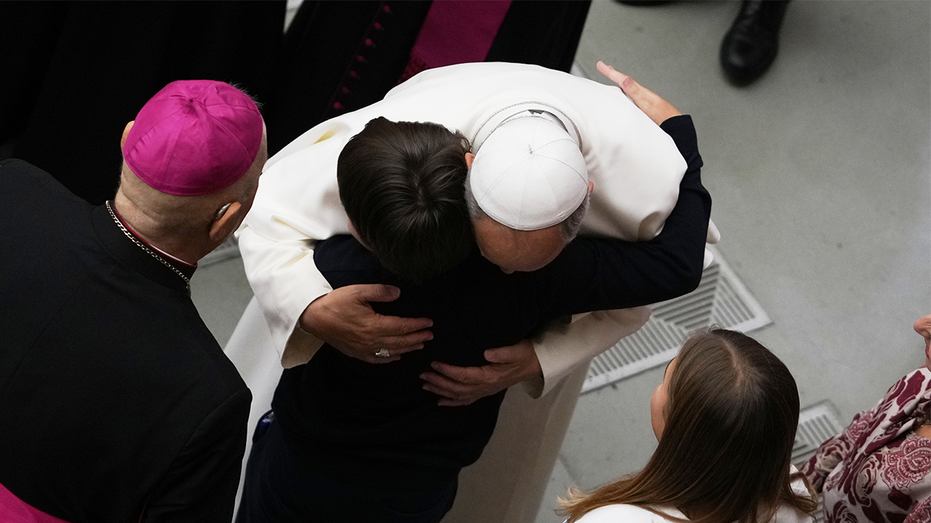
The recent praise for Pope Leo XIV’s attire aboard an airplane, intertwined with a civic campaign advocating for greater civility in air travel, underscores a broader societal shift in how public decorum and personal presentation are increasingly scrutinized and valorized. This incident isn’t merely about a pope’s fashion sense but reflects a societal desire to reestablish respect and decency amidst rising frustrations in modern air travel. It signals a cultural tension between individual comfort and collective decorum, amplified by social media, which acts as both a platform for praise and critique.
The Bigger Picture
Historically, the relationship between dress and civility has been a marker of social hierarchy and respectability. From elaborate court attire in monarchies to the somber formality of 19th-century Western dress codes, clothing has traditionally conveyed social cues. In contemporary society, especially in the context of rapid digital communication, attire often becomes a symbol of values such as discipline, respect, and social cohesion. The recent focus on the pope’s outfit echoes this longstanding tradition, but it also coincides with increasing social debates over norms of civility, especially in public spaces like airports and airplanes.
Furthermore, the return to civility campaigns reflects a societal response to a perceived decline in mutual respect, which many associate with the rise of social media disinhibition, polarized politics, and pandemic-related stress. In the travel industry, this tension manifests through incidents of unruly passengers, viral videos of disruptive behavior, and now, a push to highlight decorum via role models like the pope.
What This Really Means
This incident reveals a societal yearning for stability and decorum amid an era characterized by upheaval. The admiration for Pope Leo XIV’s attire on a plane symbolizes a longing for symbols of dignity—values that seem to have eroded in the hustle of modern life. The emphasis on dress as a signifier of respectability suggests that clothing remains a powerful, visual shorthand for societal values, even in casual settings like air travel, which traditionally prioritize comfort over formality.
Moreover, the commentary around civility campaigns highlights an underlying recognition that individual behaviors—ranging from dress to manners—are interconnected with collective well-being. Respectful dress and courteous behavior are viewed as simple, accessible ways to foster a more harmonious shared environment, especially during periods of high stress such as holiday travel.
Expert Perspectives
Experts in social psychology and behavioral studies have long argued that civility and dress codes serve as social lubricants. Dr. Emily Rosenberg, a sociologist specializing in social norms, notes, "Clothing acts as a non-verbal cue that signals respect for shared social spaces, reinforcing societal expectations for civility. When leaders and public figures embody these norms, it sets a tone of legitimacy and aspiration."
On the other hand, cultural critic Dr. James Bennett emphasizes the importance of authenticity, stating, "While dress codes can promote civility, they must be inclusive and adaptable. Over-policing attire risks alienating individuals and perpetuating class-based biases—especially in diverse societies where casual dress is a norm."
Data & Evidence
Recent studies reveal that airline passenger unruliness has increased by over 30% in the past two years, according to reports from aviation safety agencies. Surveys indicate that over 60% of travelers feel the quality of air travel experiences has diminished due to declining politeness and civility. Meanwhile, fashion experts observe that casualization of clothing in professional and social contexts correlates with a decline in perceived respectfulness, although comfort remains a dominant priority for many.
Interestingly, social media hashtags such as #TravelRespect and #FlyWithDignity have gained traction, suggesting a collective effort to reframe civility as both a personal and societal virtue.
Looking Ahead
This incident may be a precursor to ongoing efforts to reintroduce civility norms in travel and other public spheres. Airlines and policymakers could implement dress codes or behavioral guidelines, but these must be balanced against issues of personal freedom and cultural diversity. As remote work and virtual communication continue to reshape social expectations, the boundary between casual and respectful dress may evolve, requiring adaptable standards that prioritize dignity without imposing rigid norms.
Moreover, the role of influential figures like the pope in setting positive examples could foster broader cultural shifts. Future initiatives might focus on community-led campaigns emphasizing empathy, patience, and respect—values critical for navigating an increasingly interconnected yet polarized world.
The Bottom Line
While praising Pope Leo XIV’s attire may seem a minor cultural moment, it highlights deeper societal concerns about civility, respect, and social cohesion. In an age of social fragmentation, symbols like respectful clothing and courteous conduct become powerful tools for restoring dignity and shared values. The challenge lies in crafting inclusive standards that uphold respect without alienating diverse individual expressions, ultimately fostering a culture of genuine civility.
Topics
Editor's Comments
This story offers a fascinating glimpse into how symbols like clothing and behavior serve as anchors for societal values, especially during times of uncertainty. The praise for Pope Leo XIV’s attire and the subsequent civility campaign highlight the enduring power of leadership and iconography in shaping social norms. However, it also raises critical questions about the balance between fostering respect and avoiding superficial moral policing. As societal expectations evolve, especially with increasing cultural diversity and changing fashion norms, the challenge will be to promote civility in ways that are inclusive and authentic, not merely performative. This moment reminds us that civility is ultimately about mutual respect—something that must be cultivated through understanding as much as appearances.
Like this article? Share it with your friends!
If you find this article interesting, feel free to share it with your friends!
Thank you for your support! Sharing is the greatest encouragement for us.