Beyond the ‘Miracle on Ice’: How Trump Turned a Cold War Legend into Modern Political Symbolism

Sarah Johnson
December 13, 2025
Brief
Trump’s Oval Office honor for the 1980 ‘Miracle on Ice’ team is more than nostalgia. It reveals how Cold War sports myths are being repurposed as partisan political symbols in today’s polarized America.
Trump, the ‘Miracle on Ice,’ and the Weaponization of Nostalgia in U.S. Politics
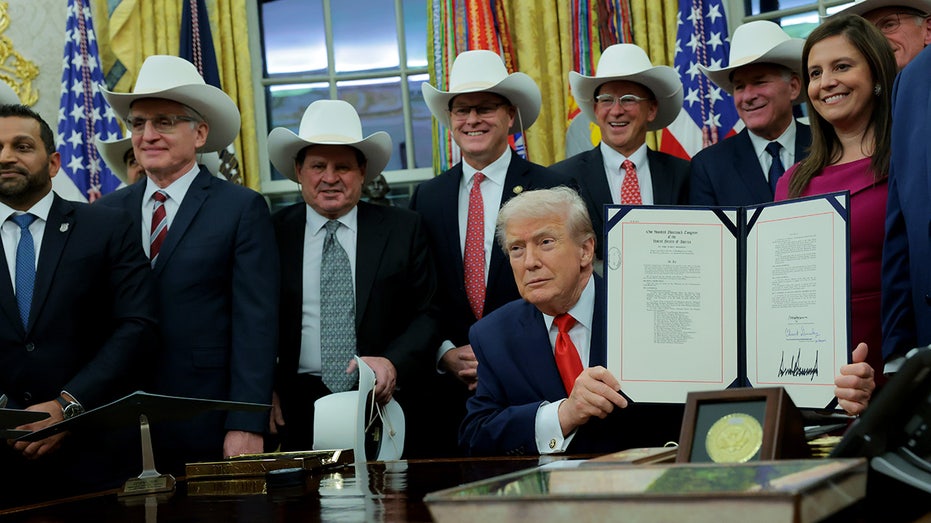
When Donald Trump welcomed the 1980 U.S. Olympic men’s hockey team to the Oval Office and signed a bill awarding them Congressional Gold Medals, the official story was about honoring a legendary sports achievement. But the deeper story is how a single game, played 45 years ago, is still being leveraged as political currency—by both politicians and athletes themselves—in a sharply polarized America.
To understand why this moment matters, you have to look past the photo op. A Cold War sports upset has become a symbolic battlefield in today’s culture wars, and the Trump-era reunion of the ‘Miracle on Ice’ team helps explain how national myths get repurposed, reframed, and sometimes weaponized.
The historical weight of the ‘Miracle on Ice’
The 1980 U.S. victory over the Soviet hockey powerhouse was never just about sports. It happened at a moment of deep American anxiety: double-digit inflation, the Iran hostage crisis, the Soviet invasion of Afghanistan, and a pervasive sense of national decline. The U.S. had been humiliated in Vietnam, Watergate had eroded trust in government, and President Jimmy Carter was warning of a national “crisis of confidence.”
Into that gloom stepped a group of American college players defeating what was essentially a Soviet professional juggernaut. The 4–3 win in Lake Placid, followed by the gold-clinching victory over Finland, became a proxy victory in the Cold War—a feel-good story that suggested American grit could still defy an apparently superior superpower.
Historians often point out that the symbolic value of the game far exceeded its strategic importance. But symbols matter. Political scientists have long noted that the ‘Miracle on Ice’ contributed to a renewed sense of American optimism that Ronald Reagan would tap into months later with his “Morning in America” narrative. The game did not elect Reagan, but it softened the ground for a resurgence of patriotic messaging and confidence in U.S. power.
Fast-forward four and a half decades, and that same emotional reservoir is still being drawn from—only now in a fractured media landscape and an era of populist politics where sports heroes are asked, or choose, to make ideological alignments explicit.
Why this ceremony is about more than a medal
On its face, Trump’s signing of H.R. 452—awarding Congressional Gold Medals to the team—looks like a standard bipartisan gesture. Congress has honored numerous sports teams and figures in similar ways. But several elements here stand out:
- Team members did more than say “thank you”; they explicitly praised Trump’s leadership, courage, and role in making the country “safe again.”
- This goes beyond gratitude into explicit political validation, effectively wrapping a transformational sports moment in the narrative of a deeply polarizing presidency.
- The event taps into a longstanding Trump strategy: associating himself with symbols of American greatness—military, law enforcement, championship teams—while portraying himself as the restorer of a lost national pride.
In that sense, the ceremony is not simply about honoring the past; it’s about claiming ownership of that past and connecting it to a particular vision of the present.
Sports, politics, and the myth of neutrality
American sports culture has long promoted the illusion that sports are “above politics.” In reality, sports has always been political: from Jackie Robinson integrating Major League Baseball in 1947, to Muhammad Ali’s refusal to serve in Vietnam, to Tommie Smith and John Carlos raising black-gloved fists at the 1968 Olympics.
What’s changed in the Trump era is not that sports and politics intersect, but how openly partisan those intersections have become—and how quickly they polarize audiences. Trump’s well-documented clashes with NFL players over national anthem protests, his public pressure campaigns on leagues, and his selective embrace of some athletes and not others have made sports a visible extension of culture wars.
Against that backdrop, comments like goaltender Jim Craig thanking Trump “for the courage you show the country every single day and for making our country safe again” are not neutral; they read as an endorsement of Trump’s broader security and political posture. They turn a shared national memory into a partisan-aligned narrative.
The appropriation of Cold War nostalgia
What’s particularly striking here is the reuse of Cold War nostalgia in a 21st-century context where the geopolitical landscape has shifted dramatically. The 1980 game was a U.S.-Soviet showdown. Today, the U.S.–Russia relationship is complex: allegations of election interference, debates over NATO, and ongoing conflicts where Russia is a central player.
By celebrating the ‘Miracle on Ice’ in a setting where team members evoke “feeling pride again” under Trump, the event implicitly aligns that historic victory with a contemporary political project. It suggests a continuity: just as America stood up to the Soviets, Trump’s America is once again strong and assertive. The nuance—that the Cold War is over, that Russia is not the USSR, and that today’s conflicts are more digitally driven and indirect—is largely absent. Symbolism does the heavy lifting.
This kind of nostalgia can be powerful but also distorting. It risks flattening complex history into a simple narrative of “us vs. them, strength vs. weakness,” which can then be mapped onto present-day debates over immigration, foreign policy, or internal dissent.
Why athletes’ words hit differently now
It’s not new for athletes to praise presidents. Championship teams have visited the White House under both parties for decades. But three dynamics make this moment different:
- The polarization of the presidency. Trump remains one of the most polarizing figures in modern U.S. history. Endorsing him, even implicitly, carries far more ideological weight than praising a relatively less divisive figure.
- The fragmentation of audiences. Social media ensures that every remark is amplified, dissected, and contextualized against an existing narrative—often instantly framed as “for” or “against” a political side.
- The precedent of athlete activism. From Colin Kaepernick to Megan Rapinoe, many athletes have used their platforms to challenge power structures. In response, overt support for sitting presidents—especially ones involved in cultural battles with other athletes—takes on the shape of counter-activism.
When Craig or Mike Eruzione express gratitude and pride in Trump’s leadership, those comments function as political signals, whether intended or not. They place a cherished, bipartisan sports memory inside a partisan frame. For some Americans, that feels affirming. For others, it feels like the co-opting of a shared national treasure.
The Congressional Gold Medal and the politics of honor
Congressional Gold Medals are one of the highest civilian honors the U.S. can bestow. They’ve gone to civil rights leaders, war heroes, scientists, and occasionally sports figures whose impact transcends the playing field.
In that sense, honoring the 1980 team is not inherently controversial; decades of reverence have cemented the game’s cultural importance. But timing and framing matter. The medal comes at a moment when Congress itself is often gridlocked and intensely partisan, making consensus-driven gestures politically valuable. Celebrating a unifying past can be a way to momentarily escape a divisive present—while still allowing each side to extract its own narrative benefits.
Trump’s White House appearance cements the medal in a visual, political frame: the United States president, in the Oval Office, surrounded by Cold War-era sports heroes who not only accept the honor but explicitly tie their feelings of pride to his leadership. The official text of H.R. 452 may be neutral; the optics are not.
What mainstream coverage tends to miss
Most surface-level coverage of moments like this hits familiar notes: the nostalgia, the “Miracle on Ice” backstory, the emotional reunion, the ceremonial bill signing. What often gets lost are the broader implications:
- Memory as a political resource: National myths like the ‘Miracle on Ice’ are not static; they are actively reinterpreted and redeployed to serve current agendas.
- Selective patriotism: The same patriotic language used to praise one set of athletes is sometimes used to condemn others—particularly those who kneel, protest, or critique domestic policy.
- Pressure on athletes: Public figures from a more “apolitical” sports era are now forced to navigate a media environment that demands clarity: are they endorsing the person, the office, or just expressing gratitude for a ceremony?
These dynamics make it increasingly difficult for any high-profile, presidentially staged sports moment to be truly nonpartisan.
Looking ahead: the battle over national symbols
What happens next isn’t about this one ceremony; it’s about the trajectory it represents.
We can expect to see:
- More politicization of sports nostalgia: Iconic past victories will continue to be invoked to support contemporary ideological narratives, especially during election cycles.
- Heightened scrutiny of athlete appearances: Every White House visit, every public comment will be parsed for political meaning, especially when associated with polarizing leaders.
- Competing claims on patriotism: Camps within U.S. politics will increasingly argue that they, not their opponents, are the “true heirs” of moments like the ‘Miracle on Ice.’
- Generational splits: Younger fans, attuned to athlete activism and skeptical of institutions, may read these ceremonies very differently from older Americans for whom 1980 is a formative memory of uncomplicated unity.
In that sense, the latest ‘Miracle on Ice’ celebration is a case study in how nations continually rewrite their own myths—often in real time and under the influence of whoever currently holds the biggest microphone.
The bottom line
The Oval Office honoring of the 1980 U.S. hockey team is more than a nostalgic look back at one of the greatest upsets in sports history. It’s a vivid example of how historical memory, patriotism, and sports culture are being drawn into the gravitational pull of modern partisan politics.
By attaching explicit praise of Trump’s leadership and national security posture to a Cold War-era symbol of American resilience, the event helps reframe the ‘Miracle on Ice’ from a broadly shared national triumph into a touchstone of a particular political narrative. That transformation carries implications far beyond hockey, touching on how Americans remember their past—and who gets to define what counts as a patriotic story.
Topics
Editor's Comments
What’s striking in this episode is how quietly the ground has shifted under our shared cultural touchstones. The ‘Miracle on Ice’ used to function as one of the rare stories almost everyone could celebrate without hesitation. By bringing that story into an overtly partisan frame—where key players publicly align their feelings of national pride with one particular leader—both the presidency and the myth itself become more contested. We should ask what happens when there are fewer symbols left that feel genuinely common, especially in a country already fractured along political, racial, and generational lines. If every powerful national memory is eventually pulled into today’s ideological struggles, the space for cross-partisan empathy shrinks further. That may be politically useful in the short term, but it’s corrosive in the long term for a democracy that depends, at some basic level, on citizens believing they still share something larger than their immediate camp.
Like this article? Share it with your friends!
If you find this article interesting, feel free to share it with your friends!
Thank you for your support! Sharing is the greatest encouragement for us.