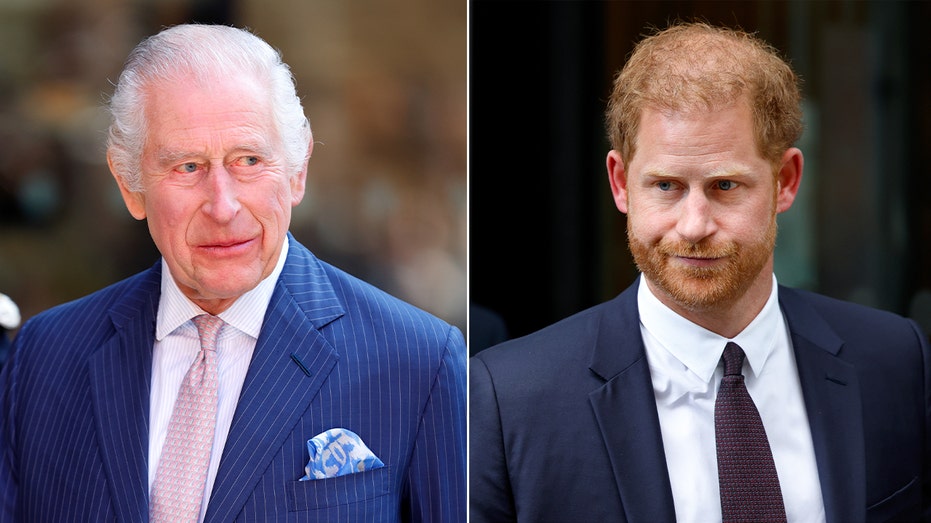
Behind King Charles’s ‘Open Door’ to Prince Harry: Illness, Succession, and the Future of the Monarchy

Sarah Johnson
December 12, 2025
Brief
King Charles’s ‘open door’ to Prince Harry isn’t just emotional; it’s a strategic move shaped by illness, succession politics, security battles, and a fragile monarchy struggling to protect its future.
King Charles, Prince Harry, and the Politics of Forgiveness: What a ‘Door Open’ Really Means for the Monarchy
Buried beneath the Christmas-at-Sandringham headlines is a much bigger story: a sick king carefully managing not just his health, but the future legitimacy of the British monarchy. King Charles keeping the “door open” for Prince Harry is less about sentiment and more about strategy, symbolism, and succession.
This moment sits at the intersection of three forces: a visibly aging monarch grappling with mortality, an heir (Prince William) who now carries much of the institution’s weight, and an estranged son (Prince Harry) who has become both a reputational risk and a potential asset. Christmas is simply the stage on which these deeper tensions play out.
The deeper stakes behind a Christmas invite
On the surface, the news is framed as: Will Harry and Meghan be invited? Underneath, several structural questions are in play:
- Can a hereditary institution maintain moral authority while publicly at war with one of its own?
- How does a monarch balance paternal instinct with institutional survival?
- What does reconciliation – or continued estrangement – signal to younger, increasingly skeptical voters across the UK and Commonwealth?
Charles’s reported desire for a “special” Christmas because “he doesn’t know how much time he has” is not merely emotional. It is also about narrative control. A seriously ill monarch must show continuity, unity, and stability – especially after a decade of royal turbulence overlapping with political and economic instability in Britain.
Historical context: royal illness and family rupture are not new
To understand this moment, you have to see it in a longer historical arc.
Royal illness as a constitutional stress test. Periods when the monarch is seriously ill have often forced the institution to reveal its internal politics:
- George III’s mental illness triggered fierce debates over regency and exposed palace factions.
- George V and George VI, both in poor health late in life, presided over transitions that required carefully choreographed public messaging to avoid panic about continuity.
- Queen Elizabeth II’s final years were marked by reassurance campaigns – highly publicized appearances and carefully controlled messaging – designed to project calm while succession to Charles was quietly prepared.
Charles’s cancer, now described as entering a third year, comes at a similar pivot: William is stepping up, Catherine is recovering from her own cancer diagnosis, and the question of what the monarchy looks like in 5–10 years is no longer theoretical.
Family rupture as a recurring royal pattern. Royal estrangements are also not new – but the Harry/Meghan rupture differs in one crucial way: it unfolded in the era of streaming, social media, and direct-to-audience memoirs. Compare:
- Edward VIII’s abdication (1936) was catastrophic for the institution but largely contained to formal statements and a limited media ecosystem.
- Charles and Diana’s breakdown (1990s) played out in tabloids and TV interviews but predated the social media era and global streaming platforms.
- Harry and Meghan (2020–2023) took their grievances direct to global audiences via Oprah, a Netflix series, and “Spare,” with a longevity and reach earlier generations couldn’t have imagined.
That context makes “keeping the door open” vastly more complicated: the Palace knows any reconciliation will be narrativized, analyzed and monetized – in real time.
What Charles is really managing: three overlapping audiences
Charles’s reported openness to Harry, combined with reluctance from “other senior royals,” reveals a split between personal and institutional calculations. The king is not just a father; he is the CEO of a centuries-old brand. Every holiday photo opportunity is content – and content shapes legitimacy.
He’s managing three different audiences simultaneously:
1. The British public
Polling in recent years has shown a generational divide: older Britons largely supportive of the monarchy; younger ones increasingly indifferent or skeptical. For them, the Harry and Meghan saga isn’t just gossip – it’s evidence in a broader debate about whether the monarchy is modern, fair and racially inclusive.
Public warmth toward Charles increased after his cancer diagnosis, but this sympathy has not automatically translated into deepened support for the institution among younger voters. A visibly fractured royal family risks reinforcing the sense that the monarchy is primarily about dysfunction and privilege.
2. The Commonwealth and global audience
Fitzwilliams’s comment about the Christmas season as an opportunity to remind the Commonwealth of the monarchy’s “soft-power diplomacy” is key. Several Commonwealth realms – notably Jamaica and other Caribbean states – are openly discussing cutting ties with the Crown.
In that context, Harry and Meghan, who have a strong global profile and a more diverse fan base, are both a danger and an opportunity. Continued estrangement reinforces narratives about a rigid, unchanging institution. A credible, carefully managed reconciliation could help project an image of adaptability and emotional maturity.
3. The institution’s inner circle
Inside the royal system, the logic is different. Senior royals and advisers are focused on:
- Information control – fear that private conversations could end up in a podcast, memoir, or interview.
- Brand dilution – Harry and Meghan’s “Hollywood player” image sits uneasily next to William and Catherine’s carefully curated, understated public persona.
- Succession optics – William must look like the future, not one pole in a public sibling feud.
That is why experts suggest Charles may want reconciliation emotionally, but courtiers and other royals see it as high-risk. It’s not that they don’t understand the human dimension; it’s that they are weighing a different set of costs.
The security issue: a practical barrier masquerading as a subplot
Harry’s request for a review of his UK security arrangements is being treated as a side note, but it is actually central to the question of whether meaningful reconciliation can happen.
Security is not just about physical protection; it is about status. Losing publicly funded security after stepping back as a working royal was a symbolic demotion. For Harry, accepting inadequate protection for his wife and children in the UK would undercut the narrative of being a responsible husband and father – something he has staked much of his new identity on.
Privately writing to the Home Secretary for a full risk assessment suggests Harry is trying to separate the security question from the emotional one: he needs a framework where visits to the UK are safe and predictable, regardless of how warm his relationship is with his father or brother.
If the Home Office softens its stance, it quietly removes one major obstacle to more frequent visits. If it doesn’t, the security issue will remain a convenient – and authentic – justification for continued distance.
Why Christmas matters so much to the Windsors
Christmas at Sandringham is not merely a family tradition; it is a recurring piece of political theatre. Since 1988, the holiday gathering there has functioned as an annual photograph of the monarchy’s health:
- Who stands where on the walk to church?
- Which couples are visibly affectionate, or conspicuously distant?
- Who is missing, and how is that absence framed?
For Queen Elizabeth II, Sandringham Christmases quietly communicated continuity: even when adult children divorced or feuded, the institution looked intact. For Charles, Christmas 2025 carries a different message: a king in active cancer treatment, a daughter-in-law publicly recovering from cancer, and an heir increasingly stepping into a quasi-regency role in all but name.
Against that backdrop, Harry’s absence or presence sends a powerful signal:
- If he attends: the visual story is one of forgiveness, family unity, and resilience in the face of illness – but only if tensions are genuinely under control and no leaks follow.
- If he stays away: the narrative shifts to a king whose “door is open” but who is constrained by the practical realities of trust and institutional risk.
The royal machine appears to be preparing the public for the latter scenario: a sympathetic, stoic king, emphasizing faith, duty, and the support of those who “stood by him most,” with Harry kept at a cautious emotional and physical distance.
The overlooked angle: Catherine’s role in the reconciliation calculus
One under-discussed factor in the Harry/Charles dynamic is the role of Catherine, Princess of Wales. The reporting notes that Charles and Catherine “grew even closer” during their parallel cancer battles, with her recovery lifting his spirits.
That matters for two reasons:
- Catherine is central to William’s public appeal. The couple’s image as stable, scandal-free, and child-focused is the monarchy’s most important asset with younger Britons. Any move that potentially destabilizes or overshadows them – such as a high-drama Sussex return – is likely to meet institutional resistance.
- Catherine’s illness has reframed Charles’s sense of legacy. Seeing his heir’s wife ill while he himself undergoes treatment appears to have deepened his emphasis on “continuity” and “smooth succession.” In that frame, Harry is emotionally important but institutionally expendable; William and Catherine are not.
In other words, Catherine’s recovery strengthens Charles’s resolve to protect the line of succession’s image. That, in turn, narrows the space for risk-taking on Harry.
Expert perspectives: duty versus forgiveness
Royal experts quoted in the reporting largely converge on a single theme: the tension between the king’s personal desire for reconciliation and the institution’s need for predictability and control.
- Amanda Matta emphasizes Charles’s emotional openness but acknowledges unresolved tensions with William, underlining that Christmas functions as a “reset button” for the royals.
- Richard Fitzwilliams highlights the risk of Harry and Meghan distracting from the monarchy’s soft-power messaging, especially at a time when Charles uses public-facing events to reassure both the nation and the Commonwealth.
- Hilary Fordwich stresses trust and the risk of leaks, suggesting any renewed betrayal would be too costly during a period of heightened vulnerability for the king.
- Helena Chard underscores the emphasis on tradition, faith, and those who have been physically present and supportive during Charles’s illness – implicitly drawing a contrast with Harry’s California-based life.
What they collectively point to is an uncomfortable reality: Charles can keep the “emotional door” open, but the institutional door is only half-unlocked, and other keyholders – William, Catherine, senior courtiers – may not be ready to open it further.
What this means for the monarchy’s future
The current standoff tells us several important things about where the British monarchy is heading.
1. The monarchy is becoming more streamlined – and more brittle
Since the death of Elizabeth II, the working royal roster has shrunk: Andrew sidelined, Harry and Meghan gone, the Queen’s generation aging. A smaller core can appear more efficient and modern, but it is also more vulnerable. Illness or scandal within a tiny group has outsized impact.
That brittleness likely fuels the wariness about bringing Harry back into the inner circle in any formal way. The cost of miscalculation is higher when there are fewer people to buffer controversy.
2. Emotional narratives now sit at the heart of legitimacy
Unlike in previous centuries, constitutional power is no longer the monarchy’s main selling point; emotional storytelling is. A king battling cancer, a princess recovering from cancer, a devoted heir stepping up – these are the narratives that sustain public support.
In that environment, a reconciliation between father and son could be incredibly powerful, particularly if framed as forgiveness, growth, and learning. But a failed or messy reconciliation – complete with leaks or renewed public accusations – could be more damaging than continued distance.
3. Harry’s brand and the Palace’s brand may now be fundamentally misaligned
Harry and Meghan’s Hollywood-centric lifestyle – attending high-profile celebrity events, building media deals, cultivating a personality-driven brand – is structurally incompatible with the monarchy’s current strategy of “dignified restraint.”
That misalignment doesn’t make reconciliation impossible, but it does make it conditional: any sustainable thaw would likely require a clear understanding that private conversations stay private and that royal events are not used as content fuel.
Looking ahead: what to watch in the next 12–24 months
Several indicators will show whether this “open door” is symbolic or the beginning of a real thaw:
- Security decisions: If Harry’s protection in the UK is upgraded or reframed, it will remove a key structural obstacle to regular visits – and signal at least a bureaucratic willingness to enable closer ties.
- Low-profile visits: More private, leak-free meetings between Charles and Harry – similar to the reported tea at Clarence House – would suggest a slow, deliberate rebuilding of trust.
- William’s posture: Any sign of direct, personal engagement between William and Harry would be a game-changer. So far, their estrangement appears to be the hardest, most immovable line.
- Harry’s media choices: If the Sussexes pivot toward quieter philanthropy and away from public royal criticism, they make it easier for the Palace to take the risk of visible reconciliation.
- Commonwealth debates: If more realms move toward republicanism, pressure will grow on the House of Windsor to demonstrate internal unity and moral relevance.
The bottom line
King Charles’s reported desire to keep the door open for Harry is not just about a father’s love in the shadow of illness. It’s a carefully calibrated position shaped by health, succession, public opinion, and the global image of a fragile institution.
For now, the emotional door is ajar, but the political and institutional doors remain heavily guarded. The king may want one more “special” Christmas with his whole family around him. The monarchy, however, seems equally focused on ensuring that when the time comes for William to take the throne, he inherits not a soap opera, but a functioning – and trusted – institution.
Topics
Editor's Comments
What’s striking in this story is how effectively the language of family – ‘darling boy,’ ‘making the most of time together’ – obscures the hard political calculations underneath. It’s tempting to frame this as a simple question of a father’s forgiveness, but the monarchy doesn’t have the luxury of operating purely on sentiment. Every apparently intimate choice – an invitation, a church walk, a Christmas photo – is also a signal to voters, Commonwealth governments, and an increasingly fragmented media ecosystem. One contrarian question worth asking is whether the institution has over-corrected toward risk-aversion. By treating Harry almost exclusively as a liability, the Palace may be missing a chance to showcase the very qualities modern audiences value: vulnerability, reconciliation, and a willingness to acknowledge imperfection. The danger, of course, is another round of public airing of grievances. But there is a different risk in doing nothing: that the monarchy clings so tightly to control that it slowly loses its emotional relevance, especially among the generations who will ultimately decide whether it survives.
Like this article? Share it with your friends!
If you find this article interesting, feel free to share it with your friends!
Thank you for your support! Sharing is the greatest encouragement for us.