Alysa Liu’s Gold in Japan Is Really a Stress Test for Modern Olympic Sport

Sarah Johnson
December 7, 2025
Brief
Alysa Liu’s Grand Prix Final gold is more than a comeback. It exposes how modern Olympic sport handles mental health, geopolitics, and a changing figure skating landscape heading into Milano‑Cortina.
Alysa Liu’s Grand Prix Triumph Isn’t Just a Comeback Story — It’s a Stress Test for Modern Olympic Sport
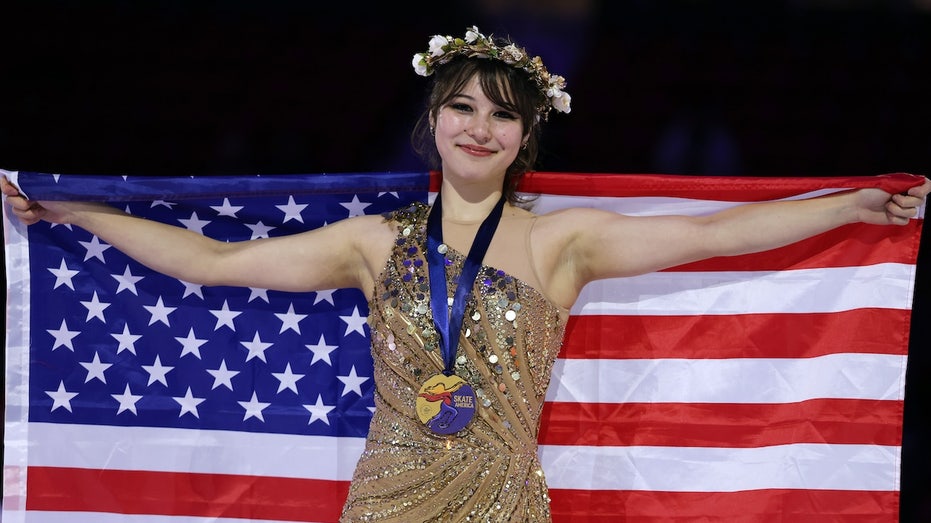
When Alysa Liu edged Japan’s Ami Nakai to win gold at the Grand Prix Final in Japan, most headlines framed it as the continuation of a remarkable comeback. That’s true, but it’s only the surface. Liu’s victory is also a window into three much bigger stories: the mental-health reckoning in elite sport, the geopolitical pressure now baked into Olympic competition, and a historic reshaping of women’s figure skating itself.
To understand why this win matters, you have to see it as more than a medal. It’s the culmination of a five‑year arc that runs from childhood prodigy to burnout and early retirement, to a return shaped by greater autonomy, political risk, and a changing technical landscape in figure skating.
From Prodigy to Exit: The Cost of Being “The Next Great Hope”
Liu first exploded onto the scene in 2019, becoming the youngest U.S. women’s national champion at 13, then defending the title in 2020. That kind of early dominance has historically been both a blessing and a curse in women’s figure skating.
Over the past three decades, the women’s field has often been driven by very young champions: Tara Lipinski (15) in 1998, Sarah Hughes (16) in 2002, and more recently the waves of Russian teens who reshaped the sport with quad jumps and short careers. The pressure cycle is familiar: discover a prodigy, build a brand, push the technical limits, then watch as injuries, puberty, and burnout thin the field.
Liu’s early retirement after the 2022 Beijing Olympics fit this pattern. By her own account, skating had shifted from joy to obligation, from passion to job. That shift is common in high‑pressure youth sports systems that treat teenagers as medal-delivery mechanisms. What’s different in Liu’s case is that she stepped away early and then came back on her own terms.
This decision aligns with a broader cultural shift in elite sports that accelerated after Simone Biles’ withdrawal from events at the Tokyo Games and Naomi Osaka’s public discussions of mental health. Elite athletes, especially women, are more willing to walk away from environments that feel extractive—even at the peak of their careers—and then renegotiate what performance looks like if and when they return.
Competing Under Surveillance: When Figure Skating Meets Geopolitics
The other piece of Liu’s story that separates her from typical comeback narratives is the national security backdrop. During the 2022 Beijing Games, she competed under heightened U.S. government security because of a Chinese espionage operation targeting her father, a former Tiananmen Square activist. For a teenager, that’s not just pressure—it’s a surreal collision of personal safety, family history, and global politics.
Olympic sport has always had geopolitical undertones—from the 1980 and 1984 boycotts to Cold War medal counts—but direct espionage concerns focused on a single athlete’s family, combined with round‑the‑clock security escorts, is a modern escalation. It illustrates how athletes can become collateral players in geopolitical disputes they didn’t choose, yet cannot avoid.
That experience likely changed Liu’s relationship to competition. When you’ve skated at an Olympics while wondering about your physical safety and your family’s vulnerability, a Grand Prix Final—while major—exists in a different psychological register. Her remark that her performance gives her confidence in “stamina” and “consistency” is understated, but underneath it is a larger resilience story: she has already skated under circumstances far more intense than a typical pre‑Olympic season.
A New Model for the Post‑Prodigy Career
Liu’s return to competition after a year of “normal college student” life is part of what makes her trajectory structurally interesting. Historically, figure skating careers were linear: rise through junior ranks, peak in late teens or early twenties, then retire into shows or coaching. Stepping away in early adulthood and coming back as a more autonomous, educated athlete challenges that model.
Her path looks more like athletes in sports such as tennis or track who take breaks for mental health, injury, or education and return with a different sense of self. For figure skating, which still carries traces of a coach‑centric, almost parental control structure, Liu’s story may become a test case: can a top skater re‑enter the system with stronger boundaries and a broader identity—and still win?
Her results since returning suggest the answer might be yes. A silver at U.S. nationals, a world title in 2024 (the first American women’s world gold since Kimmie Meissner in 2006), and now Grand Prix Final gold indicate that the old assumption—that stepping away kills your elite prospects—is eroding.
Technical Arms Race and the “Balanced Skater” Advantage
Liu emerged during the era of the Russian technical revolution, when women’s skating was defined by ultra‑C elements like quadruple jumps and triple axels from teenage athletes, many of whom faded quickly as their bodies changed. With several top Russian skaters sidelined from international competition in recent years, the women’s field has subtly rebalanced.
Instead of a pure jumping arms race, judges are increasingly rewarding complete packages: skating skills, transitions, musical interpretation, and consistency over multiple programs. Liu’s strength historically has been that she sits at the intersection of both trends: she helped push U.S. women forward technically, but she also has strong artistry and choreography.
Her narrow win over Ami Nakai—a rising Japanese teen—symbolizes this transition. Japan’s pipeline of young, technically ambitious skaters is beginning to occupy the space Russian teens once dominated. For Liu to beat a home-country teenager in Japan, in a discipline where the crowd often favors local skaters, underscores her ability not just to jump, but to compete—to manage pressure, interpret music, and construct programs that hold up under second‑half fatigue.
What This Win Signals for Team USA and the Milano‑Cortina Games
From a U.S. perspective, Liu’s sustained success marks a turning point. For nearly 20 years, American women’s singles lagged behind Japanese, Korean, and Russian dominance at the very top of the podium. The 2024 world title broke that drought. Backing it up with Grand Prix Final gold heading into an Olympic season suggests that wasn’t a one‑off peak; it may be the start of a restored U.S. presence at the very top of women’s skating.
This matters because the Winter Olympics, unlike the Summer Games, are more dependent on a small number of narrative‑rich sports for television ratings. Figure skating remains one of those anchors. A compelling, complex American women’s star who is both a medal favorite and a multidimensional person—a student, the daughter of a dissident, a retiree‑turned‑returnee—is exactly the kind of story broadcasters and sponsors seek. But it also raises questions about how much narrative weight one athlete can or should carry.
Liu herself seems wary of being reduced to a political or trauma‑centric storyline. Her joking comment about a potential movie—“They gotta make me look, like, super cool hero or something… I can’t just be the kid that got spied on”—is more than a quip. It’s a boundary. She is implicitly pushing back against being depicted as a passive victim and centering her father’s activism and agency instead. That move matters in an era where athlete stories are often simplified into neat arcs of hardship and triumph.
Media, Narrative, and the Ethics of the Comeback Story
The emerging Olympic coverage around Liu will likely emphasize three threads: her espionage‑shadowed Beijing experience, her early retirement and return, and her medal chances. But beneath those familiar beats lie harder questions about how media and federations use athlete narratives.
- Instrumentalization of trauma: There’s a fine line between giving context to Liu’s security concerns in Beijing and turning them into a promotional hook. How often will her safety situation be revisited, and to what end?
- Ownership of story: Liu’s clear preference to foreground her father’s Tiananmen activism points to a broader issue: who gets to define the main “storyline” of an athlete’s life when commercial interests are involved?
- Mental health as brand vs. reality: Post‑Biles, many institutions publicly endorse athlete wellbeing while still demanding punishing travel, competition, and media schedules. Liu’s prior burnout is a live test of whether things have actually changed.
For fans, this means reading her story with a more critical eye: enjoying the performances while asking how the system around her responds to signs of fatigue or stress this time around.
What to Watch Between Now and Milano‑Cortina
Liu herself notes that “a lot of things can happen between now and the Olympics” and flags U.S. nationals as a key step. That’s not just athlete modesty—it’s an accurate assessment of the volatility in modern figure skating.
Key variables to monitor:
- Injury and workload management: As the technical bar remains high, overuse injuries are a risk. How her team manages competition volume and training intensity will be critical.
- Judging trends: Do judges continue to reward her style of balanced, technically ambitious but artistically rich skating? Small shifts in GOEs (grade of execution) and component scores can decide medals.
- Psychological demands of being “the story”: As media attention intensifies, the emotional burden grows. The support structures around her—coaches, federation, mental health staff—will influence how sustainable this comeback is.
- International field development: Rising Japanese and Korean skaters, and any change in Russian eligibility, could reshape the podium landscape before 2026.
The Deeper Significance: An Athlete at the Crossroads of Sport and Politics
What makes Alysa Liu’s Grand Prix Final win more than a sports result is the way it intersects with broader currents: the aftershocks of Tiananmen Square, intensifying U.S.–China tensions, the mental‑health awakening in sport, and the evolution of women’s figure skating away from a single dominant nation.
She embodies a new kind of Olympian: technically exceptional, media‑savvy, politically adjacent (through family history and security realities), and increasingly assertive about how her story should be told. Her success tests whether systems built for compliant teenage prodigies can adapt to athletes who insist on being multidimensional adults.
If they can, Liu’s comeback could be a blueprint for a healthier era in figure skating—one where stepping away doesn’t end a career, family history is handled with nuance, and athletes are collaborators rather than merely subjects in the stories told about them.
If they can’t, this moment may be remembered as a brief, brilliant resurgence before the sport repeats old patterns of burnout and overreach. Either way, her gold in Japan is not the end of a narrative arc; it’s a crucial inflection point in how we understand what it means to compete—and to be watched—on the world stage.
The Bottom Line
Alysa Liu’s Grand Prix Final victory is far more than a tune‑up win before the Milano‑Cortina Olympics. It’s a stress test of how modern Olympic sport handles athlete autonomy, geopolitical pressure, and the shifting technical and cultural landscape of women’s figure skating. Her story will tell us as much about the systems around her as it will about her own resilience and talent.
Topics
Editor's Comments
One underexplored dimension of Alysa Liu’s story is how little formal accountability there is when geopolitical pressures directly affect an athlete’s safety and preparation. In Beijing, U.S. officials responded with enhanced security, but beyond that ad hoc measure there has been virtually no public discussion of what structural safeguards should exist when an athlete is targeted because of a family member’s political record. That gap matters as the Olympics increasingly take place in countries with tense relations or contested human rights practices. At the same time, Liu’s narrative highlights a double bind: the more attention is paid to her father’s Tiananmen activism, the greater the symbolic value she holds in broader U.S.–China debates, potentially increasing the very risks that prompted security concerns in the first place. Heading into Milano‑Cortina, it will be important to ask not just whether she can handle the spotlight, but whether sport governing bodies are willing to confront the uncomfortable reality that some athletes are carrying geopolitical burdens that go far beyond "pressure to perform."
Like this article? Share it with your friends!
If you find this article interesting, feel free to share it with your friends!
Thank you for your support! Sharing is the greatest encouragement for us.