Walz vs. DHS: Immigration Crackdowns, Civil Liberties, and the Fight Over Who Failed Minnesota

Sarah Johnson
December 12, 2025
Brief
Deep analysis of the clash between Gov. Tim Walz and DHS over Minneapolis immigration raids, civil liberties, and Minnesota’s $1B fraud scandal—and how it redefines blame, enforcement, and community trust.
DHS vs. Walz: Immigration Enforcement, Civil Liberties, and the Battle Over Who Failed Minnesota
The clash between Minnesota Governor Tim Walz and the Department of Homeland Security over recent immigration enforcement operations in Minneapolis is not just another blue-state vs. red administration skirmish. It sits at the intersection of three volatile currents: immigration politics in the Trump era, the post–George Floyd struggle over policing and protest, and Minnesota’s separate but politically explosive $1 billion fraud scandal linked to programs serving immigrant communities. The fight is as much about narrative and blame as it is about the specific arrests at issue.
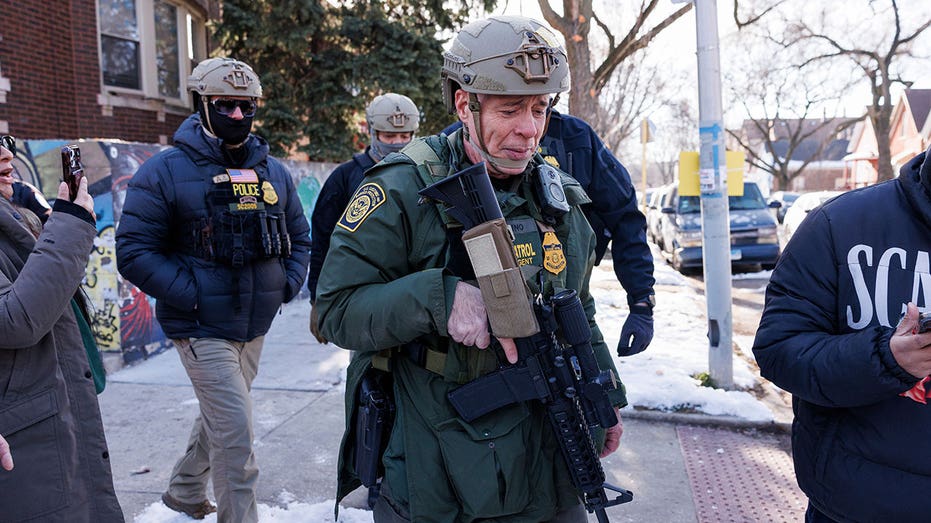
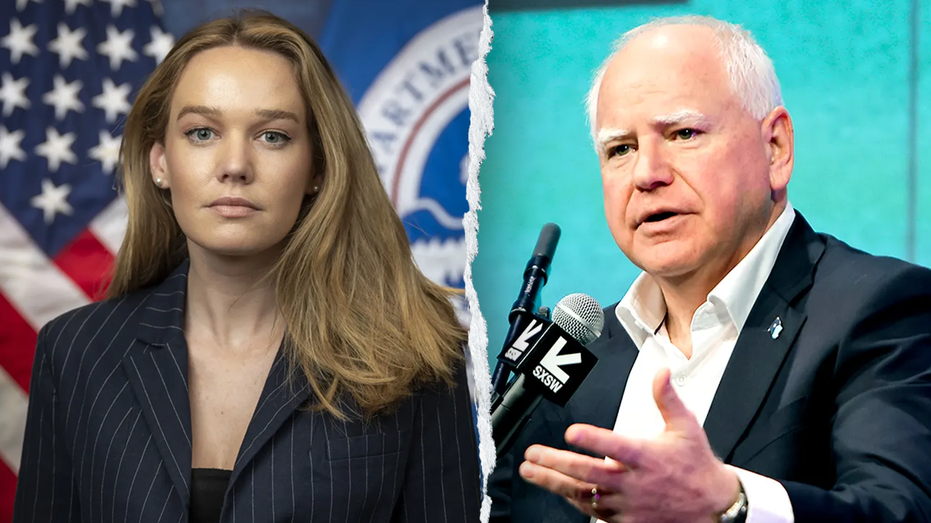
On one side, Walz is framing federal operations as overreach that threatens civil liberties and community trust, highlighting incidents in which U.S. citizens allege wrongful detention or aggressive treatment while filming or near ICE actions. On the other, DHS leadership is portraying Minnesota as a state that has allowed “criminal illegal aliens” to flourish and is now attacking federal agents who are finally restoring order, while pointing to sharp increases in assaults and threats against officers.
Underneath the rhetoric is a deeper question: who gets blamed when state systems fail—whether on fraud, public safety, or immigration—and how much power do local leaders really have when federal enforcement is weaponized as a political message?
How We Got Here: Minneapolis as a Symbolic Battleground
Minneapolis has been a symbolic arena for national conflict since 2020. The murder of George Floyd turned the city into a global focal point for police reform, protests, and debates over public safety. In that context, Minnesota’s large Somali and broader East African community—one of the most visible refugee diasporas in the U.S.—has been repeatedly pulled into national conversations about crime, radicalization, and integration, often in ways that community leaders say are unfair and stigmatizing.
Layered on top of that, the emerging fraud scandal—spanning childcare, autism services, and COVID-19 relief—and involving nonprofits with ties to immigrant communities has become a political cudgel. Republican lawmakers argue Walz’s administration failed to supervise billions in state and federal funds, enabling what some prosecutors say could become one of the largest fraud cases in Minnesota history. The governor’s critics are now linking that alleged mismanagement to a broader narrative of lax enforcement and accommodation toward immigrant communities.
Into this environment steps the Trump administration’s DHS, which is aggressively emphasizing public safety risks posed by specific undocumented immigrants, while Walz is trying to assert that federal operations must operate within constitutional bounds and maintain community trust. The ground was laid for this clash years ago, through long-running disputes over “sanctuary” policies, local cooperation with ICE, and the use of high-visibility enforcement operations as political theater.
The Legal and Political Fault Line: Protest vs. Obstruction
DHS Assistant Secretary McLaughlin’s core argument is that critics like Walz are blurring the line between lawful protest and criminal interference. She cites U.S. citizens arrested for allegedly assaulting or obstructing officers during a targeted operation, while emphasizing a “more than 1050%” increase in assaults and “8000%” increase in death threats against officers. Those numbers, even if accurate, are presented without denominator or timeframe, but they serve a clear purpose: casting DHS as under siege and positioning any criticism as aiding dangerous agitators.
Walz, by contrast, is not disputing DHS’s authority to arrest the named Ecuadorian national with a felony record. Instead, he is demanding clarity on the legal standards for detaining or arresting bystanders and citizen observers—particularly those filming or witnessing enforcement activities. He highlights cases like “Sue” (identified by DHS as Susan Tincher) and “Mubashir,” who he says was tackled and detained despite asserting his citizenship. Walz’s letter essentially asks: where is the line between constitutionally protected oversight of law enforcement and conduct that crosses into obstruction?
This is not a theoretical question. The right to record police and federal agents in public has been repeatedly upheld by courts. The First Circuit in Glik v. Cunniffe (2011) and the Third Circuit in Fields v. City of Philadelphia (2017) recognized a First Amendment right to film officers performing their duties in public, subject to reasonable time, place, and manner restrictions. However, those same rulings are clear that the right to record does not immunize individuals from arrest if they physically interfere, ignore lawful orders, or endanger operations.
The dispute in Minneapolis isn’t about the law in the abstract; it’s about whether DHS is treating legitimate citizen oversight as obstruction—and whether it is using the chaotic moments around enforcement actions to send a broader warning: don’t get in our way.
What’s Being Overlooked: The Power Struggle Over Narrative
Most coverage will frame this as Walz vs. DHS, civil liberties vs. security. What’s missing is how much both sides are fighting over narrative territory created by Minnesota’s fraud scandal and the broader 2024–2025 political climate.
Walz is under intense pressure at home for what Republicans argue was a catastrophic failure of oversight over state and federal funds that flowed into programs serving vulnerable populations. By foregrounding civil liberties and constitutional rights in his clash with DHS, he changes the subject: from administrative failure to principled defense of the rule of law and community trust. His language—“forcefulness, lack of communication and unlawful practices” and warnings about detaining citizens for “going about their daily lives”—positions him as a guardian of Minnesotans against an intrusive federal presence.
DHS, meanwhile, is explicitly tying Walz’s record on fraud and crime to its enforcement mission. Its social media rebuke—“for the past 6 years, Minnesotans have lived in fear… as you’ve let criminal illegal aliens run wild” and the stark question, “Do you stand with the illegal aliens… or with Americans?”—is less about legal nuance and more about delegitimizing Walz as an authority on safety or oversight. It folds the fraud scandal, crime fears, and immigration anxieties into one narrative: Minnesota is out of control, and only federal intervention is saving the state.
In short, this isn’t just a dispute about a single enforcement operation. It’s a battle over who will be blamed for Minnesota’s sense of insecurity—economic, administrative, and physical—and over whether immigrant communities are framed primarily as partners or suspects in that story.
Community Trust vs. Deterrence: The Policy Tradeoff
Beyond the rhetoric, there’s a policy problem that both sides are dancing around: aggressive, highly visible federal enforcement can deliver short-term arrests but impose long-term costs on cooperation, particularly in communities already wary of authority.
Studies by organizations like the Migration Policy Institute and the Urban Institute have consistently shown that heavy-handed immigration enforcement—especially raids and collateral arrests—deters victims and witnesses from reporting crimes, including domestic violence, wage theft, and gang activity. A 2013 study in American Sociological Review found that neighborhoods with high fear of deportation experienced lower crime reporting even when overall crime rates were high.
Walz’s reference to citizens “going about their daily lives” who are swept up or detained near enforcement operations reflects that concern: if simply being near ICE activity—or filming it—feels risky, residents withdraw from civic engagement. That’s particularly damaging in communities like Minneapolis’s Somali and East African neighborhoods, where trust in law enforcement has already been strained by counterterrorism scrutiny, high-profile prosecutions, and debates over policing after George Floyd.
DHS, for its part, is leaning into deterrence—not just of undocumented immigrants, but of would-be protesters. The message that anyone who “lays a hand on law enforcement” will be prosecuted “to the fullest extent of the law” is legally correct; assaulting officers is a crime. But when paired with vague descriptions of “rioters” and “agitators” and staggering percentage increases in threats, it risks sweeping in nonviolent civil disobedience and conflating dissent with violence in the public mind.
Expert Perspectives: How Legal and Security Professionals See the Clash
Legal scholars who study protest and policing say conflicts like this are becoming more common as immigration enforcement operations increasingly intersect with politicized protest environments.
“From a constitutional standpoint, the law is clear on two points: people have a right to film and observe, and they do not have the right to interfere,” said Professor David Cole, national legal director of the ACLU, in a recent panel on federal enforcement. “What’s less clear in practice is how officers distinguish between observation and obstruction in rapidly evolving, tense situations. That’s where transparency and clear policies become critical.”
On the security side, former officials argue that ignoring the surge in assaults and threats against federal officers is unrealistic.
“We are seeing a rise in confrontational tactics around enforcement operations, often encouraged on social media,” noted John Sandweg, former acting director of ICE, in a 2024 interview about protests around ICE facilities. “If the political message from local leaders is essentially that any aggressive enforcement is suspect, it can embolden people to cross the line from protest into physical interference. That creates real risk for agents and for the public.”
The tension between these two perspectives—civil liberties advocates demanding guardrails, and security professionals warning of operational chaos—plays out in every line of the Walz–DHS exchange.
Data, Risk, and the Selective Use of Numbers
McLaughlin’s reference to a 1050% increase in assaults and 8000% increase in death threats against officers is striking, but without context it functions more as alarm than analysis. If the baseline numbers were very low, percentage spikes can sound dramatic while reflecting relatively limited raw increases. DHS has documented increased hostility toward federal officers in recent years, particularly around immigration facilities and during periods of heightened political tension, but the agency rarely disaggregates threats by location, type, or link to specific policies.
On the other side, Walz’s argument relies more on anecdotal accounts than systematic data. He references specific individuals—“Sue,” “Mubashir”—and a “troubling pattern,” but the public record has not yet provided a clear, independently verified dataset showing how many U.S. citizens have been detained, for how long, and under what conditions, during recent ICE operations in Minnesota.
This asymmetry matters. DHS can claim a generalized spike in threats to justify a harder line, while state officials and civil rights advocates must individually document each alleged overreach. Without robust, transparent data from both sides, the debate defaults to dueling narratives, not evidence-based policy.
Looking Ahead: Three Big Questions for Minnesota—and Beyond
Where this goes next will depend less on one letter or one enforcement operation and more on how three broader dynamics evolve:
- Will Minnesota’s fraud scandal be formally linked to immigration policy? If investigations into the $1 billion-plus fraud scheme continue to highlight nonprofits tied to immigrant communities, expect national actors to frame this as proof that refugee and immigrant integration has failed—and to push for stricter vetting, funding caps, or new oversight structures. Walz will be pressed to show that accountability can be achieved without stigmatizing entire communities.
- Will courts—and cameras—clarify the line between protest and obstruction? If any of the arrested citizens contest charges, their cases could become vehicles for litigating the right to document federal activity around immigration enforcement. Courts may be asked to define how close observers can stand, what constitutes interference, and how officers must communicate lawful orders. Video evidence from bystanders—if preserved—will be central.
- Does this conflict become a model for federal–state clashes elsewhere? Other states with large immigrant populations and contentious relationships with the Trump administration—California, Illinois, New York—are watching how Minnesota navigates this confrontation. If DHS succeeds in portraying governors as choosing “illegal aliens” over “Americans,” Democratic leaders may be forced to recalibrate how they publicly challenge federal operations without being painted as soft on crime.
The Bottom Line
This fight is not primarily about whether a single Ecuadorian national with a felony record should have been arrested; almost no one disputes that. It is about what happens around that arrest: who else gets swept up, how far citizens can go in watching and documenting enforcement, and how those images and stories are weaponized in a broader struggle over crime, immigration, and government failure.
Walz is trying to rebuild his standing amid a massive fraud scandal by positioning himself as a defender of Minnesotans’ constitutional rights against an aggressive federal apparatus. DHS is trying to reassert federal primacy in enforcement and shift blame for Minnesota’s insecurity onto a governor it paints as dangerously lenient and incompetent.
Lost in the crossfire are the people whose lives and liberties are directly affected: immigrant communities who fear both crime and deportation, citizens who want to hold officers accountable without risking arrest, and residents who worry that every new scandal—financial or criminal—will be laid at their community’s doorstep. How Minnesota resolves this conflict will say a lot about whether the state can simultaneously demand accountability from both fraudsters and federal agents—and whether it can do so without sacrificing the civil liberties that are supposed to apply to everyone, citizen and noncitizen alike.
Topics
Editor's Comments
What stands out in this episode is how little either side is talking about concrete safeguards. Walz raises real concerns about civil liberties, but his statements stop short of proposing specific mechanisms—such as mandatory body camera policies for federal agents operating in Minnesota, public after-action reports for large operations, or a joint state–federal review board for citizen complaints. DHS, for its part, invokes dramatic percentage increases in threats without offering granular data or committing to independent auditing of arrests involving U.S. citizens. The result is a debate that leans heavily on symbolism: Walz as constitutional guardian, DHS as protector of public safety. Yet neither narrative directly addresses a key question: What verifiable standards will govern these operations going forward, and how will Minnesotans know if those standards are being followed? Until we see transparent metrics—number of collateral arrests, duration of detention for citizens, disciplinary outcomes when agents overstep—the conversation remains largely performative. That may serve short-term political goals, but it leaves both immigrant communities and law enforcement officers operating in an environment of ambiguity that breeds mistrust and repeated conflict.
Like this article? Share it with your friends!
If you find this article interesting, feel free to share it with your friends!
Thank you for your support! Sharing is the greatest encouragement for us.