
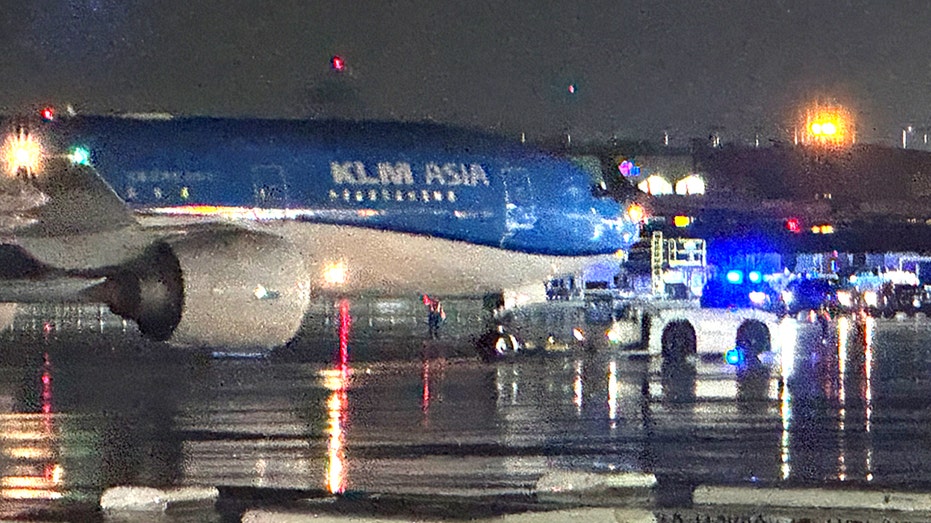
Unruly Behavior on Taxiing Flight at Atlanta Airport: A Deep Dive into Aviation Security and Mental Health Challenges

Sarah Johnson
December 3, 2025
Brief
Analyzing a disruptive aviation incident at Atlanta airport reveals how mental health, security challenges, and airline protocols intertwine, offering insights on the growing complexities in air travel safety.
Opening Analysis
The startling incident at Hartsfield-Jackson Atlanta International Airport, where a passenger forcibly opened an emergency exit and deployed the inflatable slide during taxiing, underscores growing challenges in airline security management and passenger mental health crisis mitigation. Beyond disrupting an Amsterdam-bound flight, this episode reveals critical vulnerabilities in balancing passenger safety, airline operational integrity, and responding effectively to mental health emergencies onboard aircraft.
The Bigger Picture
Hartsfield-Jackson is the world’s busiest airport by passenger numbers, handling more than 100 million travelers annually pre-pandemic. Such volumes complicate security and operational stability, especially as airlines increasingly contend with passengers exhibiting disruptive or erratic behavior. Historically, similar incidents have triggered costly groundings and heightened aviation security protocols, reflecting a persistent tension between passenger rights and maintaining safe, orderly flights.
The emergency exit system and inflatable slide are vital safety components designed strictly for evacuation in dire circumstances. Activation outside those contexts—whether accidental or deliberate—can cause substantial operational disruptions and financial losses. This event fits a pattern of post-pandemic flights witnessing a rise in unruly conduct, fueled by heightened anxiety, mental health stressors, and sometimes misinformation or mistrust among travelers.
What This Really Means
First, this incident exemplifies how the aviation industry is facing a dual challenge: stringent security protocols combined with an urgent need for better mental health crisis response mechanisms. The passenger, Johannes Van Heertum, reportedly called 911 alleging a weapon—highlighting how perceived threats may trigger panic and improper actions during flights.
Secondly, the event triggered cascading effects: immediate flight cancellation, complex passenger rebooking, and resource diversion—including the involvement of police and emergency medical technicians. The costs—both tangible and intangible—for airlines, airports, and passengers are significant. This underlines the necessity for airlines to train crews not only in traditional security threats but also in de-escalating mental health episodes.
Finally, this incident exposes a legal and ethical dilemma. Charging Van Heertum with reckless conduct, criminal damage, and interfering with security seems appropriate legally but also spotlights how behavioral health intersects with criminal justice when crises unfold mid-air. Developing better intervention and post-incident care protocols could prevent escalation and improve outcomes.
Expert Perspectives
Dr. Linda Avery, a clinical psychologist specializing in trauma and anxiety disorders, notes, "Air travel anxiety can amplify preexisting mental health conditions, sometimes leading to sudden episodes. Airlines need integrated mental health support frameworks to identify and manage such risks proactively."
Captain William Hanson, a former commercial pilot and aviation safety consultant, emphasizes, "Emergency systems must never be compromised, but the design and operational protocols should factor in human behavior under duress. Training crews to recognize early signs and respond calmly can mitigate risks significantly."
Professor Marc Feldman, expert in aviation law, adds, "The legal response must balance accountability with compassion. Overcriminalizing behavior rooted in mental health crises risks stigmatization and deters people from seeking help. Alternatives like mandated treatment programs alongside suitable penalties can be more effective."
Data & Evidence
Recent trends recorded by the U.S. Department of Transportation indicate a 50% increase in reports of disruptive passenger behavior on flights from 2019 to 2024. Additionally, FBI data reflect an uptick in aircraft-related security incidents involving individuals experiencing mental health episodes.
According to research by Airlines for America, each emergency slide deployment outside regulated use can cost airlines upwards of $30,000, factoring repair, operational delay, and rebooking expenses.
Mental health experts estimate that approximately 20% of passengers have some degree of anxiety or mood disorders exacerbated during flights, underscoring the scale of the challenge.
Looking Ahead
Moving forward, airlines and airports will need to adopt multi-disciplinary strategies combining enhanced security measures, mental health awareness, and crisis de-escalation training for frontline staff. Technological innovations may enable early detection of distress signals via behavioral analytics or biometric data.
Policy frameworks could evolve to mandate mental health first-aid certifications for cabin crew and establish rapid response teams skilled in behavioral health onboard. Regulators might also consider redefining protocols for emergency equipment use and mental health interventions under FAA guidelines.
For passengers, awareness campaigns on managing travel anxiety and resources for pre-flight mental health preparation could reduce incidents. Meanwhile, legal reforms might integrate therapeutic jurisprudence models tailored for in-flight behavioral incidents.
The Bottom Line
This Atlanta airport emergency exit deployment incident is a microcosm of broader systemic issues compounding aviation safety today—namely, the intersection of security protocols and mental health emergencies. Understanding these complex dynamics and implementing holistic solutions is critical not only to minimize operational disruptions but to safeguard passenger well-being and uphold aviation security in an increasingly fraught air travel environment.
Topics
Editor's Comments
This incident at Atlanta’s airport not only disrupted one flight but also spotlights a systemic challenge that is often underestimated: the intersection of mental health and aviation security. While airlines have traditionally focused on preventing violent or terrorist threats, the growing prevalence of anxiety and panic-related disruptions requires a paradigm shift. Solutions must extend beyond punitive measures to embrace mental health resources, redesigning how we respond to crises in the confined and high-stress environment of a plane. Moreover, this event calls into question the adequacy of current emergency system safeguards when a single individual’s panic can cause costly and dangerous disruptions. As air travel rebounds post-pandemic, such incidents may become more frequent unless preventive measures advance accordingly. Policymakers, airlines, and mental health professionals have an urgent mandate to collaborate in developing integrated protocols that make skies safer and flights smoother for all.
Like this article? Share it with your friends!
If you find this article interesting, feel free to share it with your friends!
Thank you for your support! Sharing is the greatest encouragement for us.