More Than a Clapback: What Taylor Swift’s Refusal to “Go Away” Reveals About Power and Longevity

Sarah Johnson
December 12, 2025
Brief
Taylor Swift’s four-word clapback isn’t just celebrity banter. It exposes how gender, ownership, and economics shape who’s allowed long-term power in pop culture—and why she refuses to quietly step aside.
Why Taylor Swift’s Four Words Matter: The Economics and Gender Politics Behind “I Don’t Want To”
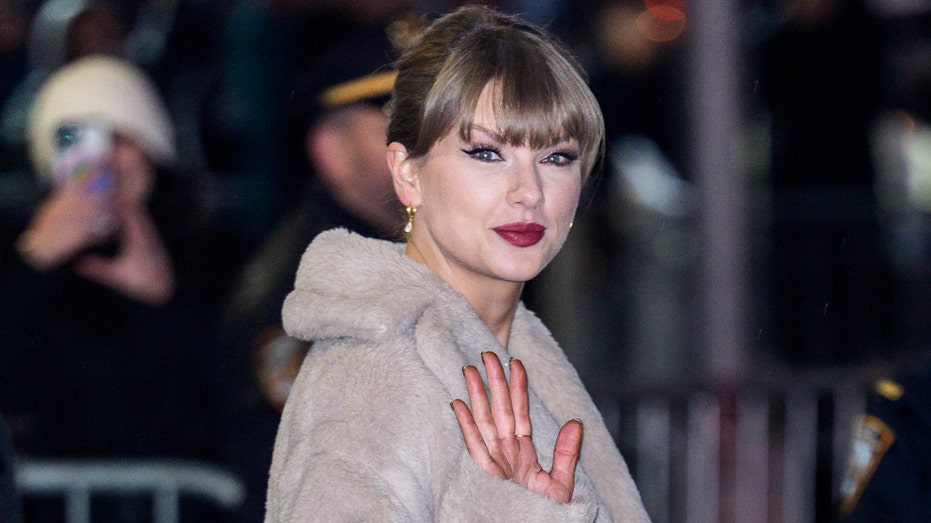
On the surface, Taylor Swift’s four-word response to critics who tell her to “go away” — “I don’t want to” — sounds like a throwaway late-night line. In reality, it’s a succinct manifesto about power, gender, ownership and the changing rules of fame in the 21st century.
Swift is not just defending her right to stay in the spotlight; she’s challenging a cultural script that has long dictated how — and when — women in entertainment are supposed to exit. Her comments about “career longevity,” reclaiming her masters, and seeking advice from elders like Stevie Nicks reveal something bigger: she’s openly trying to build a multi-decade, multi-platform empire in a system that’s historically punished women for doing exactly that.
The long shadow of the Hollywood expiration date
Swift’s emphasis on “longevity” is a quiet rejection of one of entertainment’s most persistent norms: the idea that fame, especially for women, is a short-term lease, not a deed.
For decades, the industry has treated female stardom as a youth-based, limited-time product. Classic pop careers often peaked in an artist’s 20s and early 30s — with women usually pushed toward “legacy” status much earlier than men. Madonna, for example, began facing ageist commentary in her 40s that male counterparts like Mick Jagger or Paul McCartney largely sidestepped. The public language around women aging has typically framed visibility as a kind of vanity — something they should gracefully surrender rather than actively protect.
Swift, now 35, is at a pivot-point where many female pop stars historically start being asked implicitly or explicitly to shrink: tour less, release less, talk less, make room. She’s doing the opposite. Instead of “bowing out while you’re ahead,” she’s doubling down — with a two-year, 5-continent tour, a massive re-recording project, and continued creative expansion.
When she jokes about people saying “Give someone else a turn” and responds, “I don’t want to,” she is not just clapping back at online critics. She’s naming a structural expectation — then refusing it.
Why “go away” is rarely said to male empires
This backlash doesn’t happen in a vacuum. We’ve normalized male artistic empires that run for decades: Springsteen, Jay-Z, U2, the Rolling Stones, Drake. Few commentators seriously argue that these figures should “step aside” to clear space for younger acts; at most, we debate whether their new work is as strong as their old material.
With women, the conversation is different. Success at a massive, sustained scale is frequently framed as crowding out others, becoming “overexposed,” or being “too much.” We see this pattern with figures like Beyoncé, Rihanna, and Swift: huge commercial and artistic achievement quickly becomes a cultural Rorschach test for anxieties about saturated media, fandom intensity, and women’s power.
“Go away” isn’t just about volume of coverage. It’s about discomfort with a woman who refuses to age into the role of background cultural furniture — the tasteful icon who appears at awards shows, releases selective projects, and otherwise stays quiet.
Reclaiming the masters: ownership as long-term strategy
Swift’s comment that 2025 was a “good year” because she both got engaged and got her masters back is telling. She’s pairing romantic stability with business sovereignty — subtly linking emotional and economic autonomy.
Her masters battle — and the subsequent project of re-recording her old albums — fundamentally changed how mainstream audiences think about music ownership. For decades, the standard industry structure placed long-term control firmly with labels and investors. Artists, especially early in their careers, surrendered masters in exchange for promotion and distribution. Swift’s refusal to accept permanent loss, and her decision to rebuild her catalog from scratch, created a rare public conversation about what it means to actually own your work.
Seen through this lens, her insistence on staying visible is not just about ego. Long-term economic value in streaming-era music is tightly linked to cultural relevance. Back catalogs generate recurring revenue only if audiences continue to care. Remaining hyper-visible — tours, media, cultural discourse — is part of how she protects the financial upside of owning those masters. Longevity isn’t a vanity project; it’s an asset-management strategy.
The Eras Tour as proof-of-concept for sustained dominance
The Eras Tour — 149 shows across five continents, each roughly three hours long — is more than a concert series. It’s a live demonstration that a female pop star can operate at the scale of a global infrastructure project, not just a seasonal pop phenomenon.
Economically, the tour has been compared to the GDP of small countries. Cities reported hotel booms, transit surges, and measurable tourism spikes when her shows came to town. In the U.S., multiple analysts pegged the tour’s broader economic impact in the tens of billions of dollars when you include travel, hospitality, retail and ancillary spending — an unprecedented figure for a single artist’s tour.
The physical toll she describes — stomach flu on stage, “flickering lightbulb” exhaustion, rigid post-show routines — underlines a key contradiction: the world is demanding superhuman output from an individual who is simultaneously being told she’s too present. The same culture that criticizes her ubiquity is cheerfully lining up, literally and financially, to extend it.
The emotional labor of staying at the center
Swift’s description of her post-show ritual — bath, room service, bingeing true crime or audiobooks — is more than quirky lifestyle detail. It hints at a psychological survival tactic: how do you turn off when your job is to embody a global-scale emotional lightning rod?
Her “profession,” as she put it, is coming up with ideas. That’s creative labor. But at her scale, another layer has emerged: emotional and reputational labor. She isn’t just writing songs; she is managing a sprawling narrative universe, a vast fan ecosystem, and the expectations of multiple industries (music, film, sports-adjacent media through her relationship with Travis Kelce, streaming platforms, fashion, and more).
Declining to step aside means signing up to sustain that multi-layered labor indefinitely. That’s not a trivial decision — especially for a woman in an industry that historically hasn’t offered robust institutional support for female longevity beyond a chosen few.
Mentors, networks, and the architecture of staying power
The three people she cites as trusted advisors — Stevie Nicks, Max Martin and Travis Kelce — map out an interesting triangle of longevity strategy:
- Stevie Nicks represents artistic and spiritual endurance. Nicks has navigated decades of changing trends, personal turmoil and shifting industry models while maintaining a sense of autonomy and mystique.
- Max Martin embodies hit-making as a sustained craft. His career across multiple artist generations shows how you can evolve sonically and commercially without burning out or becoming obsolete.
- Travis Kelce offers insight from a different high-pressure performance ecosystem: professional sports. Athletes deal with short career windows, intense media scrutiny and brutal physical demands — a useful comparative model for managing peak performance and planned decline.
Taken together, these advisors suggest that Swift is deliberately assembling a cross-domain playbook for staying relevant, healthy and in control over decades, not album cycles.
What the critics may be missing
When skeptics say “give someone else a turn,” they implicitly assume that cultural attention is a zero-sum game: more Swift equals less opportunity for newer artists, especially women. The reality is more complicated.
There’s evidence that dominant female artists can expand the overall market for women’s music rather than just monopolize it. The spike in women-led tours in 2023–2024 — including Beyoncé, Olivia Rodrigo, and others — suggests that major female-led cultural moments can prime audiences and promoters to invest in a wider range of women. Younger artists often report that Swift’s success has normalized women as business leaders, writers, and tour architects, not just performers.
The overlooked dynamic is that Swift is simultaneously a competitor and a door-opener. Her fights over masters, streaming royalties and touring economics have created precedents others can leverage. You can argue about the distribution of attention, but the legal and financial ceilings she’s raised are hard to deny.
The gendered demand for self-erasure
There is also a quieter, gendered expectation embedded in the “go away” narrative: that women should be modest about their ambition and finite in their presence. Staying too long, or fighting too hard to own your narrative and assets, is often read as greed, narcissism, or insecurity.
Swift’s “I don’t want to” is radical precisely because it refuses that coded politeness. She’s not offering a carefully humble justification. She’s just saying no — to critics, to the timing others might prefer, and to the unwritten rule that gratitude should be expressed through eventual disappearance.
What happens if she actually achieves true longevity?
If Swift successfully maintains this level of cultural relevance deep into her 40s and 50s, the ripple effects could be substantial:
- New norms for female career arcs. Younger artists could plan for multi-decade careers without assuming a hard drop-off at 35–40, changing how they negotiate contracts, structure finances and manage their catalogs.
- Industry pressure on ownership models. Her re-recording strategy and masters reclamation may push labels to offer more flexible or artist-favorable terms to avoid similar high-profile defections.
- Shift in fan expectations. Fans raised in a Swift-dominant era may come to expect that their favorite artists will evolve with them over several life stages, rather than being replaced by fresh faces every few years.
- Broader conversation on burnout. As more is revealed about the toll of mega-touring, we may see increased scrutiny of how the industry structures tours, contracts and rest periods — especially for artists who refuse to simply disappear when exhausted.
Looking ahead: the post-Eras chapter
With the Eras Tour concluded and her masters reclaimed, Swift is entering a new strategic phase. She’s no longer just a superstar within an industry; she’s a major supplier who owns much of the product, controls key distribution narratives, and influences consumer behavior across several platforms.
The question is less whether she’ll “go away” and more how she’ll modulate her presence. Hyper-visibility is both a moat and a vulnerability. The most likely evolution — if she follows patterns seen in long-lived male counterparts — is not disappearance, but recalibration: fewer but more targeted projects, more ownership stakes, and an even stronger focus on long-term catalog value rather than short-term chart wins.
The bottom line
Swift’s four words are deceptively simple. They distill a larger stance: a refusal to participate in the quiet self-erasure that has often been expected of women at the top of entertainment. They sit at the intersection of gender politics, economic strategy, and cultural power.
Her insistence on staying is not just about attention. It’s about ownership, precedent and the right to turn a fleeting pop career into a durable, self-directed life’s work. Whether you’re a fan or a critic, ignoring that dimension means missing what’s truly at stake when someone at her level calmly says: I don’t want to.
Topics
Editor's Comments
What strikes me about Swift’s “I don’t want to” is how unadorned it is. She doesn’t justify staying with metrics—no mention of tour grosses, streaming numbers, or chart positions. Instead, she treats presence itself as something she doesn’t owe anyone an explanation for. That’s a quiet but significant shift from the defensive posture women in entertainment often take, where longevity has to be excused as fan service or framed as a reluctant response to demand. The contrarian point worth raising, however, is about concentration of power: even if her staying put exposes double standards, it also accelerates an already stark winner-take-most dynamic in music. The industry has every incentive to build a handful of ultra-reliable brands rather than invest broadly in riskier new acts. Swift’s stance challenges sexist expectations, but it also inadvertently reinforces an economic structure that sidelines smaller voices. The real question is whether her generation of superstars will use their leverage to push for systemic reforms that outlast them—or simply cement their own exceptional status.
Like this article? Share it with your friends!
If you find this article interesting, feel free to share it with your friends!
Thank you for your support! Sharing is the greatest encouragement for us.