Why Sean Duffy’s CDL Ultimatum to New York Could Reshape Federal Power, Immigration Policy, and the Trucking Economy

Sarah Johnson
December 12, 2025
Brief
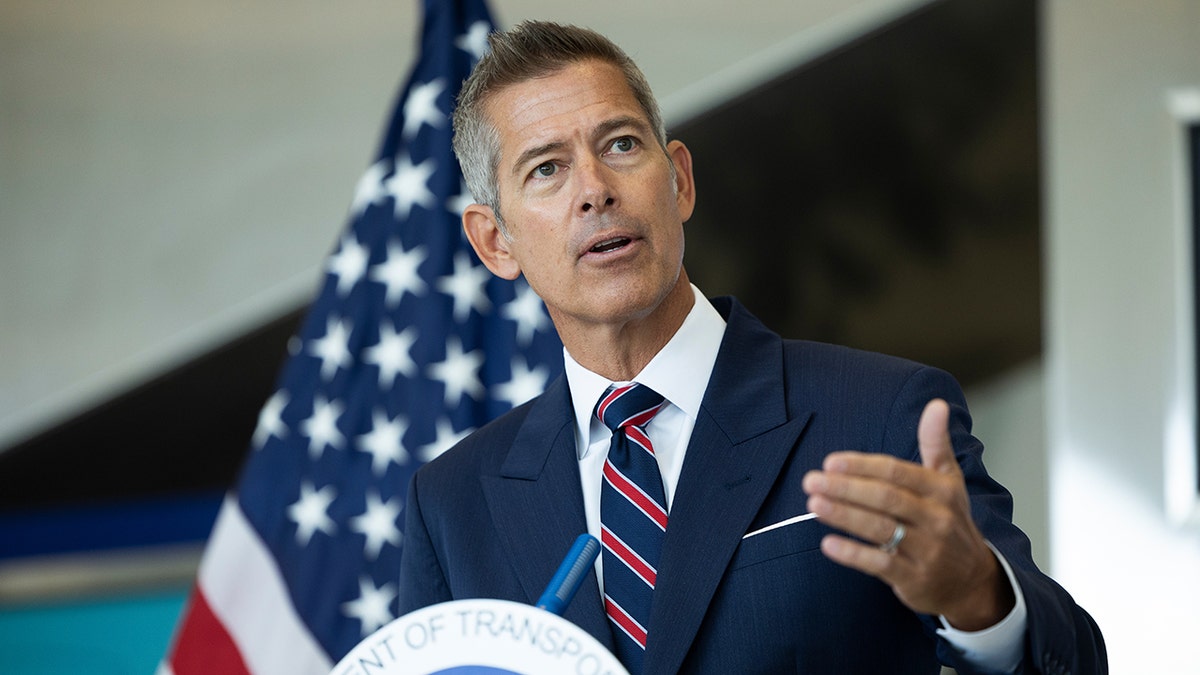
Sean Duffy’s threat to strip New York of $73M over allegedly illegal CDLs is less about paperwork and more about federal power, immigration policy, trucking labor, and national supply-chain risk.
Duffy’s Threat to Strip New York of Highway Funds Isn’t Just About Licenses. It’s About Power, Immigration, and Who Controls the Roads.
Transportation Secretary Sean Duffy’s threat to withhold $73 million in federal funds from New York over allegedly illegal commercial driver’s licenses (CDLs) sounds like a narrow regulatory spat. It isn’t. It sits at the intersection of federal power, state immigration policy, highway safety, and a fragile national supply chain already stretched by labor shortages in trucking.
Beneath the headlines about “illegally” issued licenses lies a deeper battle: who gets to decide who is allowed to move America’s goods, what counts as a legitimate identity in an era of polarized immigration politics, and how far Washington can go in punishing a state to make a national point.
Why This Fight Matters Beyond New York
At the surface level, Duffy claims that 53% of New York’s non-domiciled CDLs were “issued unlawfully or illegally,” giving the state 30 days to get into compliance or risk losing tens of millions in federal transportation funds. A non-domiciled CDL is typically issued to someone who lives in one place but is licensed in another—often foreign nationals who are authorized to operate commercial vehicles in the U.S.
The immediate stakes are straightforward: $73 million is not pocket change. That money supports road maintenance, infrastructure projects, safety programs, and transit initiatives. But the long-term stakes are bigger:
- The precedent for using federal funding as a blunt political and policy weapon against states.
- The impact on an already strained trucking and logistics workforce.
- The collision between federal immigration enforcement priorities and state-level licensing policies.
- The potential chilling effect on other states with expansive driver’s license policies for non-citizens.
How We Got Here: A History of Federal–State Battles Over Licenses and IDs
This confrontation doesn’t come out of nowhere. It sits on two decades of tension over identity documents, security, and immigration.
Real ID, 9/11, and the Federalization of Driver’s Licenses
After the September 11 attacks, Congress passed the REAL ID Act of 2005, effectively turning state-issued licenses into a de facto national ID system for certain federal purposes (like boarding planes and entering federal buildings). Although states still issue licenses, Washington laid down minimum standards for identity verification and documentation.
Some states resisted REAL ID on privacy and cost grounds; others, like New York, have tried to accommodate both federal rules and local political priorities, including more inclusive policies for undocumented residents. This push-pull created a patchwork system where not all licenses are equal—and where the distinction between driving privileges and immigration status has become politically explosive.
Immigration, ‘Green Light’ Laws, and the CDL Question
New York’s 2019 “Green Light Law” allowed undocumented immigrants to obtain standard (non-federal) driver’s licenses, provoking a major clash with the federal government over access to DMV data. That law did not authorize undocumented immigrants to obtain CDLs for interstate commerce, which are governed more tightly by federal standards. But it did signal New York’s willingness to push the boundaries on licensing and identity.
CDLs for non-domiciled drivers—often foreign nationals with temporary work authorizations, or residents of other countries with commercial driving rights in the U.S.—sit in a complicated legal space. Federal Motor Carrier Safety Administration (FMCSA) rules require specific immigration and work authorization statuses for such licenses, and states must verify those statuses to stay in compliance.
Duffy’s claim that more than half of New York’s non-domiciled CDLs were issued “unlawfully” suggests either:
- a breakdown in New York’s vetting and verification processes, or
- a dispute over how federal law and guidance should be interpreted in the context of New York’s more permissive licensing regime.
What’s Really at Stake: Policy, Politics, and Leverage
1. Federal Leverage via the Power of the Purse
Threatening to withhold transportation funds is a strategy with a long history. In 1987, the Supreme Court’s decision in South Dakota v. Dole upheld the federal government’s ability to tie highway funding to the drinking age. Since then, Washington has repeatedly used federal dollars to push states toward national standards on safety and public policy.
What’s different now is the intensity of partisan polarization. Actions that once looked like technocratic nudges increasingly appear as political punishment. If Duffy follows through on withholding funds, it would be a high-profile example of the executive branch using the funding spigot not just to enforce safety standards, but to make an example of a politically blue state—and, by extension, its approach to immigration and licensing.
2. Safety vs. Access: Competing Narratives
Duffy is framing this as a pure safety issue: improperly documented commercial drivers operating 40-ton trucks on American highways. If New York issued CDLs without properly verifying immigration status, work authorization, or identity documents, there are legitimate safety and security concerns. CDLs come with privileges that carry outsized risk if misused.
However, New York and its supporters are likely to argue that:
- Licensed, tested drivers—even non-citizens—are safer than an underground workforce driving without credentials.
- Federal rules don’t always reflect the realities of labor markets, especially in trucking, where the American Trucking Associations has estimated recent driver shortages in the tens of thousands.
- The rhetoric of “illegal licenses” can blur important distinctions between undocumented status, temporary legal status, and non-citizen residency.
This tension—between strict compliance and pragmatic inclusion—is playing out in many policy arenas, from sanctuary cities to work permits for asylum seekers. CDLs are just the latest flashpoint.
3. The Supply Chain Angle Most Coverage Will Miss
Trucking is the backbone of the U.S. economy. More than 70% of domestic freight tonnage moves by truck. Many fleets rely heavily on immigrant and foreign-born drivers, particularly in long-haul and specialized sectors. If New York must suddenly suspend, revoke, or refuse renewal of hundreds or thousands of non-domiciled CDLs, the ripple effects could be felt far beyond its borders.
New York is a major gateway state: ports, railheads, and border crossings all knit into national logistics networks. A disruption in eligible drivers there could:
- Increase reliance on carriers licensed in neighboring states, reshaping regional freight patterns.
- Increase operating costs as companies scramble to replace disqualified drivers.
- Intensify existing labor shortages, particularly for specialized freight that requires experienced CDL holders.
In other words, what sounds like a compliance dispute could echo into shipping times, costs for consumers, and the broader economic narrative heading into a volatile election cycle.
What the Numbers and Law Likely Look Like
While Duffy cites the 53% figure, the public hasn’t yet seen the underlying audit or methodology. Historically, when FMCSA or related agencies flag CDL issues, they’re looking at factors like:
- Failure to verify lawful presence or work authorization.
- Acceptance of documents that don’t meet federal standards.
- Systemic data mismatches between state DMVs and federal databases like SAVE (Systematic Alien Verification for Entitlements).
Under federal law (notably 49 CFR Part 383), states that issue CDLs must comply with uniform standards or risk decertification and funding penalties. The 30-day ultimatum suggests that regulators believe the deficiencies are administrative and fixable—but also serious enough to demand rapid action.
Expert Perspectives
Transportation, legal, and security experts see the issue from different angles:
On the legal and constitutional front, federalism scholars point to a potential replay of earlier funding battles.
“Using highway funds as leverage has Supreme Court precedent behind it, but there are limits,” says Prof. Elena Martinez, a constitutional law scholar at Georgetown Law. “If the conditions are too coercive or too detached from the purpose of the funds, states may push back in court. The question will be whether the alleged CDL violations are framed as a genuine safety issue or perceived as a proxy for immigration enforcement.”
From a transportation safety perspective, the question is whether non-domiciled drivers are inherently riskier, or if regulation is the key factor.
“The data generally show that training, enforcement, and hours-of-service compliance matter far more than the immigration status of drivers,” notes Dr. Karen Liu, a transportation safety analyst and former FMCSA consultant. “If New York really cut corners on vetting, that’s a problem. But we should be careful not to conflate paperwork failures with actual crash risk without robust evidence.”
Economists focused on logistics warn that abrupt enforcement moves can have unintended economic consequences.
“Every time we tighten eligibility for CDLs without a transition plan, the supply chain feels it,” says Mark Henderson, a freight economist with the nonpartisan Logistics Policy Institute. “If New York has to yank licenses quickly, fleets will be scrambling. That might be justified for safety reasons, but policymakers should be transparent about the trade-offs.”
What Happens Next: Scenarios and Implications
Over the next 30–90 days, several paths are possible:
Scenario 1: Quiet Compliance and Technical Fixes
New York could quietly negotiate with DOT and FMCSA, tighten its verification procedures, re-review affected licenses, and report “corrective actions” that satisfy federal officials. This is the most technocratic outcome—and the one that would likely minimize disruption to drivers and freight flows.
But in today’s environment, “quiet” may be wishful thinking. Both state and federal officials have incentives to play to their political bases, especially on immigration-adjacent issues.
Scenario 2: Public Standoff and Litigation
If New York disputes the findings or frames the federal move as overreach or political retaliation, the state could challenge the ultimatum in court, arguing that the penalty is excessive or that the federal interpretation of the rules is flawed.
Litigation would extend the uncertainty. During that period, affected drivers could find themselves in limbo, and carriers may hesitate to rely on New York-licensed non-domiciled drivers for fear of sudden disqualification.
Scenario 3: Broader Political Domino Effect
Other states with permissive licensing policies for non-citizens—especially those that have experimented with driver’s licenses for undocumented residents—will be watching closely. If Duffy’s threat results in visible penalties for New York, states like California, New Jersey, and Illinois may face renewed scrutiny of their own CDL practices, even if their policies technically comply with federal rules.
This could either lead to a wave of preemptive tightening of licensing practices—or, conversely, a coordinated pushback from a coalition of states asserting their authority to define who can drive on their roads, so long as they meet safety standards.
What’s Being Overlooked: The Human Dimension
Much of the public debate will focus on legality, funding, and safety. Less attention will be paid to the drivers themselves, many of whom are immigrants working long hours in difficult conditions to keep goods moving.
If New York must retroactively review or revoke non-domiciled CDLs, real people will lose livelihoods overnight. Some may have followed every instruction given by state officials and still find their status suddenly “non-compliant” because the rules—or their interpretation—changed above their heads.
This raises a broader policy question: when states and the federal government clash, who bears the cost? Often, it’s neither the politicians nor the senior bureaucrats, but the workers occupying the least stable positions in the labor market.
Looking Ahead: What to Watch
Over the coming weeks, key signposts will signal where this story is heading:
- The details of the federal findings: Does DOT or FMCSA release a report outlining how it arrived at the 53% figure, and what exactly was “unlawful”?
- New York’s public response: Does the state acknowledge errors and pledge fixes, or dispute the characterization and hint at legal action?
- Impact on drivers: Are non-domiciled CDL holders notified of status reviews, suspensions, or revocations? Do unions or advocacy groups get involved?
- Copycat scrutiny: Do we see similar audits or warnings directed at other states in the next 6–12 months?
The Bottom Line
Duffy’s 30-day ultimatum to New York is about far more than paperwork. It’s a test of how aggressively the federal government can enforce national standards in a polarized era, particularly when those standards collide with a state’s more inclusive approach to licensing and immigration.
If handled carefully, this could end in overdue technical corrections that improve safety without major collateral damage. If mishandled, it could deepen federal–state mistrust, disrupt supply chains, and turn commercial driver licensing into yet another frontline in America’s never-ending immigration and culture wars.
For everyone from truckers to governors to consumers paying shipping-driven price increases, the outcome will matter in ways that won’t fit neatly into a breaking news chyron.
Topics
Editor's Comments
What’s striking about this story is how quickly a technical audit finding—53% of non-domiciled CDLs allegedly issued improperly—has been turned into a public ultimatum with a clear political edge. There are real safety questions here, and New York owes its residents transparency about how such a high non-compliance rate emerged, if the figure holds up under scrutiny. But it’s equally important to ask why the enforcement response is so publicly theatrical and so tightly framed in terms of punishment rather than remediation. We’ve seen this movie before with REAL ID, sanctuary cities, and pandemic measures: the federal government uses funding threats to steer state policy, and states respond either with quiet capitulation or noisy resistance. What’s missing so far is a serious discussion of proportionality and due process for affected drivers. If the federal findings are accurate, a targeted, phased correction plan with clear protections for workers who followed state guidance might serve safety goals without needlessly destabilizing livelihoods and supply chains. Instead, the opening move has been a 30-day or-else warning blasted on social media—a choice that suggests messaging and political positioning are as central as technical compliance. That’s the tension to watch as this unfolds.
Like this article? Share it with your friends!
If you find this article interesting, feel free to share it with your friends!
Thank you for your support! Sharing is the greatest encouragement for us.