
Beyond the Horizon: Renewed Search for MH370 Illuminates Unseen Dimensions of an Aviation Mystery

Sarah Johnson
December 3, 2025
Brief
This analysis explores the renewed search for Malaysia Airlines Flight 370, contextualizing technological advances, geopolitical complexities, and enduring human impacts beyond conventional news coverage.
Opening Analysis
The announcement that the search for Malaysia Airlines Flight 370 (MH370) will resume more than a decade after its mysterious disappearance is a significant development in one of aviation history's most perplexing mysteries. Despite exhaustive prior efforts, the plane's fate remains unknown, leaving families without closure and fueling global fascination. The imminent deep-sea search by Ocean Infinity, leveraging advanced marine robotics and a novel no-find, no-fee contract, signals a renewed commitment to unraveling this enigma. Beyond its immediate humanitarian aims, this development reflects broader trends in technology-driven maritime exploration and the challenges of investigating catastrophic events in remote environments.
The Bigger Picture
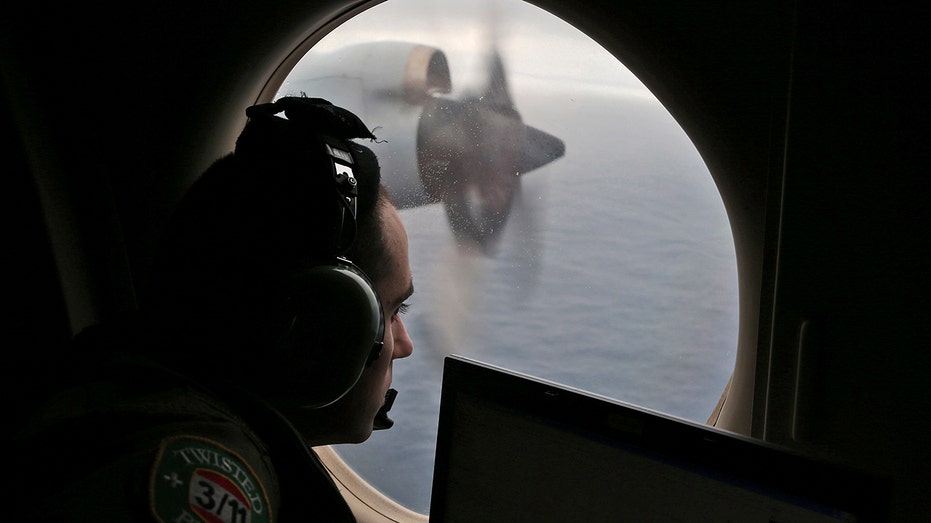
Since MH370 vanished from radar screens shortly after departing Kuala Lumpur on March 8, 2014, with 239 people aboard, the incident has persisted as an unresolved tragedy with profound implications. Early investigations established that the plane deviated sharply from its planned route, veering southwards over the Indian Ocean—a vast and remote stretch of ocean known for unpredictable weather, strong currents, and limited satellite coverage. Despite extensive multinational search efforts encompassing an area of approximately 120,000 square kilometers, no definitive wreckage was located until scattered debris washed ashore on islands far from the main search zones, including pieces confirmed to be from the Boeing 777.
The failure to locate the aircraft in the years following its disappearance underscores the difficulties posed by the ocean’s vastness and depth. Previous technological limitations and the challenge of working with incomplete or imprecise satellite data hampered search models. Moreover, the disaster laid bare lapses in global aviation safety protocols and tracking capabilities, prompting regulatory bodies to reconsider real-time aircraft monitoring systems to prevent similar disappearances.
What This Really Means
Restarting the search in 2025, over a decade later, highlights several key developments in technology, geopolitics, and the human imperative for closure. The selection of Ocean Infinity—a private marine robotics company—demonstrates the increasing role that commercial firms and cutting-edge technology play in solving public mysteries that governments struggled to address. Notably, Ocean Infinity's "no-find, no-fee" agreement shifts financial risk away from the Malaysian government, reflecting a pragmatic approach to resource-intensive searches in uncertain conditions.
The targeted 55-day search area of 5,800 square miles is substantially smaller than earlier search zones, evidencing improved analytical models possibly derived from advances in satellite data processing, ocean current mapping, and underwater scanning technologies such as autonomous underwater vehicles (AUVs). This refined focus suggests that algorithmic improvements and deeper understanding of debris drift have helped narrow potential crash sites.
Beyond the technological angle, this effort underscores the enduring trauma and societal need for resolution after mass disasters. Families of MH370 victims have voiced frustration over the protracted lack of answers, and governments involved face growing pressure to demonstrate meaningful action. The continuation of the search contributes not only to potential physical recovery but also to symbolic healing and accountability.
Expert Perspectives
Dr. Laurence Styron, an expert in aviation safety and disaster investigation at the International Air Transport Research Institute, notes: "The MH370 case is a watershed moment in aviation history. It exposed vulnerabilities in global tracking and crisis management, which have since catalyzed changes in international aviation protocols. Renewed searches benefit from technological leaps in underwater mapping and might offer finally the evidence needed to solve the mystery and strengthen future safety measures."
Dr. Mara Evers, a maritime robotics specialist affiliated with the Oceanographic Institute, commented: "Ocean Infinity's deployment of autonomous underwater vehicles equipped with high-resolution sonar and mapping technologies marks a new era in subsea exploratory capacity. The ability to conduct prolonged, detailed scans autonomously allows for coverage of large, complex seafloor topographies that were previously inaccessible or too costly to survey thoroughly."
John McAlister, a geopolitical analyst focusing on Southeast Asia, adds: "The MH370 case also reflects regional challenges related to multilateral coordination and transparency. Renewed efforts could catalyze improved cooperation among Indian Ocean nations for maritime search and rescue initiatives, which hold broader security and humanitarian implications beyond aviation alone."
Data & Evidence
Key data points framing this search include the fact that MH370 disappeared approximately 90 seconds after leaving Malaysian airspace, and independent satellite data indicated the plane's route diverted south over the Indian Ocean. Previous multinational searches covered an estimated area larger than 46,000 square miles—roughly the size of Sweden—without finding the main wreckage.
The "no-find, no-fee" contract offers up to $70 million reward if Ocean Infinity locates the aircraft within a 5,800-square-mile search area, illustrating the enormous financial stakes involved. Ocean Infinity’s prior 2018 search utilized autonomous underwater vehicles scanning at depths exceeding 4,500 meters with sonar imaging capabilities exponentially superior to past efforts, albeit without success. The company claims recent technological enhancements have improved underwater targeting and data processing speeds by up to 30%, vital for managing the scale and complexity of the ocean floor in the designated sector.
Looking Ahead
If Ocean Infinity’s targeted search uncovers new evidence or debris, it could finally provide closure for families and inform future aviation safety improvements. Even in the absence of discovery, advanced mapping data will contribute valuable knowledge about the Indian Ocean seabed, aiding future scientific and navigational endeavors.
Moreover, this search could set a precedent for private-public partnerships in maritime exploration and disaster response, encouraging governments to leverage commercial innovation for complex challenges. The quest for MH370’s fate also raises pressing questions about improving live aircraft tracking—particularly over remote regions lacking radar coverage—and the role of satellite constellations in real-time monitoring.
Conversely, failure to locate MH370 again may cast doubt on the feasibility of resolving certain aviation mysteries through underwater searches alone, prompting calls for paradigm shifts towards prevention, information transparency, and disaster preparedness.
The Bottom Line
The renewed search for MH370 reactivates a decade-long quest that encapsulates humanity's deep yearning for answers amid tragedy. It highlights the intersection of advanced technology, international cooperation, and the emotional landscape of loss. While the outcome remains uncertain, this attempt illustrates evolving methodologies in maritime exploration and a persistent refusal to let this aviation mystery fade into obscurity.
Topics
Editor's Comments
The renewed MH370 search encapsulates a compelling intersection of human determination, technological innovation, and geopolitical collaboration. While prior efforts struggled under the weight of uncertainty and limited data, today’s search benefits from a decade of scientific advances and analytical refinement. Yet, this endeavor also forces us to confront uncomfortable truths about the inherent challenges of remote ocean exploration and the limits of technology when facing vast natural environments. Moreover, it prompts reflection on how aviation authorities worldwide can implement lessons from MH370 to prevent future disappearances. Despite the passage of time, the stakes remain deeply personal and globally significant. The willingness to keep probing reflects not only technological optimism but also an ethical imperative to provide answers to those left waiting for closure.
Like this article? Share it with your friends!
If you find this article interesting, feel free to share it with your friends!
Thank you for your support! Sharing is the greatest encouragement for us.