Obamacare’s Next Cliff: What the Senate Stalemate Reveals About the Future of U.S. Health Care

Sarah Johnson
December 12, 2025
Brief
The Senate’s failed Obamacare subsidy votes expose a deeper question: how long can the U.S. rely on temporary subsidies to prop up a fragile private insurance market before a structural overhaul becomes unavoidable?
Obamacare’s “Healthcare Cliff” Isn’t Just a Senate Stalemate — It’s a Stress Test for America’s Entire Health-Care Model
As the Senate watches dueling Obamacare fixes collapse in rapid succession, the immediate storyline sounds familiar: partisan gridlock, messaging votes, and looming deadlines. But beneath the procedural drama lies something much bigger — a structural test of how far the United States is willing to go to sustain a market-based health system that depends on ever-rising federal subsidies to remain politically survivable.
The imminent expiration of enhanced Affordable Care Act (ACA) subsidies at year’s end is not just a budgetary issue. It’s a pressure point exposing three unresolved questions that have dogged U.S. health policy for more than a decade:
- How much public money will it take to keep private individual markets affordable enough for middle- and lower-income Americans?
- Can Congress move beyond “temporary patches” to a long-term design, or is crisis governance the new normal?
- Who will get blamed — and rewarded — when the next round of premium hikes and coverage losses hits voters?
That’s why this fight over a seemingly technical subsidy extension is drawing such hard-edged political maneuvering: it’s really a contest to define the future of health coverage for tens of millions of Americans, with both parties trying to lock in their narrative before the next election cycle fully kicks in.
How We Got Here: A Decade of Temporary Fixes and Weaponized Premiums
The ACA’s basic architecture — private plans sold on exchanges, heavily subsidized by federal tax credits — was always politically fragile. When the law passed in 2010, subsidies were designed primarily to protect lower-income consumers from premium spikes. But as health-care costs climbed faster than wages, “middle-class” enrollees started feeling the squeeze.
Key turning points created the present “cliff”:
- 2014–2016: Early exchange instability. Many insurers mispriced risk, premiums jumped, and some carriers exited exchanges. Subsidies insulated many low-income enrollees but not those just above eligibility thresholds.
- 2017–2019: Trump-era moves and counter-moves. The Trump administration cut cost-sharing reduction payments and promoted non-ACA plans, but Congress failed to repeal the ACA. Premiums surged, then partially stabilized. Insurers priced in federal uncertainty.
- 2021: The big temporary expansion. Under pandemic relief measures, Congress significantly boosted ACA subsidies and removed the prior 400% of poverty cap, leading to record enrollment. Many middle-income families saw premiums fall by hundreds of dollars a month — but only under a time-limited deal.
- 2022–2025: The extension cycle. Rather than restructuring the system, Congress twice opted to “kick the can” by extending enhanced subsidies. Each extension was sold as bridge, not blueprint. The current deadline is simply the latest turn of that wheel.
What we’re seeing now is the cumulative result of governing by patch: every temporary fix creates a new baseline, and rolling it back becomes politically toxic. Once voters internalize a lower premium as “normal,” allowing that support to expire looks like an active cut — not the end of an emergency measure.
What’s Really at Stake in the Senate’s Failed Votes
On the surface, this week’s votes were about two things: a Democratic-backed three-year extension of enhanced subsidies and Republican plans that tie a shorter extension to reforms like expanded Health Savings Accounts (HSAs). Neither was expected to survive the 60-vote threshold. That’s precisely the point: both parties are using failure to define the battlefield.
Behind the rhetoric, several strategic calculations are driving behavior:
- Democrats are trying to lock in the expectation of robust subsidies. A three-year extension would push the next “cliff” closer to the outer edge of the political calendar and normalize the higher subsidy level. It also preserves the premise that affordability should be guaranteed for a broad swath of households, not just the poor.
- Republicans are trying to reframe the problem as system failure, not subsidy insufficiency. Their proposals build around HSAs and “patient control,” arguing that pouring more money into the ACA simply props up a flawed, expensive structure. They want the fight to be about cost drivers and regulation, not just how big the check should be.
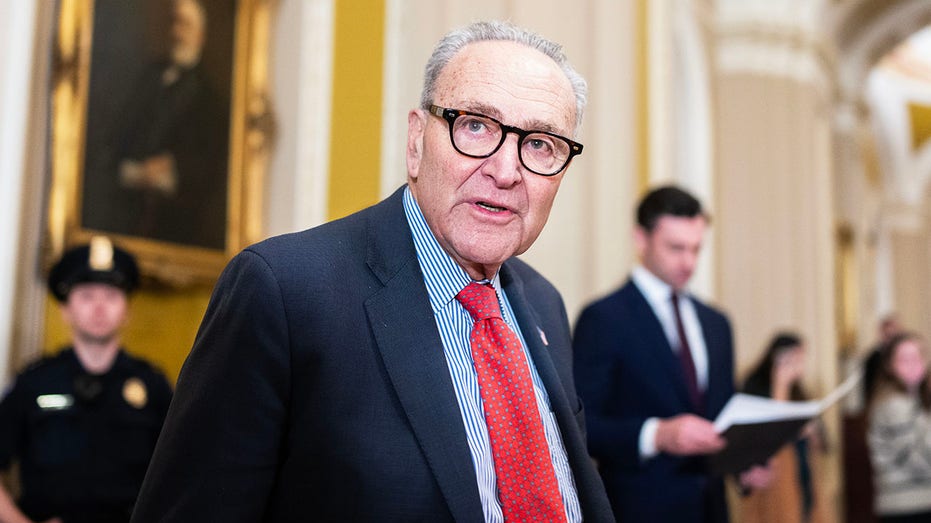
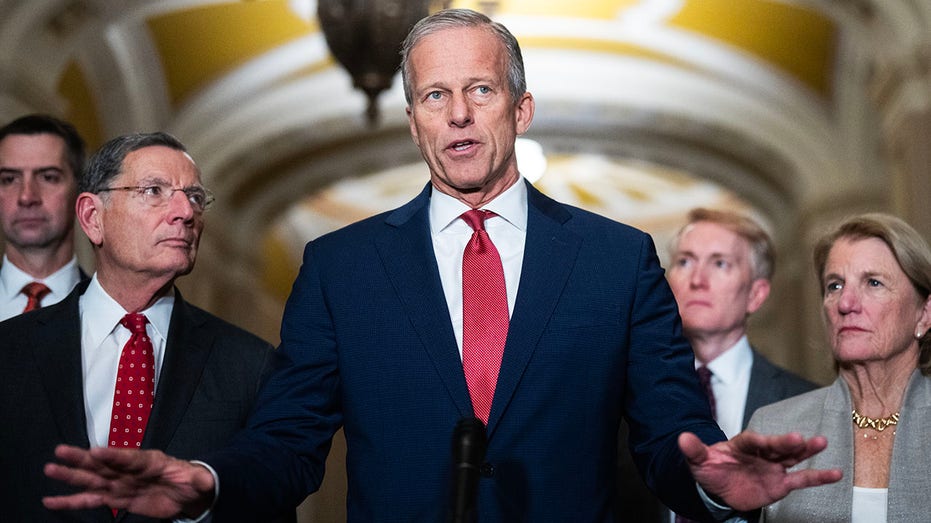
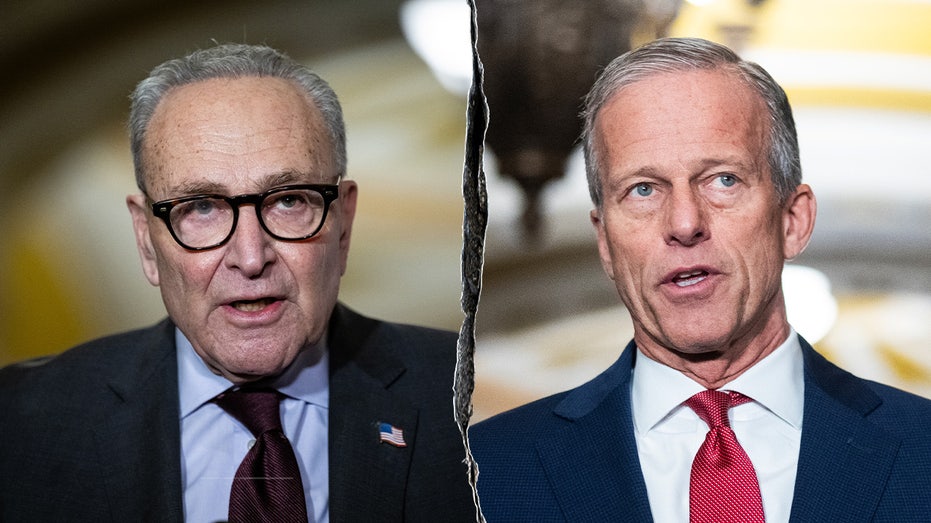
- Both sides are pre-writing the blame narrative. Senate Majority Leader John Thune describes the Democratic bill as a “messaging vote”; Senate Majority Whip John Barrasso talks about “corruption that has run rampant in Obamacare.” Senate Majority Leader Chuck Schumer counters that Republicans now “own” any premium spike. Each bloc is less afraid of policy failure than of losing the blame game.
Sen. Lisa Murkowski’s comment — that the Senate sometimes has to show “what we can’t do first” — is revealing. It acknowledges that the chamber is now functioning as a stage, not a solution factory, at least in the initial rounds. These failed votes are as much about mapping out political possibilities as about actual policymaking.
The Underlying Policy Divide: Subsidies vs. Structure
Strip away the talking points and the real divide is simple: should the federal response to high premiums be primarily to subsidize those premiums, or to rebuild the underlying market that generates them?
Democrats, in broad terms, accept the ACA’s market-based structure but see subsidies as the main lever for affordability. They prioritize stability and coverage numbers:
- Enhanced subsidies supported record ACA enrollment — over 21 million people in recent years.
- The Congressional Budget Office has previously estimated that letting enhanced subsidies lapse would increase premiums for many enrollees by thousands of dollars per year and push millions to drop coverage.
- Politically, Democrats see the ACA as a success story still under siege, so they resist reforms that look like structural rollback.
Republicans emphasize market redesign and consumer-directed tools like HSAs:
- Plans like Sen. Roger Marshall’s combine time-limited subsidy extensions with broader changes — HSA expansion, regulatory tweaks, and cost-cutting rhetoric.
- They argue that subsidies mask — and ultimately entrench — inflated premiums, high deductibles, and limited plan choice.
- Philosophically, Republicans want more exposure to prices and more room for non-ACA coverage, even if that means less comprehensive benefits for some.
The reality is that both approaches contain partial truths. Subsidies do meaningfully improve affordability in the short term — that’s borne out in enrollment and premium data since 2021. But subsidies alone do not bend the underlying cost curve in a system where hospital, drug, and insurer consolidation is increasingly dominant.
The Trump Factor: Presidential Silence in a Policy Vacuum
Several senators openly point to Donald Trump’s absence as a key variable. Sen. Chris Murphy’s blunt assessment — “Not until Donald Trump decides we get out of it” — underscores a reality: when one party controls the White House and both chambers, rank-and-file negotiations only go so far without direction from the top.
Trump has signaled interest in HSAs but has kept an arm’s-length distance from the subsidy fight. That creates a vacuum with three consequences:
- Republican factions lack a unifying line. Without a clear White House red line, GOP proposals range from short-term extensions with HSAs to two-year credits (Collins–Moreno) — a spread wide enough to divide their own caucus.
- Democrats can frame this as a leadership test. Murphy’s comments are laying the groundwork: if premiums spike or coverage drops, Democrats will argue that a Republican-controlled government chose inaction.
- The odds of last-minute chaos increase. Historically, presidents have stepped in near deadlines to bless a compromise or deliberately allow a confrontation. The current ambiguity makes it harder for Senate negotiators to know how far they can go.
What Happens If the Cliff Isn’t Averted?
If enhanced subsidies lapse on schedule, the effects will be uneven but significant.
Who is hit first and hardest?
- Middle-income households just above poverty thresholds, especially in high-cost states and rural areas with limited insurer competition.
- Older enrollees in their 50s and early 60s, for whom premiums can be several times those of younger consumers.
- Self-employed and gig workers who don’t have employer coverage and rely on ACA exchanges as their only realistic option.
For many of these households, the shift isn’t marginal. Premiums can jump by hundreds of dollars per month, or deductibles can become so high that coverage feels nominal. That’s the “healthcare disaster” Democrats warn about — not a theoretical crisis, but a gradual erosion in real-world access and financial security.
System-level consequences could include:
- Coverage losses. CBO and independent analysts have consistently projected that subsidy rollbacks reduce enrollment. Even a few million more uninsured people can strain uncompensated care systems and state budgets.
- Market destabilization. If healthier, price-sensitive enrollees drop coverage first, risk pools worsen, accelerating the next round of premium increases.
- State-level divergence. States with their own subsidy programs or aggressive outreach may buffer the blow, widening the gap between “health policy haves and have-nots.”
Why Bipartisanship Is Both Necessary and Structurally Difficult
Several senators, including Republican Bill Cassidy, insist that a bipartisan solution is “the way Congress is supposed to work.” That’s not nostalgia; it’s recognition that any durable health-care framework must survive changes in partisan control.
But three structural problems hinder bipartisan work:
- Health care is now a core identity issue. For Democratic voters, defending and expanding the ACA has become a litmus test; for Republican voters, opposing “Obamacare” was a defining project for a decade. Compromise now carries reputational risk with primary voters.
- Crisis timing rewards short-term fixes. Because markets are sensitive and elections are frequent, Congress is repeatedly incentivized to patch immediate pain (subsidy extensions) rather than overhaul the architecture.
- Budget rules distort incentives. The reconciliation process — which Republicans may use next year — allows one-party action but requires deficit-conscious trade-offs on paper, encouraging time-limited fixes that “score” cheaper while pushing real costs outside the budget window.
This is why the current fight may drag into the new year and into reconciliation: it allows Republicans to advance a more ideologically coherent package without needing 60 votes, even if it further entrenches the ping-pong dynamic in U.S. health policy.
What Mainstream Coverage Often Misses
There are three underreported dimensions to this debate:
- Health-care affordability is quietly replacing “coverage expansion” as the central political fault line. The ACA has, by most measures, significantly reduced the uninsured rate. The fight now is less about whether people have a card and more about whether that card protects them from financial shock. High deductibles and out-of-pocket costs are as politically potent as losing coverage outright.
- Subsidies are becoming a structural pillar of the private insurance market, not a temporary patch. The more years Congress extends enhanced subsidies, the harder it becomes to imagine a system without them. The U.S. is drifting toward a hybrid model where private coverage is heavily underwritten by taxpayers — without a transparent public debate about that long-term direction.
- The employer-based system is the quiet third rail. Any serious attempt to rationalize subsidies — for example, aligning ACA credits with the massive tax exclusion for employer plans — would require confronting the biggest hidden subsidy in U.S. health care. Neither party is eager to open that front in an election cycle.
Looking Ahead: What to Watch in the Coming Months
Several signals will reveal whether this is heading toward another short-term patch or a more consequential shift:
- White House positioning. If Trump moves from vague support for HSAs to endorsing a specific Senate framework, that instantly reshapes Republican negotiating space.
- Moderate bloc behavior. Senators like Murkowski, Collins, and others who voted across proposals are signaling openness to compromise. If they begin crafting a small bipartisan package — a modest subsidy extension plus limited reforms — it could form the basis for a year-end or early 2026 deal.
- Insurer and hospital lobbying. Major carriers and provider groups have a lot to lose from destabilized exchanges. As deadlines near, they can exert significant pressure, especially on Republicans from rural states where hospital finances are fragile and exchange options are thin.
- State responses. Some blue states may move to add or enhance their own subsidies if Congress fails to act, deepening the red–blue divide in health coverage resilience.
Speculatively, the most likely near-term outcome remains a limited, time-bound extension paired with modest Republican-flavored reforms — enough for both sides to claim partial victory and avoid an immediate cliff, but not enough to settle the structural debate.
The Bottom Line
This isn’t just another Obamacare skirmish. The Senate’s struggle over expiring subsidies is a referendum on whether the U.S. will continue deepening its reliance on federal dollars to sustain a fragmented private insurance market — or whether political pressure will eventually force a more fundamental redesign.
For now, both parties are trying to avoid owning the next spike in premiums. But as temporary fixes pile up, the real question is becoming harder to duck: how many more cliffs can the system endure before voters demand something more than another extension?
Topics
Editor's Comments
What’s striking in this episode is how normalized crisis governance has become in U.S. health policy. Both parties now plan around cliffs they themselves created, using each impending deadline as leverage rather than a prompt for structural solutions. Democrats lean on the real, immediate harm that lost subsidies would inflict on families, but largely sidestep the question of whether endlessly escalating public outlays to private insurers is sustainable. Republicans rightly highlight the system’s inefficiencies yet have not produced a politically credible alternative that matches current coverage levels, especially for lower-income and high-risk patients. The missing conversation is about the long-term destination: are we drifting toward a de facto public financing backbone for a private delivery system, or will there be a moment when policymakers confront the employer-based tax exclusion, provider pricing power, and the fragmented multi-payer structure head-on? Until that question is forced, Congress will likely continue to trade small reforms for temporary fiscal anesthesia — and voters will keep experiencing health care as a series of shocks rather than a coherent system.
Like this article? Share it with your friends!
If you find this article interesting, feel free to share it with your friends!
Thank you for your support! Sharing is the greatest encouragement for us.