A Memorial That Blames: How a New Monument Could Rewire America’s Immigration Debate

Sarah Johnson
December 13, 2025
Brief
House Republicans’ proposed memorial to Americans killed by undocumented immigrants is more than symbolism. It’s an attempt to hard-wire a powerful narrative about immigration, crime, and blame into the nation’s capital.
Why a National Memorial for Crimes by Undocumented Immigrants Could Reshape the Immigration Debate
House Republicans’ new push for a national memorial honoring Americans killed by undocumented immigrants is not just a symbolic gesture. It’s an attempt to hard‑wire a particular story about immigration into the nation’s physical and political landscape—one that could influence policy, elections, and public memory for decades.
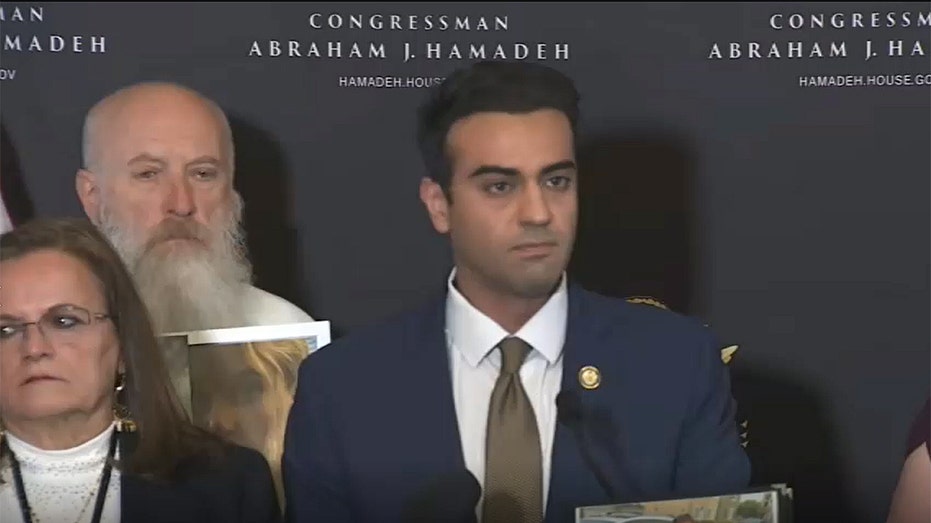
On its face, the proposal, led by Rep. Abe Hamadeh of Arizona, centers on grief, remembrance, and accountability. Beneath that, it’s a sophisticated deployment of political messaging through public commemoration—weaponizing memory in one of the most polarized policy arenas in American life.
How We Got Here: From "Angel Families" to National Monument Politics
The memorial proposal sits at the intersection of three longer-running trends:
- The elevation of “angel families” in national politics – Families who have lost loved ones to crimes committed by undocumented immigrants have been a visible part of Republican messaging since at least the mid‑2010s. Donald Trump regularly featured such families at rallies and the 2016 and 2020 conventions to dramatize his border security agenda.
- The use of crime as a lens for immigration debates – Though numerous studies show immigrants (including undocumented immigrants) generally commit crimes at lower rates than native‑born citizens, individual high‑profile cases have repeatedly shaped public perception. Politicians have long understood that a single horrific story can outweigh a thousand statistical charts in the public imagination.
- The politicization of memorials and monuments – From Confederate statues to 9/11 memorials, the U.S. has entered an era in which physical commemorations are understood as political acts. Which tragedies are memorialized—and how—signals whose suffering counts, who is blamed, and what policies are justified.
In this context, a national memorial to victims of crimes by undocumented immigrants is not a neutral tribute. It is an effort to physically enshrine a causal narrative: immigration policy → illegal presence → violent crime → American death.
What’s Driving the Push Now?
The timing is deliberate. The announcement comes after:
- Record border encounters in late 2024, with more than 300,000 encounters at the southern border in December 2024, followed by a sharp drop to roughly 11,600 in September 2025 after aggressive enforcement by the new Trump administration.
- Publicized violent incidents, including the killing of a National Guard member, which Republicans have used to argue that earlier Biden-era policies were dangerously permissive.
- A dramatic deportation push, with DHS under President Trump and Secretary Kristi Noem claiming more than 2.5 million deportations in under a year—an unprecedented pace in modern U.S. history.
Hamadeh’s framing—that the memorial will both honor victims and “shame the politicians who allowed this situation to happen”—reveals the strategic goal: to permanently affix blame to prior administrations and to certain state and local policies that limit cooperation with federal immigration enforcement.
This is memorialization as political indictment.
Crime, Immigration, and What the Data Actually Say
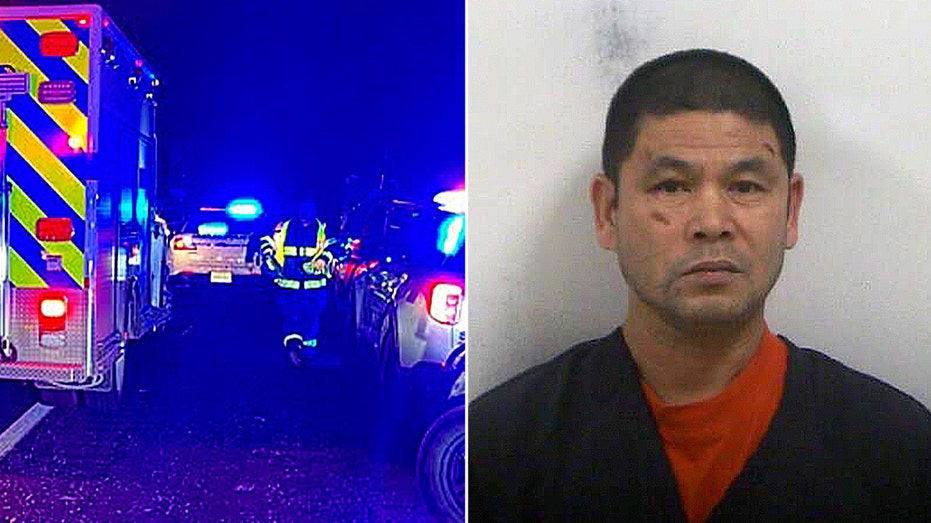
The emotional force of the proposal comes from stories like that of Jennifer Boss, whose daughter was brutally killed, allegedly by an undocumented immigrant who was later released because of Illinois policy choices. These tragedies are real, and the grief is profound.
But policy analysis requires stepping back from singular stories and asking: How common is this? What is the baseline risk compared with the general population?
Key points from existing research (pre‑2025, but still instructive):
- Multiple peer‑reviewed studies (for example, work by the Cato Institute using Texas conviction data and research in journals such as Criminology) have consistently found that immigrants—including undocumented immigrants—tend to have equal or lower criminal conviction and incarceration rates than native‑born citizens.
- Analyses of statewide data in places like Texas indicated undocumented immigrants were substantially less likely to be convicted of violent crimes than native‑born Americans.
- That said, the absolute number of crimes committed by undocumented immigrants is not zero. In a country of 330+ million people, even rare events can generate dozens or hundreds of tragic cases.
Politically, the statistical rarity is almost irrelevant. Immigration opponents don’t have to prove that undocumented immigrants are more dangerous on average—only that “every preventable death” justifies a radically more restrictive approach. The memorial is designed to keep those preventable deaths permanently in the foreground.
Why This Memorial Is Different From Other Memorials
Most national memorials commemorate:
- wars or mass attacks (World War II, Vietnam, 9/11), or
- historic injustices acknowledged by the state (Japanese American internment, civil rights struggle).
They generally focus on mourning and reflection, not on labeling a particular population as the causal agent of danger.
This proposal is different in several ways:
- It targets a category of people rather than a specific event. The memorial would be built because perpetrators are “individuals unlawfully present in the United States.” The defining feature is immigration status, not the crime itself.
- It is explicitly policy-prescriptive. Supporters are open that the memorial is intended as a rebuke of past policies and as a reminder of the need for aggressive enforcement in the future. It is effectively a permanent campaign billboard carved in stone.
- It risks a one-sided narrative. There is no parallel discussion of Americans killed by U.S. citizens, by firearms, by domestic abusers, or by fentanyl trafficked through legal ports of entry those deaths vastly outnumber those caused by undocumented immigrants.
There is precedent for issue‑driven memorials—the Oklahoma City National Memorial emphasizes the threat of domestic extremism, and the 9/11 memorial inevitably shapes views on terrorism and security. But those focus on very specific events, not broad demographic categories.
Policy Implications: From Memorial Wall to Legislative Wall
If this memorial is authorized and built, it is likely to be used to bolster several policy directions:
- Harsher interior enforcement – Increased pressure on states and cities to repeal sanctuary policies and fully cooperate with ICE detainers, framed as a moral obligation to the victims honored at the memorial.
- More restrictive asylum and parole rules – The argument will be that allowing asylum seekers or parolees into the interior before their cases are resolved presents avoidable risks.
- Expanded detention and expedited removal – To minimize the possibility that someone who later commits a violent crime was released pending proceedings.
- Broader political blame – Expect the memorial to be invoked in campaigns against lawmakers who supported more permissive policies, particularly in swing districts and states.
Critics will likely argue that such a monument distorts risk, stigmatizes millions of law‑abiding undocumented residents, and diverts attention from more statistically significant drivers of violent crime—like firearms access, poverty, and domestic violence.
The Human Stories and the Moral Dilemma
There is no way to talk about this issue without acknowledging the raw human grief at its center. Parents like Jennifer Boss are not political props in their own eyes; they are people who experienced institutional failure after suffering unimaginable loss.
Yet policymakers face a difficult moral and analytical question: Should the worst outcomes, rather than the most probable ones, drive immigration policy?
Public health and safety policy typically weighs both:
- We allow cars on highways knowing thousands will die each year, because the economic and social benefits are enormous—but we regulate speed limits, seat belts, and drunk driving.
- We don’t ban all prescription drugs because a small number of people abuse or react badly to them; we regulate, monitor, and intervene case-by-case.
Immigration is different because the victims and perpetrators can be framed in stark “us versus them” terms: Americans versus foreigners. That framing makes it politically easier to argue that even very rare harms are unacceptable if they can be traced to someone who “never should have been here at all.”
What’s Being Left Out of the Conversation
Several important dimensions are largely absent from the rhetoric around this memorial:
- The role of U.S. demand and domestic actors – Much cross‑border crime, from drug trafficking to human smuggling, is driven by U.S. markets and facilitated by U.S. citizens as well as foreign nationals.
- The contributions of undocumented workers – Millions of undocumented immigrants pay taxes, staff key industries (agriculture, construction, caregiving), and live for decades without any criminal record. Their stories are unlikely to be part of this memorial.
- Violence driving migration – Some undocumented migrants themselves flee violence in their home countries, often worsened by U.S. foreign policy, arms flows, and economic pressures. Their victimization does not figure into this narrative.
- The comparative scale of harms – More than 45,000 people in the U.S. die annually from gun violence; tens of thousands die from drug overdoses. The subset of violent crimes involving undocumented immigrants is a tiny portion of overall victimization, but it commands disproportionate attention in this proposal.
None of this erases the suffering of angel families. It does highlight that policy built around the most emotionally compelling subset of harm can easily become unbalanced.
Looking Ahead: What to Watch For
Several key developments will determine how consequential this proposal becomes:
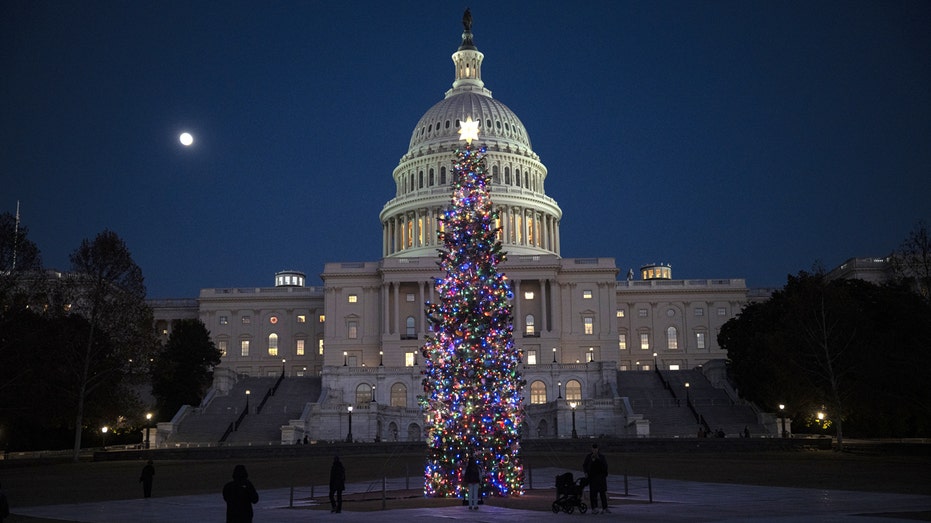
- Legislative specifics – Where in Washington, D.C. would the memorial be located? Will it require private fundraising or federal appropriations? The closer it is to the National Mall, the stronger its symbolic power.
- Scope and criteria – Who counts as a victim for the purposes of the memorial? Only those killed by people later found to be undocumented? What about unresolved cases or non‑homicide crimes? These definitional choices will shape both the size and the politics of the project.
- Democratic response – Will Democrats oppose the memorial outright (risking accusations of disrespecting victims) or try to reframe it (for example, by pairing it with memorials to migrants who died crossing the border or in U.S. custody)?
- Judicial or design controversies – As with other contentious monuments, expect fights over design, inscriptions, and whether the narrative presented is balanced or inflammatory.
In the longer term, if built, the memorial could become a recurring backdrop for press conferences, bill signings, and campaign speeches attacking any administration deemed “weak” on enforcement.
The Bottom Line
The proposed national memorial for Americans killed by undocumented immigrants is not just about honoring victims. It’s an effort to cement a specific story about immigration into stone: that the defining truth of undocumented presence in the U.S. is lethal danger to citizens, caused by political negligence.
Whether that narrative is supported by broad data is almost beside the point. Statistically rare tragedies often drive enduring policy. This memorial aims to ensure those tragedies remain permanently visible—and politically potent—at the heart of the nation’s capital.
Topics
Editor's Comments
What’s most striking about this proposal is how effectively it sidesteps the central empirical question: Are undocumented immigrants, as a group, driving crime in the United States? The available evidence suggests no, but the memorial isn’t built for analysts; it’s built for memory. A parent standing in front of a wall of names doesn’t think in terms of base rates or comparative risk—they absorb a moral lesson that feels self-evident: this should never have happened, and someone is to blame. The power of such a site is that it makes a particular causal story emotionally incontestable. That raises hard questions about fairness and proportionality. We rarely talk about memorials to victims of gun violence in a way that directly implicates gun owners as a class, nor do we build national monuments to Americans killed by drunk drivers that frame all alcohol consumers as a threat. Yet here, a status-based category—undocumented immigrants—is poised to be memorialized primarily as a source of danger. That asymmetry deserves much more scrutiny before we carve it into stone.
Like this article? Share it with your friends!
If you find this article interesting, feel free to share it with your friends!
Thank you for your support! Sharing is the greatest encouragement for us.