Stabbing at Macy’s Herald Square: What a Holiday Horror Reveals About Urban Safety and America’s Social Fault Lines

Sarah Johnson
December 12, 2025
Brief
A tourist’s stabbing at NYC’s flagship Macy’s exposes deep fractures in urban safety, homelessness policy, retail security, and tourism economics far beyond a single holiday crime headline.
Stabbing at Macy’s Herald Square: What a Single Holiday Attack Reveals About Urban Safety, Tourism, and America’s Social Breakdown
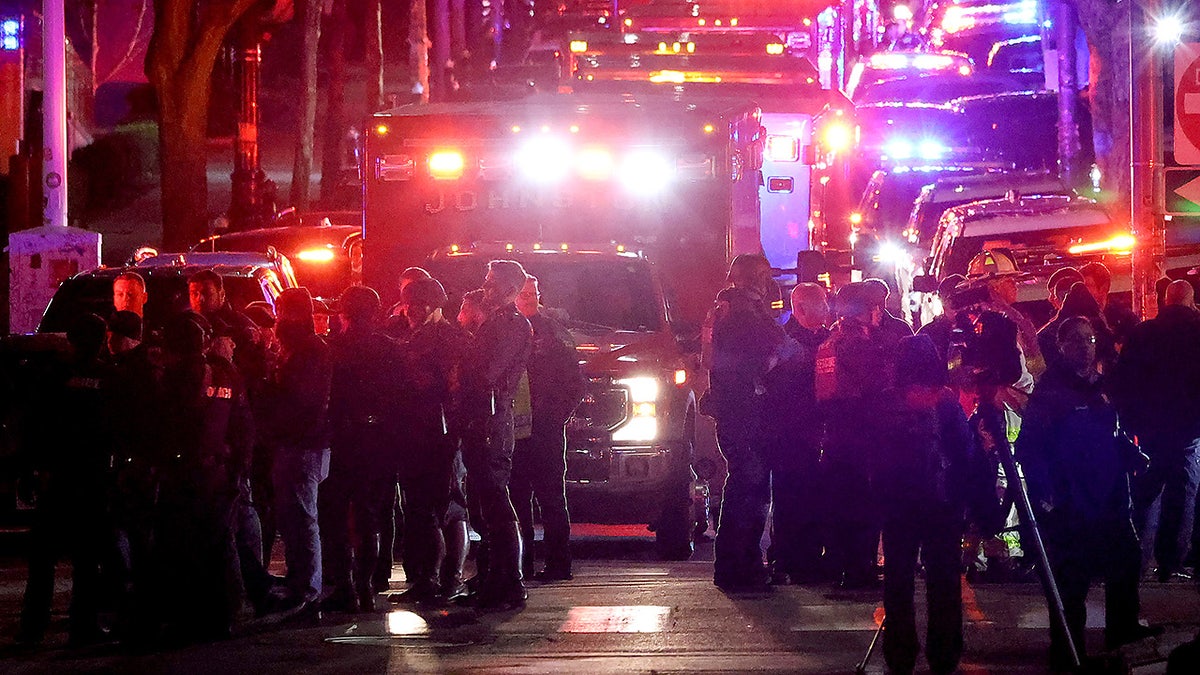
A tourist stabbed multiple times in a bathroom at New York City’s flagship Macy’s during the peak holiday rush is more than another crime headline. It’s a convergence point: homelessness, mental health, policing, retail security, and the fragile trust that keeps big cities economically alive all collided in one of the most iconic commercial spaces in the United States.
To understand why this incident matters, we have to pull back from the immediate horror of a 38-year-old visitor attacked in a crowded shopping landmark and look at the deeper fault lines it exposes—from the way American cities handle vulnerable and destabilized populations to the economic risk posed when tourists start to doubt that high-profile destinations are safe.
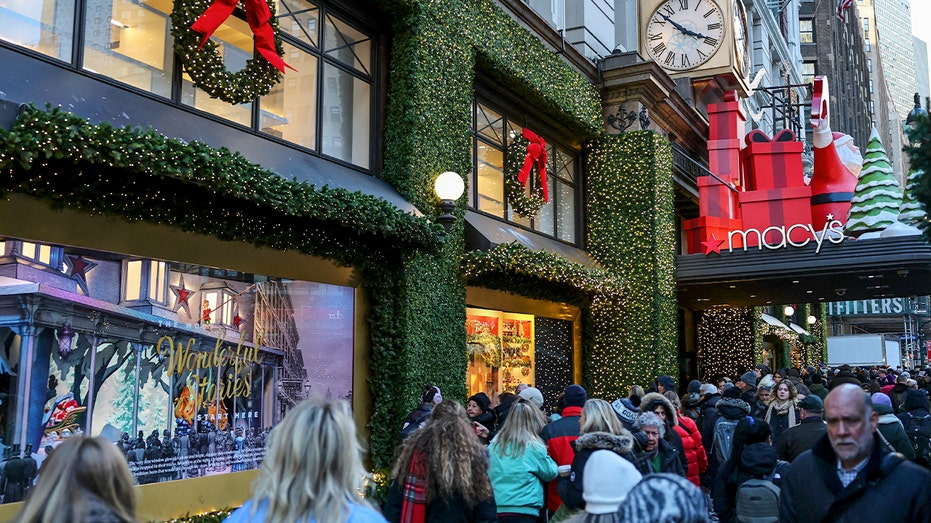
Macy’s Herald Square as a Symbol—and Why That Matters
Macy’s Herald Square isn’t just a department store; it’s a symbol of New York’s identity and, by extension, the nation’s urban revival narrative.
- Opened in 1902, it became the world’s largest store and a flagship of American consumer culture.
- The Macy’s Thanksgiving Day Parade and its holiday windows have helped position the store as a global aspirational destination.
- For decades, a trip to Macy’s at Christmas has been a shorthand for “New York during the holidays” in movies, advertising, and tourism promotion.
Violent crime at such a highly symbolic, heavily trafficked site strikes at something deeper than the statistics. It undermines the story New York and other cities sell to the world: that you can enjoy dense, vibrant urban life and still be reasonably safe. When fear enters that story, it doesn’t just change individual behavior—it threatens entire local economies built on foot traffic and tourism.
The Intersection of Homelessness, Mental Health, and Public Space
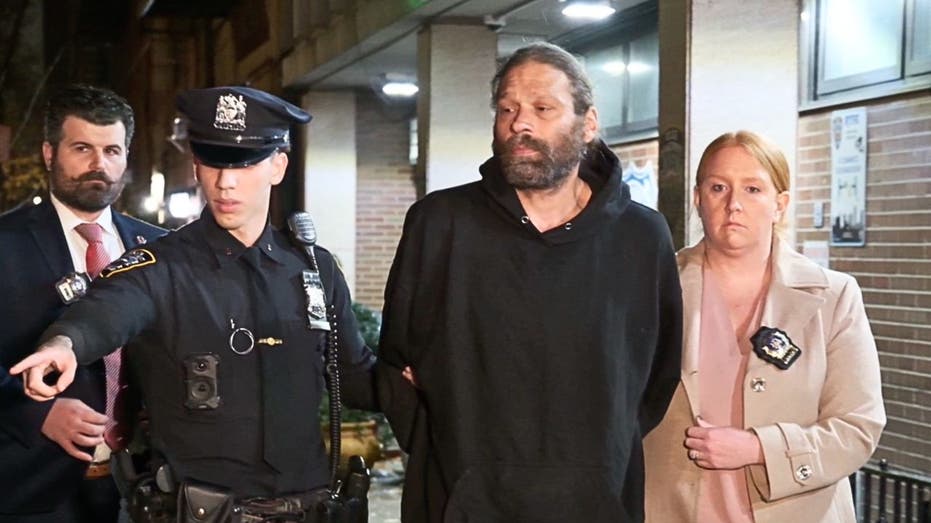
The accused attacker, reportedly a homeless woman from Massachusetts, fits an increasingly familiar pattern: people in unstable housing situations, often moving between states or cities, intersecting with public spaces without adequate support or intervention until crisis hits.
Over the last decade, particularly post-2020, U.S. cities have struggled with:
- Rising visible homelessness: The U.S. Department of Housing and Urban Development estimated over 653,000 people were homeless on a single night in 2023, the highest figure since reporting began in 2007.
- Severe mental illness in the homeless population: Studies consistently find that roughly 20–25% of homeless adults live with a serious mental illness, far higher than the general population.
- Fragmented services: Mental health, housing assistance, and policing operate in silos. People fall through the gaps, often crossing state lines with little continuity of care.
Large private-but-public-facing spaces like malls, transit hubs, and flagship retail stores have effectively become informal frontline mental-health and homelessness interfaces. Security guards and retail staff are asked, implicitly, to manage what is fundamentally a public health and social services failure.
This incident, reportedly in a 7th-floor bathroom, highlights a key vulnerability: semi-private spaces in public venues where people in crisis can encounter unsuspecting civilians with little oversight, supervision, or rapid intervention capacity.
Why Tourists Feel This More Intensely Than Locals
The victim was a tourist from California, visiting what should have been a safe, heavily monitored commercial landmark, accompanied by her husband—a sheriff’s deputy back home. That profile amplifies the story’s impact in several ways:
- Tourists lack local risk instincts: They don’t know which locations or hours feel safer or riskier. They trust the “brand” of the city and its iconic spaces.
- The law-enforcement connection (husband as sheriff, victim a civilian employee) turns this into a potent symbol in debates about crime and bail reform, even if the case itself doesn’t yet implicate those policies.
- Word-of-mouth effect: Tourism research shows that high-profile violent incidents, especially involving visitors, can measurably depress travel plans—sometimes for years.
New York City’s tourism industry is not a side business; it’s core infrastructure. Before the pandemic, the city welcomed around 66 million visitors annually, generating tens of billions in economic activity. As the city continues recovering from COVID-19 and grapples with high retail vacancy rates in some areas, maintaining a sense of safety in signature locations like Herald Square is economically existential.
Retail Crime, Perception, and the New Fragility of Urban Commerce
This stabbing comes against a backdrop of growing anxiety about crime in and around retail spaces—though the discourse often conflates different phenomena: organized retail theft, opportunistic shoplifting, and serious violent crime. They are not the same, but they all contribute to a shared perception of disorder.
Over the last few years:
- Major chains have publicly cited crime and safety concerns as factors in closing stores in several major U.S. cities.
- Retail workers report rising incidents of harassment and threats, even when physical violence remains statistically rare.
- Retailers have invested heavily in private security, cameras, and access controls—yet bathrooms and fitting rooms remain hard-to-monitor spaces where privacy is also a legal and ethical requirement.
Macy’s response—expressing sadness and referring questions to authorities—is standard corporate crisis language. What’s missing, and what many customers increasingly expect, is clarity about what operational changes large retailers are willing to make to address safety in high-traffic, high-symbolism locations.
Those could include:
- Redesigning restroom entrances and layouts to reduce blind spots without compromising privacy.
- Deploying roving staff or security checks specifically in upper-floor or less-trafficked areas.
- Partnering with city outreach and mental-health teams to respond to vulnerable individuals on-site.
The risk for retailers is a vicious cycle: a few high-profile incidents lead to declining customer comfort, reduced traffic, and lower revenue—weakening their ability to invest in security or maintain staffing levels, which in turn can increase vulnerability.
The Political Weaponization of Crime Stories
This attack did not occur in a vacuum; it landed in the middle of an ongoing national political narrative about crime, migration, and urban governance. References to broader debates over asylum and NYC crime in coverage of the incident signal how quickly individual acts of violence are absorbed into pre-existing partisan frames.
Crime statistics in New York show a complex picture:
- Homicides and shootings have declined from their 2020–2021 spike.
- Certain categories of felony assault and transit crimes have remained stubbornly elevated compared to pre-pandemic baselines.
- Public perception of safety, however, often lags behind—or diverges from—official data.
Events like a tourist stabbing inside Macy’s are politically powerful precisely because they are emotionally legible: this is a place people know, during a season they emotionally associate with warmth and tradition, involving a victim who could easily be them. That makes it a potent talking point in arguments over policing levels, bail laws, mental-health involuntary commitment policies, and funding for homeless services.
But focusing solely on punitive responses—more arrests, longer sentences—without addressing the upstream drivers of homelessness and untreated mental illness risks repeating a cycle in which people circulate between streets, shelters, jails, and emergency rooms without long-term stabilization.
Expert Perspectives: Safety, Systems, and What We’re Missing
Public safety and urban policy experts often stress that the most shocking incidents are not always the most useful guide for policymaking, but they can illuminate systemic failures.
Urban criminologists note that serious violent crime in commercial spaces like department stores remains relatively rare compared to street-level crime, domestic violence, or neighborhood-based conflict. Yet they also point out that the symbolic impact of attacks in iconic or "safe-feeling" spaces is outsized.
Mental-health advocates emphasize that while many people experiencing homelessness or psychiatric crises are not violent, a small subset of individuals with untreated severe conditions, combined with substance use and total social isolation, can pose real risks to themselves and others. The failure is not in recognizing that risk, but in building systems capable of intervening before incidents occur.
Security and retail consultants highlight the tension between customer experience and security protocols. High-end or flagship retailers are reluctant to turn stores into visibly fortified environments; yet without more intentional design and staffing strategies, they remain exposed in exactly the kinds of semi-private spaces where this stabbing reportedly occurred.
What This Incident Reveals About Systemic Gaps
Several deeper issues converge in this case:
- Interstate mobility of vulnerable people: A suspect from Massachusetts, reportedly homeless, in a New York flagship store illustrates how individuals move across jurisdictions far faster than social service systems can track or support them.
- Blurred responsibility lines: Who is responsible for recognizing and intervening with individuals in crisis in semi-public spaces—store security, police, mental-health teams, or social service agencies?
- Data deficits: While crime data is tracked, cities often lack integrated datasets linking homelessness, psychiatric hospitalizations, prior arrests, and shelter usage in ways that could inform targeted, preventive outreach.
- Design vulnerabilities: Many older retail spaces were built for a different era, with less attention to Crime Prevention Through Environmental Design (CPTED) principles that can reduce risk without turning public spaces into fortresses.
Looking Ahead: What to Watch
This incident is likely to spark a series of responses—some immediate and visible, others slower and more structural.
Short term, watch for:
- Increased uniformed and plainclothes security presence in and around major Manhattan retailers during the remainder of the holiday season.
- Heightened political rhetoric linking this and similar incidents to broader narratives about urban crime and social policy failures.
- Potential litigation or calls for Macy’s and other retailers to clarify safety protocols, especially in bathrooms and secluded floors.
Longer term, the larger questions will be:
- Will New York and other big cities expand assertive outreach and treatment models for people with severe mental illness who are repeatedly destabilized in public spaces?
- Will retailers quietly redesign their stores and policies to harden semi-private spaces without alienating customers?
- Will tourism data in 2026–2027 show any measurable impact from a cluster of highly publicized incidents in high-profile locations?
The Bottom Line
A woman stabbed inside the most iconic department store in America during the holidays is not just a crime story; it is a stress test of the urban social contract. It forces uncomfortable questions about how cities manage vulnerable populations, how private businesses share responsibility for public safety, and how quickly perceptions of danger can erode decades of work restoring confidence in urban life.
Whether this becomes just another headline or a catalyst for more integrated approaches to homelessness, mental health, and urban security will depend less on what happens in court and more on what policymakers, retailers, and city leaders do in the months quietly following the outrage.
Topics
Editor's Comments
What strikes me about the Macy’s incident is how quickly we default to familiar scripts—“soft-on-crime policies,” “urban decay,” “dangerous homeless people”—without interrogating the architecture of failure underneath. This is not just about whether police are tough enough or prosecutors strict enough. It’s about the absence of a coherent system for dealing with people in obvious crisis before they intersect with random civilians. We tolerate a patchwork in which a person can be known to shelters, emergency rooms, and perhaps even police in more than one state, yet there is no durable plan that prevents them from spiraling into exactly this kind of outcome. At the same time, we under-examine the role of private spaces that function as public squares. Flagship stores are now central nodes of urban life, but we treat their safety protocols as proprietary business decisions rather than elements of public infrastructure. The contrarian view here is that if we keep framing each violent episode as evidence for or against a political tribe’s talking points, we will miss the opportunity to ask harder questions about why the richest cities in the world still outsource mental-health care to sidewalks, subway cars, and, in this case, a department store bathroom.
Like this article? Share it with your friends!
If you find this article interesting, feel free to share it with your friends!
Thank you for your support! Sharing is the greatest encouragement for us.