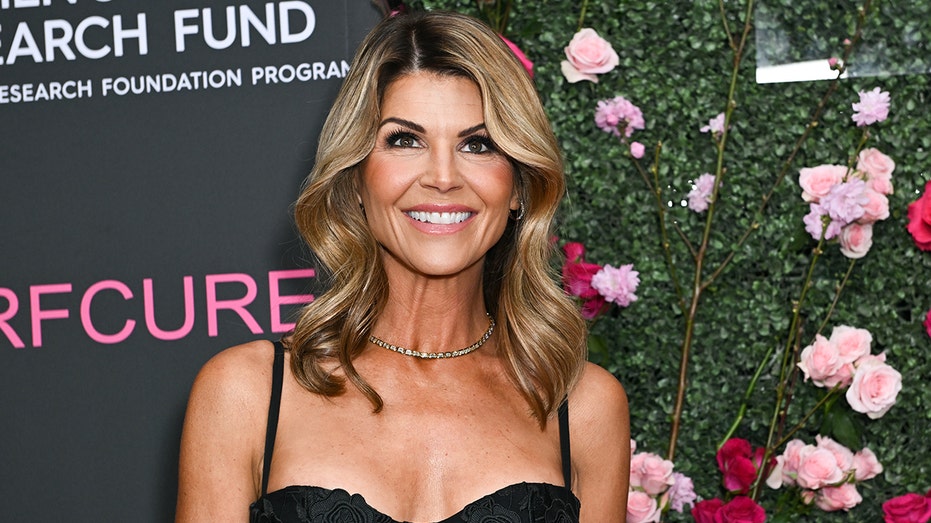
Lori Loughlin’s Hallmark Return: How Hollywood Sells Forgiveness After Varsity Blues

Sarah Johnson
December 12, 2025
Brief
Lori Loughlin’s Hallmark return is more than a comeback story. It exposes how fame, class, and carefully packaged forgiveness shape who gets a second chance—and who never gets one.
Lori Loughlin’s Hallmark Comeback Is Really About Power, Privilege, and the Business of Forgiveness
Lori Loughlin’s return to Hallmark is being framed as a feel‑good comeback: a once‑beloved TV mom rebuilding her life after a public fall from grace. But step back from the casting announcement, and this story becomes a revealing case study in how American culture, the entertainment industry, and class privilege intersect to manufacture redemption.
Her reappearance as Abigail Stanton on “When Calls the Heart” is not just about one actress getting a second chance. It’s about who gets to move on, how quickly, and on what terms—especially after a scandal that exposed deep inequities in higher education and the justice system.
The Bigger Picture: From ‘Aunt Becky’ to Varsity Blues Villain
Loughlin’s career has long traded on a carefully cultivated persona: the wholesome, trustworthy TV mom from “Full House” and then Hallmark’s small-town, family-friendly universe. That image made the 2019 “Varsity Blues” college admissions scandal especially jarring. Here was the quintessential American TV mother, paying hundreds of thousands of dollars to cheat her daughters’ way into the University of Southern California.
The scandal itself was a watershed moment. It exposed an ecosystem where:
- Wealthy families paid up to millions of dollars to rig test scores, fabricate athletic profiles, and bypass legitimate admissions processes.
- Middle- and working-class families, meanwhile, faced brutally competitive admissions, crushing tuition bills, and no comparable shortcuts.
- The justice system responded unusually aggressively—raids, indictments, prison sentences—precisely because the wrongdoing was so public and so clearly emblematic of elite privilege.
Loughlin ultimately pleaded guilty to conspiracy charges, served two months in prison, performed 150 hours of community service, and paid a $150,000 fine. For many critics, the punishment still felt modest compared to the scale of the scheme and its symbolic resonance. For supporters, her prison time became proof she had “paid her debt” and deserved to move on.
The Hallmark return is happening after a seven-year absence from the network and roughly five years after the scandal first broke. That timing aligns with a broader cultural cooling of what’s often labeled “cancel culture,” and with a shift toward more curated, commercially useful narratives of forgiveness.
What This Really Means: The Business Model of Redemption
From a business and cultural standpoint, Loughlin’s comeback illustrates several trends:
1. Forgiveness as Content Strategy
Hallmark isn’t just rehiring an actress; it’s selling a story arc that mirrors its brand: fall, repentance, restoration. The move allows the network to tap into:
- Nostalgia: Viewers who grew up with “Full House” and followed “When Calls the Heart” are being invited to re-embrace a familiar character and, by extension, the actor behind her.
- Emotional branding: Forgiveness, perseverance, and “getting back up after being knocked down” are core themes in Hallmark’s storytelling. Loughlin’s real-life narrative now fits neatly into that template.
- Low-risk controversy: Enough time has passed that outrage has cooled, but the name recognition remains. That combination can translate into ratings without major advertiser boycotts.
Redemption, in other words, has become a monetizable genre—especially for a network whose entire value proposition is emotional comfort.
2. The Uneven Geography of ‘Cancel Culture’
Publicists quoted around Loughlin’s comeback emphasize that “cancel culture has eased” and that America loves underdogs and second chances. That’s only partly true. What’s actually eased is the cost of controversy for certain kinds of figures:
- Established celebrities with longstanding positive brand equity.
- Those whose offenses can be reframed as personal misjudgments rather than systemic harms.
- Figures whose core audiences are inclined toward traditional narratives of redemption and family values.
Contrast that with lesser-known actors, marginalized creators, or behind-the-scenes workers whose careers can be derailed by a single allegation or online backlash without the PR machinery or fanbase to engineer a comeback. The “second chance economy” is open for business—but entry is tiered by fame, wealth, and pre-existing goodwill.
3. Recasting Privilege as Relatable Parenthood
One PR expert quoted argues that many Americans “relate” to Loughlin’s motive: doing whatever it takes to give your children an edge. That framing is powerful—and deeply revealing.
Millions of parents want better lives for their kids. But most don’t have access to $500,000 bribes, private counselors willing to falsify documents, or universities willing to look the other way. By emphasizing the emotional motive (love for one’s children) while downplaying the structural inequality (access to illicit pathways), the narrative smooths over the class dimension that made the admissions scandal so inflammatory in the first place.
The risk is that Loughlin’s story becomes less a cautionary tale about systemic privilege and more a sentimental story about a mom who went “too far” but “learned her lesson”—a narrative that comfortingly absolves the broader system.
4. Gendered Expectations of Contrition
There’s also a gender lens here. Female celebrities seeking comeback arcs are often expected to embody remorse, humility, and “lessons learned.” Loughlin’s recent interviews lean heavily on perseverance, forgiveness, and letting go of negativity. What she does not do is directly revisit the specifics of the scandal or engage deeply with its implications for fairness in education.
That omission is strategic: the more she stays in the realm of generic life lessons, the more compatible her messaging is with Hallmark’s brand and her long-standing persona. It also sidesteps uncomfortable questions about whether her punishment matched the privilege that enabled the crime.
Data & Evidence: How Rare Is This Kind of Comeback?
To understand the stakes, it helps to situate Loughlin’s experience within broader patterns:
- More than 50% of U.S. marriages end in divorce; roughly two-thirds to three-quarters of divorces are initiated by women, depending on the study. Her separation from Mossimo Giannulli is unlikely to hurt her brand, precisely because divorce is now perceived as commonplace—and in celebrity culture, almost expected.
- In the Varsity Blues case, about 50+ parents were charged; many received prison sentences ranging from a few weeks to several months. Loughlin’s two‑month sentence places her toward the more punitive end for first-time white-collar offenders—but still far from the multiyear sentences often handed down for lower-income defendants in nonviolent fraud or drug cases.
- Entertainment comebacks after scandal are increasingly normalized: athletes returning after doping, musicians after abuse allegations, actors after racist or offensive behavior. Public memory in the social media era is short—but selectively so. Big names with loyal fan bases are disproportionately likely to get second chances.
In that context, Loughlin’s return is less an outlier and more a template for how well-managed, time-delayed rehabilitation works—especially for white, middle-aged, family-brand actresses whose audiences skew toward traditional values and nostalgia.
Expert Perspectives: Image Rehab, Inequality, and Audience Psychology
Media scholars and sociologists point to several dynamics at play.
On image reconstruction: Crisis communications experts note that Loughlin’s strategy checks all the standard boxes: disappear from the spotlight, serve the sentence without public theatrics, avoid combative interviews, and re-emerge slowly in roles that reinforce the pre-existing persona rather than challenge it.
On inequality and accountability: Sociologists who study punishment and privilege point out that public fascination with stories like Loughlin’s can paradoxically soften attitudes toward elite misconduct. When wrongdoing is wrapped in narratives of motherhood, hardship, and personal growth, structural critiques—about who can buy access, who is overpoliced, and who is overpunished—fade into the background.
On audience psychology: Media psychologists argue that viewers often want their parasocial relationships restored. If audiences spent years investing emotionally in “Aunt Becky” or Abigail Stanton, they may be motivated to integrate the scandal into a broader redemption story rather than abandon the character. That desire can drive receptiveness to carefully managed comeback narratives.
Looking Ahead: What to Watch as Loughlin Rebuilds
The success or failure of Loughlin’s Hallmark return will reveal more than just her star power. Key indicators to watch:
- Ratings and social sentiment: Do episodes featuring her character spike in viewership? Does online conversation trend toward forgiveness, indifference, or renewed anger?
- Advertiser posture: Do major brands avoid her episodes, or do they treat her presence as essentially risk‑neutral? Quiet confidence from advertisers would signal that the reputational risk calculus has shifted decisively.
- The depth of her public reflection: Over time, does Loughlin engage more directly with the ethics of educational inequality and privilege, or does she keep the conversation in a safe zone of generic personal growth? That choice will shape whether her story becomes a meaningful reflection on systemic issues or a tidy, marketable morality play.
- Industry precedent: If her return is commercially successful, other networks and studios may be more willing to rehabilitate similarly controversial figures, especially if their misdeeds can be framed as personal rather than structural harms.
There is also a generational layer: younger viewers, already skeptical of higher education costs and elite institutions, may read her story differently than older Hallmark loyalists. Their response will matter for how sustainable this redemption arc is over the next decade.
The Bottom Line
Lori Loughlin’s Hallmark comeback is not just about whether a disgraced actress can work again. It’s a window into how American culture metabolizes scandal when the wrongdoer is familiar, relatable, and wealthy—and how the entertainment industry packages forgiveness as both moral narrative and business strategy.
Her return underscores a hard truth: in Hollywood and beyond, second chances are available, but not equally. They are easier to claim when you already have what most people don’t—money, a beloved brand, and an industry that knows how to turn your contrition into content.
Topics
Editor's Comments
One striking omission in the emerging Lori Loughlin redemption narrative is any serious reckoning with the students who were displaced—or symbolically displaced—by the admissions scheme. Even if her daughters’ admission did not literally knock a specific low-income student out of a USC seat, the scandal crystallized a long-standing reality: admissions slots at elite institutions are finite, and mechanisms that privilege wealth, legacy, and athletic proxies systematically narrow opportunities for others. The media’s pivot to emphasizing Loughlin’s perseverance and forgiveness risks turning a structural story into a purely individual moral drama. That’s emotionally satisfying but politically convenient—it allows audiences to feel generous without confronting the uncomfortable question of whether the system itself remains unchanged. The more Hallmark and similar outlets monetize her comeback as a feel-good arc, the more urgent it becomes to ask: whose stories of systemic exclusion never get written into prime-time redemption narratives at all?
Like this article? Share it with your friends!
If you find this article interesting, feel free to share it with your friends!
Thank you for your support! Sharing is the greatest encouragement for us.