Lithium, Narco-Politics and Power Shifts: What Bolivia’s Pivot to the US Really Means

Sarah Johnson
December 13, 2025
Brief
Bolivia’s pivot from China and Venezuela toward the U.S. is about far more than diplomacy. This analysis unpacks the lithium race, narco-state legacies, and regional power shifts reshaping La Paz.
Bolivia’s Sudden Pivot to Washington: Lithium, Narco-Politics and the End of an Era
Bolivia’s move to reembrace the United States and distance itself from China and Venezuela is more than a routine change in foreign policy. It marks the collapse of one of Latin America’s longest-running leftist experiments, the opening of a new front in the U.S.–China rivalry over critical minerals, and a test of whether a fragile democracy can disentangle itself from entrenched narco-networks without triggering a new cycle of instability.
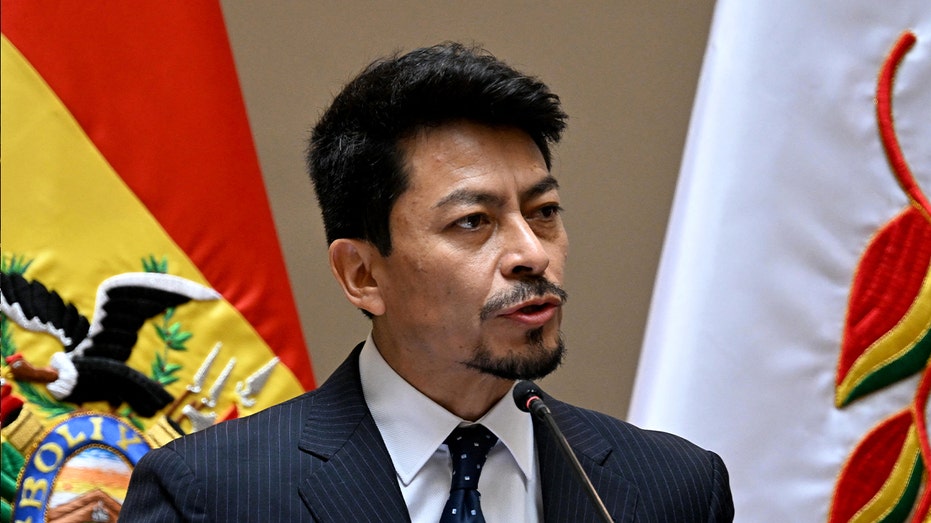
The new conservative, pro-business government of President Rodrigo Paz is signaling a break with nearly two decades of Movimiento al Socialismo (MAS) rule under Evo Morales and Luis Arce. Foreign Minister Fernando Aramayo’s trip to Washington to restore ties with Israel and court U.S. investment is the early visible sign of that realignment. But the deeper story is about power, resources, and security — and whether Bolivia can escape a pattern that has repeatedly trapped resource-rich countries: swinging between external patrons while failing to fix internal governance.
A Region’s Political Pendulum Swings Again
To understand Bolivia’s pivot, it helps to situate it within Latin America’s cyclical waves of left and right governments. The early 2000s “pink tide” brought Morales to power in 2006, as part of a broader backlash against U.S.-backed neoliberal reforms in the 1990s. Morales aligned with Hugo Chávez’s Venezuela, Cuba, and later Nicaragua in an anti-U.S., resource-nationalist bloc. China stepped in as financier, buyer, and political counterweight to Washington.
Over time, that model frayed. Commodity prices fell after the 2011 peak, exposing how dependent Bolivia’s social programs were on gas and mineral revenues. The 2019 crisis over Morales’ attempt to stay in power and contested election results damaged MAS’s legitimacy. Arce’s presidency prolonged the project, but mounting corruption allegations, economic malaise, and accusations of narco-infiltration into state institutions eroded support.
Bolivia is now part of a newer pattern: second-generation pendulum swings. Countries like Argentina, Chile, Colombia, and Brazil have oscillated more rapidly between left and right in the last decade, not out of renewed ideological conviction, but because electorates are punishing incumbents for insecurity, stagnation, and corruption. Paz’s victory follows the same logic: less a sweeping endorsement of conservative ideology than a rejection of a discredited system.
From Anti-Imperialism to Strategic Realignment
The Morales era was defined by a discourse of anti-imperialism and sovereignty, often centered on resistance to Washington. Yet dependence didn’t disappear; it shifted. China became a major buyer of Bolivian raw materials and a key source of loans and infrastructure projects. In the lithium sector, the state pursued state-led, China-partnered initiatives that produced more announcements than industrial capacity.
Aramayo’s language about breaking China’s “monopoly” on mining and courting “serious investors” from the U.S. signals two things:
- A recognition that Chinese capital has not delivered the value-added industrialization many Bolivians were promised.
- An effort to rebalance foreign partners without formally closing the door on Beijing — more diversification than outright decoupling, at least for now.
Historically, Bolivia has repeatedly used external alignment shifts to renegotiate its role in global commodity chains — from tin in the 20th century to gas and now lithium. Each pivot has created winners and losers internally, often fueling new conflicts. The risk is that the U.S.–China rivalry over critical minerals turns Bolivia into an arena of geostrategic competition rather than a protagonist shaping its own development strategy.
Lithium: The Quiet Driver Behind the Pivot
Underlying the diplomatic gestures is one of the world’s most consequential resource stories: Bolivia’s lithium reserves. Estimates routinely place Bolivia among the top three countries for lithium resources, alongside Chile and Argentina, forming the “Lithium Triangle.” Yet, unlike its neighbors, Bolivia has struggled to convert potential into scalable production.
Under Morales, Bolivia pursued a state-controlled model, often suspicious of foreign multinationals. Deals with Chinese and German firms faced political backlash, technical delays, and questions over transparency. As global demand for lithium surged — driven by electric vehicles and energy storage — Bolivia was largely on the sidelines.
The Paz government’s strategy, as described by Aramayo, suggests a shift toward:
- More flexible partnership models with foreign companies.
- Explicit courting of U.S. technology and investment.
- A bid to integrate into the “whole chain of production,” not just raw material extraction.
From Washington’s perspective, this is strategically significant. The U.S. has been scrambling to secure non-Chinese sources of critical minerals and build resilient supply chains for the energy transition. If Bolivia offers preferential access or favorable regulatory terms to U.S. firms, it could become a key link in a Western-aligned lithium chain — but only if it solves longstanding issues of infrastructure, governance, and community consent around mining.
Narco-State Legacies and the Security Dimension
Aramayo’s blunt reference to “narco authorities” governing Bolivia for years is politically explosive. It taps into a longstanding concern: that parts of the security forces, judiciary, and political elite have been penetrated by cocaine trafficking networks.
Bolivia is not a major consumer market, but it is a crucial producer of coca and a corridor for cocaine shipments moving toward Brazil, Europe, and beyond. Over the last decade, analysts have documented:
- Murky links between local powerbrokers, business elites, and drug logistics.
- Weak controls over frontier regions and airstrips.
- Occasional high-profile arrests of officials tied to trafficking networks.
By foregrounding transnational criminal organizations, the new government is doing more than seeking U.S. goodwill. It is:
- Justifying a purge or restructuring of security institutions.
- Signaling alignment with U.S. priorities on organized crime and drug trafficking.
- Potentially setting up legal and political cases against figures from the previous administration.
There is an opportunity here to genuinely strengthen rule of law and state capacity. But there is also a risk that “narco” rhetoric becomes a catch-all label to delegitimize opponents, something Latin America has seen repeatedly. The credibility of the new government will hinge on whether anti-crime campaigns are accompanied by institutional reform, transparency, and due process — or selective targeting.
Venezuela, Israel, and Symbolic Breaks
Two diplomatic moves stand out: support for a “democratic transition” in Venezuela and the restoration of ties with Israel, which had been severed over the Gaza war.
Supporting a transition in Venezuela places Bolivia in the camp of regional actors that are increasingly impatient with Nicolás Maduro’s authoritarian entrenchment. It also aligns with U.S. and European efforts to pressure Caracas through sanctions and legal actions, including targeting alleged narco-trafficking vessels and sanction evasion schemes.
Restoring ties with Israel is structurally less about bilateral trade and more about signaling. Under Morales, Bolivia’s break with Israel was framed as an act of solidarity with Palestinians and a rejection of U.S. foreign policy. Reestablishing relations serves as a shorthand for a broader foreign policy reorientation: away from symbolic anti-Western stances and toward pragmatic alignment with Western democracies, regardless of domestic debates over the Middle East.
What This Realignment Could Change — and What It Can’t
Even if the foreign policy headlines are dramatic, Bolivia’s fundamental constraints remain stubbornly familiar:
- Economic dependency on commodities: Lithium and minerals can generate windfalls, but they are volatile and vulnerable to global price cycles and technological shifts (e.g., alternative battery chemistries).
- Social polarization: MAS still represents a large segment of Indigenous and working-class voters. A sharp pivot toward foreign investors risks being cast as a betrayal of resource sovereignty.
- Institutional fragility: Courts, regulatory agencies, and oversight bodies are weak and politicized. Changing flags on foreign partners will not fix this.
The critical question is whether Paz uses this window of international goodwill to tackle deep-seated governance issues — contract transparency, community consultation in mining zones, judicial reform, and professionalization of security forces — or whether the pivot mainly rearranges external patrons while preserving domestic patterns of clientelism.
Expert Perspectives: Promise and Peril
Regional analysts are divided on how transformative this pivot can be.
Some see a chance for Bolivia to finally leverage its resources into broader development. Others warn that without robust domestic reforms, new investors will simply plug into old patterns of extraction and inequality.
Several long-term observers also highlight the geopolitical dimension: as U.S.–China rivalry deepens, small and mid-sized states are under pressure to pick sides. Bolivia’s current bet on Washington may yield short-term support, but it could prove costly if future governments swing back or if U.S. political priorities shift.
Looking Ahead: Early Warning Indicators
Over the next 12–24 months, several indicators will reveal whether this pivot is more than symbolic:
- Contract transparency: Will lithium and mining contracts with U.S. and other Western firms be published, debated, and subject to oversight?
- Community conflict: Do mining regions see rising protests over land, water, and benefit-sharing, or is there evidence of negotiated agreements?
- Institutional actions on narco-corruption: Are investigations and prosecutions broad-based and professional, or narrowly targeted at political rivals?
- Regional diplomacy on Venezuela: Does Bolivia play a constructive role in multilateral efforts, or simply echo U.S. talking points?
- Balance with China: Does La Paz fully sideline Chinese partners, or maintain a hedging strategy to avoid over-dependence on any one power?
The Bottom Line
Bolivia’s new alignment with the United States and break with China- and Venezuela-centered networks is less an ideological conversion than a strategic reset engineered by a government that sees opportunity — and necessity — in changing partners. Lithium, narco-politics, and regional power struggles form the real backbone of this story.
Whether this becomes a turning point in Bolivian development or merely another chapter in the country’s long history of commodity-driven dependency will depend less on diplomatic photo-ops in Washington and more on what happens in courts, mining regions, and security institutions at home.
Topics
Editor's Comments
What’s striking about Bolivia’s pivot is how much of it is being narrated through external relationships — with the U.S., China, Venezuela, Israel — while the hardest questions remain internal. Can a government that owes its legitimacy to a rejection of MAS-era corruption avoid reproducing the same patterns under a different ideological banner? The emphasis on lithium and transnational crime gives Washington-friendly talking points, but both are double-edged. Lithium can generate foreign exchange and infrastructure, but without transparent contracts and robust environmental safeguards, it can also deepen social conflict and entrench local elites. Likewise, a crackdown on ‘narco authorities’ can clean up institutions, yet history from Colombia to Mexico shows how easily security agendas can spiral into abuses and selective justice. Another underexplored angle is how Indigenous and rural communities — core constituencies of the Morales project — will respond to a government that openly seeks tighter alignment with Western investors and security priorities. If the Paz administration fails to meaningfully incorporate these groups into decision-making, Bolivia could see not just a geopolitical pivot, but a new cycle of internal fragmentation that no amount of foreign capital can fix.
Like this article? Share it with your friends!
If you find this article interesting, feel free to share it with your friends!
Thank you for your support! Sharing is the greatest encouragement for us.