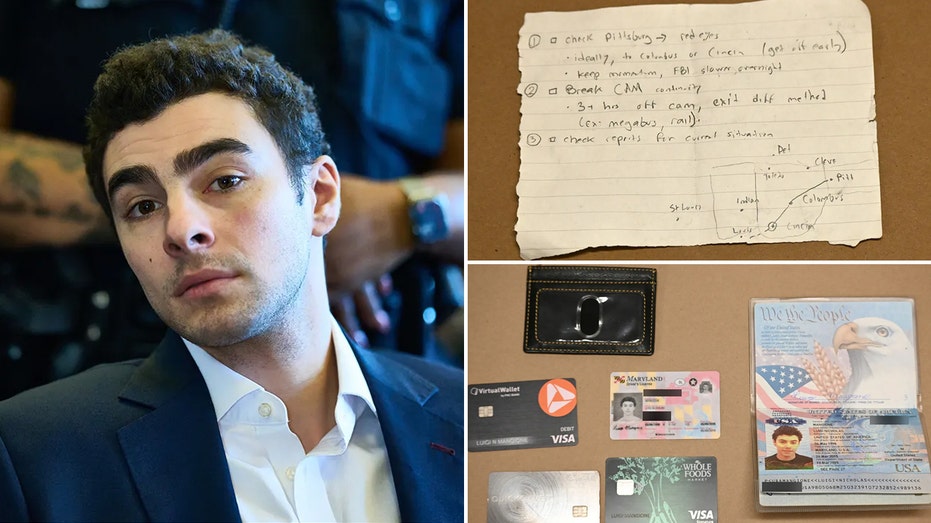
Inside the Luigi Mangione Backpack Battle: How One Search Could Reshape the CEO Murder Case

Sarah Johnson
December 13, 2025
Brief
The Luigi Mangione backpack fight is more than a procedural dispute; it’s a major test of police search powers, Miranda limits, and how far courts bend rules in high-profile murder cases.
The Backpack That Could Break the Case: Why a Single Search May Decide the Luigi Mangione Murder Trial
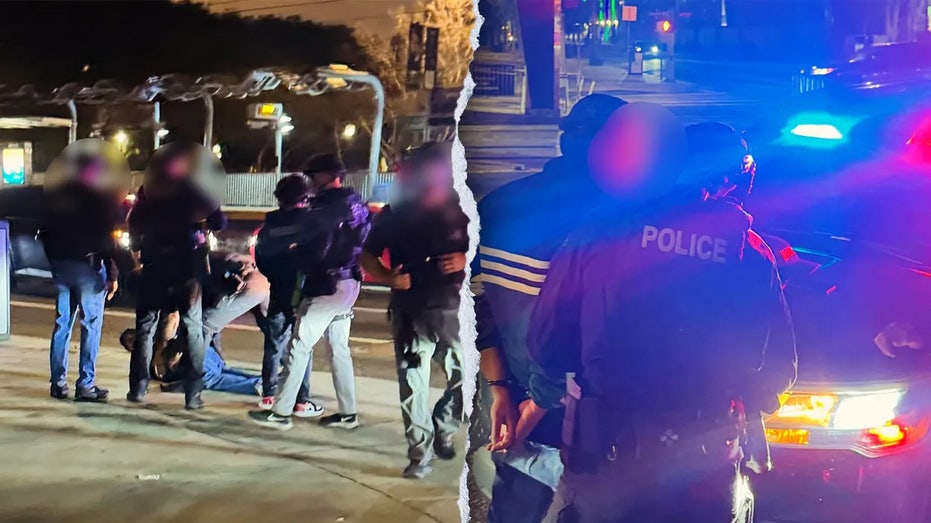
The fight over what Altoona police found inside Luigi Mangione’s backpack is not a minor procedural skirmish. It’s a high-stakes test of how far courts will let officers stretch warrant exceptions and Miranda rules when a routine ID stop turns into a suspected high-profile murder arrest. What Judge Gregory Carro decides about that backpack could determine not only the fate of this case, but also signal to police departments nationwide how aggressively they can search and question suspects swept up in fast-moving manhunts.
From Suspicious Customer to Murder Suspect: Why This Moment Matters
On its face, the hearing in New York is about whether Pennsylvania officers legally searched a backpack and properly handled Miranda warnings after detaining Mangione at a McDonald’s in Altoona. But underneath that procedural surface are much larger questions:
- When does a “suspicious person” call and a fake ID justify a full-blown search without a warrant?
- How long can officers delay making clear that someone is in custody to elicit statements without triggering Miranda?
- Should potentially decisive physical evidence — a magazine loaded with bullets allegedly concealed in wet underwear — be thrown out if officers misstepped?
Courts have long walked a tightrope between empowering police to act quickly in dangerous cases and enforcing constitutional limits. This case sits squarely on that rope: a high-profile homicide involving a health care CEO, a multi-state arrest, and evidence that, if excluded, could dramatically weaken the prosecution’s narrative of intent and preparation.
How We Got Here: The Legal Doctrines Behind the Backpack
The prosecution’s case rests heavily on two long-standing exceptions to the Fourth Amendment’s warrant requirement: search incident to arrest and inventory search.
In Chimel v. California (1969), the Supreme Court held that after a lawful arrest, officers can search the arrestee and the area within their immediate control — the so-called “wingspan” rule — to remove weapons or prevent destruction of evidence. Later cases, like United States v. Robinson (1973), reinforced that this authority does not depend on case-by-case proof of danger; the arrest itself triggers the power to search.
Separately, in Illinois v. Lafayette (1983), the Court approved “inventory searches” of property when booking a suspect into custody, ostensibly to protect the suspect’s belongings, shield police from theft claims, and ensure officer safety. These searches are supposed to follow standardized procedures rather than investigative hunches.
Neama Rahmani, a former federal prosecutor, is leaning on precisely these doctrines: if Altoona officers had probable cause to arrest Mangione for false identification, they could search his person and nearby belongings, including his backpack, without a warrant. The key legal questions then become:
- Did probable cause to arrest for false identification exist before the search?
- Was the backpack truly within Mangione’s immediate control at the time of the search?
- Was the search genuinely incident to arrest or an inventory process, or a pretext to look for evidence in a murder investigation?
The defense is attacking those fault lines. The bodycam footage is critical: one officer says, “We probably need a search warrant at this point,” suggesting uncertainty about their legal authority. Another responds, “It doesn’t matter. He is under arrest for a crime here, so we can search.” That exchange cuts both ways. It shows some awareness of the need for legal justification, but it also suggests a conclusion-driven approach — assume authority because they want to search, rather than carefully walking through the law.
The Miranda Question: Getting Suspects to Talk Without ‘Custody’
Parallel to the backpack fight is a more subtle but equally important issue: When was Mangione actually “in custody” for Miranda purposes?
The Supreme Court’s Miranda line of cases requires police to advise a suspect of the right to remain silent and to an attorney once they are both in custody and subject to interrogation. But “in custody” doesn’t just mean handcuffed or at a station. It means a reasonable person in the suspect’s position would feel they’re not free to leave.
Officer Stephen Fox testified he deliberately did not tell Mangione he was in custody to “get the suspect to talk.” That is a risky statement in a suppression hearing. Courts look beyond what officers say to what they do: the number of officers, tone, physical restraint, location, and whether the suspect was told they could leave. If the environment had effectively become a custodial scenario, delaying Miranda to elicit admissions — especially about identity, fake ID use, or the backpack — could contaminate any statements and possibly taint the search, depending on how closely linked the two are.
This is part of a broader trend in policing: pushing the boundary of “non-custodial” encounters to get suspects talking before formal rights attach. The Mangione hearing is exposing that tactic in unvarnished form, on bodycam and under oath.
What’s Really at Stake if the Backpack Evidence Is Thrown Out
Rahmani is blunt: losing the backpack evidence could be “potentially fatal” to the prosecution. That’s not rhetorical exaggeration. The contents of that bag — particularly the magazine with bullets allegedly hidden in wet underwear — matter for several reasons:
- Link to the weapon. Even if the gun itself was recovered elsewhere, ammunition and magazines can corroborate ownership, access, and familiarity with the weapon allegedly used in the CEO’s killing.
- Proof of preparation and consciousness of guilt. A magazine wrapped in wet underwear is not how people typically carry ammo. It suggests concealment, maybe an attempt to obscure forensic traces, and a level of planning that goes to intent.
- Bolster for other evidence. Prosecutors already have video, DNA, fingerprint evidence, and eyewitness testimony, according to Rahmani. The backpack evidence helps knit those pieces into a coherent narrative: this isn’t just the right person at the scene; it’s someone armed and trying to hide that fact while on the run.
If the backpack is out, the government’s case doesn’t evaporate, but its story changes. Instead of a suspect caught with ammunition consistent with the murder, they have a person allegedly identified on video, at the scene, and by forensic trace evidence. That can still be powerful — modern juries often view DNA and surveillance as gold-standard proof — but the prosecution loses a dramatic, easily understood piece of physical evidence that ties the homicide to Mangione’s flight.
More importantly, excluding the backpack sends a message: courts are willing to put constitutional safeguards ahead of prosecutorial convenience, even in a high-profile killing. That’s precisely why law enforcement and civil liberties advocates will be watching this ruling closely.
A History of High-Stakes Suppression Fights
The Mangione hearing fits squarely into a long tradition of American criminal law being shaped not by trials, but by pre-trial fights over evidence.
From the exclusionary rule in Mapp v. Ohio (1961) to the Miranda decision in 1966, some of the most important limits on police power emerged from cases where judges were asked to throw out seemingly incriminating evidence. In more recent decades, suppression battles in terrorism, organized crime, and high-profile homicide cases have refined how courts interpret warrant exceptions, consent, and custody.
Several trends are particularly relevant here:
- Bodycam as double-edged sword. Cameras protect officers from false accusations but also capture hesitations like “We probably need a search warrant,” which defense attorneys can wield to show confusion or overreach.
- Expanding warrant exceptions. Courts have sometimes allowed broad readings of “search incident to arrest” and “inventory search,” especially in vehicle cases. Defense lawyers see this as eroding the Fourth Amendment, and Mangione’s team is clearly trying to draw a line.
- Identity-based stops and private tipsters. The McDonald’s manager’s 911 call — reporting that customers thought a man looked like a “CEO shooter” — is part of a larger reliance on private actors and subjective suspicion. Courts increasingly must decide how much weight to give these lay identifications.
Historically, when courts let questionable searches slide in high-profile cases, those rulings get cited in more routine prosecutions. The concern among civil liberties advocates is that what starts with a murder suspect at a highway McDonald’s ends up governing street stops, minor drug cases, and everyday encounters.
Expert Perspectives: A Clash of Police Power and Due Process
Legal experts tend to cluster into two camps on cases like this.
On one side are former prosecutors and some law-and-order scholars who emphasize officer safety and rapid response. Their argument: once officers had probable cause that Mangione was lying about his identity and using a fake ID, they had every reason to suspect he might be dangerous, particularly given the nationwide news around the CEO’s killing. In that frame, leaving a backpack unsearched in a fast-food restaurant could be reckless. The search, they say, is exactly what the “incident to arrest” and “inventory” exceptions were designed to allow.
On the other side are defense-oriented scholars and civil liberties advocates who see this as yet another instance of backward reasoning: officers decide they want to search, then justify it after the fact. They point to the bodycam comment about probably needing a warrant, and to Fox’s admission about not telling Mangione he was in custody to get him talking, as evidence that the law was treated as an obstacle to be navigated, not a constraint to be obeyed.
What’s often missing from public debate is the middle ground: judges have tools to tailor their rulings. They can, for example, exclude certain statements but admit physical evidence, or allow the backpack contents while restricting how prosecutors describe the circumstances to the jury. Those fine-grained decisions rarely make headlines but define how “rights” actually operate in the real world.
Broader Implications: Why This Case Reaches Beyond One Defendant
The Mangione case exposes several cross-cutting tensions that are shaping American criminal justice:
- Corporate crime vs. individual rights. The alleged victim is a high-profile CEO in a critical sector (health care). When corporate leaders are targeted, political and public pressure to secure convictions spikes, often colliding with procedural safeguards.
- Policing in the surveillance era. Video and forensic evidence are plentiful, yet officers still push for broad search authority. Courts must decide whether that abundance makes aggressive warrantless searches less necessary, or whether the existing doctrines still apply unchanged.
- Interstate policing. The case raises coordination issues: Pennsylvania officers making decisions that will be scrutinized in a New York courtroom, with another state’s standards, jury pool, and political climate in play.
If Judge Carro sides heavily with prosecutors, police departments may read that as a green light to treat backpacks, purses, and similar items as fair game whenever they can articulate probable cause for any arrestable offense — even something as minimal as false ID. If he draws a sharper line, especially criticizing the Miranda delay and the officers’ own uncertainty on video, departments may need to retrain on when and how they can rely on warrant exceptions.
What to Watch Next
Several developments will indicate how transformative this ruling could be:
- The granularity of the judge’s opinion. A detailed, fact-specific ruling may limit its ripple effect. A sweeping endorsement or rejection of the search and the Miranda handling could become a reference point for future cases.
- How the prosecution adjusts. If the backpack evidence is excluded, watch whether prosecutors double down on DNA, video, and eyewitnesses — and whether they attempt to introduce the ammunition through alternative legal theories.
- Defense strategy at trial. A win on suppression would likely shift the defense narrative from police misconduct toward reasonable doubt about identity, intent, or premeditation. A loss forces them to confront a jury with physical evidence that appears highly incriminating.
The Bottom Line
This isn’t just a story about a backpack in a McDonald’s. It’s about how far we’re willing to let police stretch long-standing exceptions to the Fourth and Fifth Amendments when a routine local arrest suddenly connects to a headline-grabbing homicide. For Mangione, the ruling could mean the difference between facing a jury with or without some of the most damning physical evidence against him. For everyone else, it will help define how much of their privacy still survives the potent combination of suspicion, a 911 call, and a zippered bag within arm’s reach.
Topics
Editor's Comments
What’s striking in the Mangione hearings is how ordinary the underlying police conduct looks. A suspicious-person call, a fake ID, officers uneasy about a subject’s behavior — this is everyday policing, not a SWAT raid or a complicated surveillance operation. Yet wrapped around those familiar facts is a homicide involving a major corporate figure, national media attention, and a backpack that could decide whether a jury ever hears about some of the most incriminating physical evidence. That juxtaposition is worth sitting with. If courts are willing to relax search and Miranda standards whenever a case becomes high-profile downstream, we risk creating a two-tiered system where the rules are bendable when headlines are big enough. Conversely, if judges aggressively police those boundaries even in a CEO murder case, it sends a powerful message that constitutional protections are not contingent on the victim’s status or the political stakes. The deeper question this case poses is not just what happened in an Altoona McDonald’s, but whether we’re comfortable letting urgency and public pressure quietly rewrite the everyday rules of police-citizen encounters.
Like this article? Share it with your friends!
If you find this article interesting, feel free to share it with your friends!
Thank you for your support! Sharing is the greatest encouragement for us.