Inside Lando Norris’s Title Breakthrough: How McLaren Finally Cracked the Verstappen Era

Sarah Johnson
December 7, 2025
Brief
Lando Norris ending Max Verstappen’s title streak is more than an upset. It signals a structural power shift in F1 driven by regulations, budgets, and a new generation of stars.
Lando Norris Ends Max Verstappen’s Era: What McLaren’s Title Breakthrough Really Signals for Formula 1
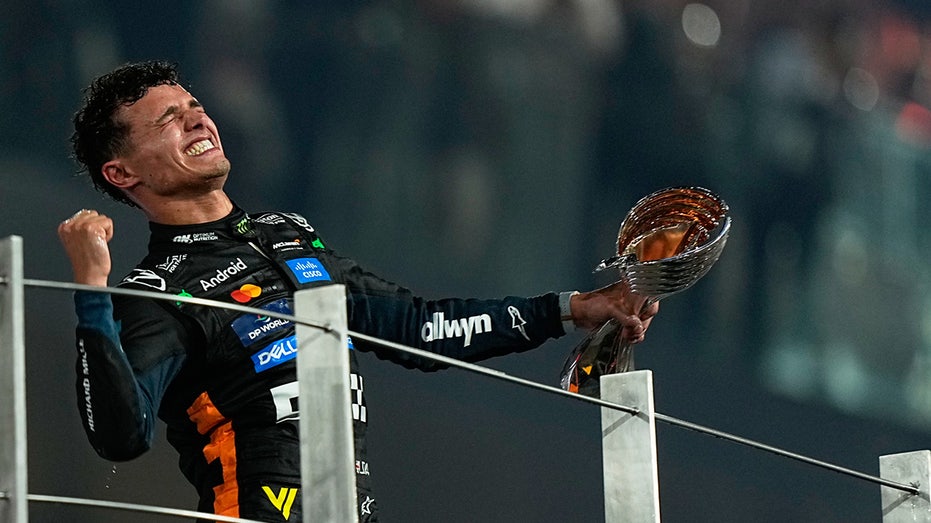
Lando Norris clinching the 2025 Formula 1 World Championship in Abu Dhabi is not just a feel‑good story about a popular young driver finally getting his first title. It marks the most serious structural reset in F1 since the end of the Mercedes era in 2021. After four straight championships for Max Verstappen and Red Bull, Norris’s triumph with McLaren suggests the competitive order, the commercial narrative, and even the political balance inside the sport are all shifting.
To understand why this moment matters, it’s useful to see it not as a single upset, but as the culmination of a decade of regulation changes, investment decisions, and generational turnover among drivers and audiences.
A rare break in F1 dynasties
Modern F1 is defined by long dynasties: Michael Schumacher and Ferrari in the early 2000s, Sebastian Vettel and Red Bull from 2010–2013, Lewis Hamilton and Mercedes from 2014–2020, and Verstappen and Red Bull from 2021–2024. In the last 25 years, only a handful of drivers have managed to interrupt those empires, usually during brief windows when regulations or internal politics created vulnerability.
Norris now joins that small group of “dynasty interrupters” – think Nico Rosberg in 2016 or Kimi Räikkönen in 2007 – but with one key difference: his title doesn’t look like a fluke born of chaos. It’s the product of sustained McLaren progress, a clear upward trajectory under the budget cap, and a genuinely competitive driver pairing with Oscar Piastri.
McLaren had been climbing back toward the front since 2019, but the 2025 season signaled something else: the team is no longer a promising underdog; it is part of F1’s new power core. Norris’s narrow two‑point margin over Verstappen, and 13 over Piastri, reflects how thin the performance margins have become at the top.
How regulations, budgets and brains made this possible
Norris’s title is also a delayed payoff of a regulatory strategy F1 put in motion years earlier. Three elements matter most:
- Budget cap: Introduced in 2021, the cost cap was designed to stop the wealthiest teams from outspending the field into oblivion. By 2025, we’re seeing its intended effect: Red Bull’s advantage is no longer reinforced by a spending gulf; smart mid‑field teams with good leadership can catch up.
- Aerodynamic testing restrictions: Under the current rules, the best-performing teams get fewer wind tunnel and CFD hours than those behind them. McLaren, having been a ‘chaser’ for several seasons, benefitted from more development time to close the gap to Red Bull.
- Stability of engine regulations: With power units largely frozen until the 2026 overhaul, performance gains increasingly come from chassis and aero innovation. That plays to McLaren’s strengths and reduces the advantage historically held by manufacturer-backed giants.
What looks like a thrilling three-way title fight between Norris, Verstappen and Piastri is also a case study in how rules – often dismissed as dry governance – can rebalance a competitive ecosystem over several seasons.
McLaren’s long road back – and why 2008 matters again
Norris becoming the first McLaren champion since Lewis Hamilton in 2008 completes a story arc that almost ended in irrelevance. After Hamilton’s departure in 2012, McLaren spiraled: a disastrous Honda partnership, sponsor flight, and a slide into the midfield raised real questions about whether the team could ever return to title‑winning form.
Two inflection points changed that trajectory:
- Strategic restructuring and leadership changes in the late 2010s, including new technical leadership and a clearer long‑term plan.
- Backing youth: betting heavily on Norris and later Piastri signaled that McLaren was building for the next decade, not chasing short‑term fixes with veteran drivers.
Hamilton’s 2008 title had cemented McLaren as a top-tier powerhouse. The years that followed nearly dismantled that reputation. Norris’s 2025 title doesn’t just restore the brand; it bridges eras. For younger fans who entered F1 during Netflix’s “Drive to Survive” boom, Norris isn’t the heir to the Hamilton–Alonso–Senna line; he is the face of their own F1 generation. This title anchors that generational identity.
The Verstappen era isn’t over – but it just became more complicated
Verstappen losing the championship by two points after winning six of the last nine races underlines how dangerous he remains. His late‑season surge, sparked by victory at the Italian Grand Prix, was eerily reminiscent of his 2022 and 2023 runs where once the car unlocked an extra performance window, the rest of the field faded quickly.
What’s changed isn’t Verstappen’s ability; it’s the environment around him:
- Fewer “easy” points: With McLaren and others capable of winning regularly, Verstappen can no longer rely on a guaranteed top-two baseline every weekend.
- Tighter margins, harsher penalties: A single DNF, strategy error, or disqualification – like Norris and Piastri’s in Las Vegas – now swings the entire championship equilibrium.
- Psychological pressure shift: For four years, Verstappen was the hunter turned overlord. Now he is re‑cast, at least temporarily, as the dethroned champion facing a rising rival who has finally “figured out” how to win a title.
This is less the end of the Verstappen era than the start of a contested one. Historically, F1 only becomes truly global cultural currency when empires are challenged – not when they dominate unchecked.
The Norris–Piastri paradox: F1’s strongest duo and its biggest risk
One of the least talked‑about features of this title fight is how precarious McLaren’s internal balance is. Norris and Piastri are arguably the most potent driver pairing on the grid: fast over one lap, strong in race trim, and still improving.
But the Las Vegas Grand Prix disqualifications that tightened the championship picture also revealed how fragile this dynamic could become. When both your drivers are potential champions, every strategy call, team order, or upgrade allocation carries double political cost.
F1 history is littered with intra‑team title fights that boiled over: Senna vs. Prost at McLaren, Hamilton vs. Rosberg at Mercedes. McLaren is entering that danger zone. For 2025, the disqualification and points situation created an external enemy in Verstappen that helped unify the camp. In future seasons, the real threat to Norris might not be Red Bull – it might be the other side of the McLaren garage.
What this title means for F1’s business model
From the perspective of F1’s owners and broadcasters, Norris’s title win is almost the ideal outcome:
- New champion, familiar star: Norris is already a fan favorite with a massive online presence and a younger demographic reach than Verstappen or Hamilton. A new champion with an existing fan base is commercial gold.
- Competitive unpredictability: A title fight settled by a two‑point margin in the final race reinforces the idea that every race matters – crucial for retaining casual fans drawn in by streaming and social media.
- Market diversification: A British champion in a British‑based team is a ratings boost in F1’s most mature market, while Verstappen’s strong Dutch and European fan base remains intact. The sport gains storyline depth without losing its existing pillars.
This also comes at a critical moment: with 2026’s new engine regulations looming, F1 needs to prove that its current era is worth investing in, both for sponsors and for teams evaluating long‑term commitments. A multi‑team, multi‑driver title battle is the most persuasive argument the sport can make.
The overlooked factor: how small moments now decide big titles
Amid celebrations and highlight reels, one theme risks being underplayed: how narrow the margins have become. Consider the key pivot points:
- Piastri’s run of four wins in five early races – and the points Norris dropped there.
- Verstappen’s eight‑race podium drought and subsequent six wins in nine races.
- The dual disqualification of Norris and Piastri in Las Vegas, which almost handed Verstappen a late-season lifeline.
In a field where the top three teams are separated by tenths of a second, a single technical infringement, safety car timing, or pit stop error can define a season. That volatility will only increase as the budget cap squeezes out runaway development and pushes teams toward similar performance ceilings.
For teams, this raises the premium on operational excellence and risk management. For drivers, it makes consistency, adaptability, and psychological resilience as valuable as raw pace.
Where this goes next
Looking ahead, several storylines now intersect:
- Can McLaren sustain title-level development into 2026? The team now has proof of concept. But we’ve seen champions fall back quickly when regulations reset.
- How does Red Bull respond? Expect an aggressive development push and a renewed focus on minimizing operational errors that cost points early in 2025.
- What happens inside McLaren’s driver dynamic? Piastri came within 13 points of a title in his early 20s. He will not accept a permanent supporting role.
- How does Norris handle being the benchmark? Many drivers fight differently once they have something to lose. His claim that he now knows “what Max feels like” is as much a warning as a celebration.
In that sense, Abu Dhabi 2025 doesn’t close a chapter so much as open a new one: the first true three‑pillar era of F1 in years, with McLaren, Red Bull, and a still‑latent Mercedes or Ferrari all capable of shaping the future.
The bottom line
Lando Norris’s first world championship is not just about one driver’s “long journey” paying off. It’s the first clear proof that F1’s new economic and regulatory architecture can unseat an entrenched champion, elevate a resurgent historic team, and create a more volatile, compelling title fight.
For Norris, it validates his status as more than just a popular, fast driver – he is now the benchmark for the post-Hamilton, post‑Vettel generation. For Verstappen, it marks the end of unchallenged dominance and the start of a more complex legacy phase. For McLaren, it’s the completion of a long, often painful rebuild.
And for Formula 1, it’s something rarer still: a changing of the guard that feels earned, not manufactured.
Topics
Editor's Comments
What’s striking about Norris’s title isn’t just the competitive story but the governance angle. For years, F1 has promised that its cost cap and aero-testing handicap would prevent any one team from locking down the sport indefinitely. Yet skepticism remained, particularly as Red Bull’s dominance persisted post-2021. This season is the first concrete evidence that those tools can, over a medium-term horizon, reconfigure the hierarchy without a full regulation reset. The uncomfortable question for the sport is whether it can maintain this equilibrium. Teams are already probing the cap’s boundaries, and political pressure will grow as more stakeholders realize how much power the FIA and commercial rights holders now wield via financial and technical rules. Norris’s title is being celebrated as proof of a healthier, more competitive F1. The real test will be whether the system can preserve that competitiveness when it starts to disadvantage today’s winners and reward tomorrow’s challengers in ways that may not be as commercially convenient.
Like this article? Share it with your friends!
If you find this article interesting, feel free to share it with your friends!
Thank you for your support! Sharing is the greatest encouragement for us.