HUD vs. Boston: How a DEI Housing Probe Could Redraw the Lines of Fair Housing Law

Sarah Johnson
December 12, 2025
Brief
HUD’s investigation into Boston’s DEI housing policies is an early test of how far cities can go with race-conscious housing goals, amid a national backlash against DEI and a deepening housing crisis.
HUD’s Probe of Boston’s DEI Housing Policies Is About Much More Than One City
HUD’s new civil-rights investigation into Boston’s diversity, equity and inclusion (DEI) housing agenda is not just a local story. It’s an early test of how far the federal government is now willing to go in policing race-conscious housing policies at a moment when civil-rights law, DEI politics, and an acute housing crisis are colliding.
At stake is a core question that has shaped American housing for more than half a century: when government tries to fix the legacy of racial discrimination, where is the line between permissible equity-driven policy and unlawful race-based preference?
Why this story matters
Boston’s housing strategy explicitly promises that at least 65% of homeownership opportunities through city initiatives should go to BIPOC (Black, Indigenous and people of color) households, and that outreach will target Black and Latino families. HUD now says those provisions may violate the Fair Housing Act and Title VI because they allegedly use federal funds to confer race-based advantages.
If HUD ultimately rules that Boston’s DEI framework is discriminatory, it would send a chilling signal to cities nationwide that have embraced race-conscious language and goals in housing and other public programs. If Boston prevails, it would affirm that local governments retain significant leeway to design race-aware strategies to respond to long-standing racial gaps in access to homeownership and wealth.
How we got here: A half-century of tension between fair housing and race-conscious policy
The current clash can’t be understood without the legal and historical backdrop of the Fair Housing Act of 1968. That law was designed to dismantle explicit discrimination in sales, rentals, and lending — practices that had been entrenched through redlining, racially restrictive covenants, and urban renewal programs that bulldozed Black neighborhoods while subsidizing suburban growth.
Over time, federal housing policy evolved along two parallel tracks:
- Anti-discrimination enforcement – targeting overt, disparate treatment based on race, color, national origin, and other protected characteristics. This is the classic “you may not refuse to rent or sell to someone because of race” paradigm.
- Affirmatively Furthering Fair Housing (AFFH) – a requirement that jurisdictions using HUD funds actively dismantle segregation and expand fair access to opportunity. This shifted government from passive non-discrimination toward a proactive role in addressing patterns of segregation.
Since the 1990s, cities have experimented with various tools to close racial gaps, including targeted outreach to minority communities, down-payment assistance programs, and neighborhood investments in historically redlined areas. These policies often walk right up to, but try not to cross, a legal line: they are framed around geography, income, or the presence of historic discrimination, rather than explicit racial quotas for individuals.
What makes Boston’s case different is the explicitness of its goals. Committing in writing that “at least 65%” of city-facilitated homeownership opportunities should go to BIPOC households gives HUD and critics a straightforward hook: they can argue Boston has converted an equity-oriented narrative into a numeric race-based allocation of opportunity, particularly when federal funds are involved.
What HUD is really challenging
According to HUD’s letter, Boston’s Fair Housing Assessment and Housing Strategy 2025 contain three elements that are drawing federal scrutiny:
- Targeted homebuyer outreach to “Black and Latinx families.”
- A directive that city departments collect racial and ethnic data to evaluate work through a “racial equity/social justice lens.”
- A stated goal that at least 65% of homeownership opportunities through city initiatives go to BIPOC households, and that assistance is “particularly” for BIPOC residents.
Legally, these are not identical moves. Data collection and equity-focused evaluation are widely used tools in civil-rights compliance. Courts have generally upheld government’s ability to monitor racial outcomes to ensure it is not discriminating. Targeted outreach is common as well, especially when addressing communities historically excluded from mortgage markets.
The 65% target is more fraught. HUD appears to be treating it as a de facto racial quota or preference. If programs using federal money effectively guarantee that a majority of opportunities will be reserved for specific racial groups, that could run afoul of Title VI, which bars discrimination in federally funded programs, and the Fair Housing Act’s prohibition of making housing unavailable because of race.
The deeper conflict is philosophical: is a numerical racial goal always discriminatory, even when designed to reverse historical discrimination? Or is it a legitimate policy tool to address persistent inequities in a market still shaped by past exclusion?
DEI backlash meets housing scarcity
The Boston probe also sits inside a wider political reversal on DEI. Following the Supreme Court’s 2023 decision striking down affirmative action in higher education, conservative legal groups have pursued similar arguments against corporate and public DEI initiatives, attacking what they label “reverse discrimination.”
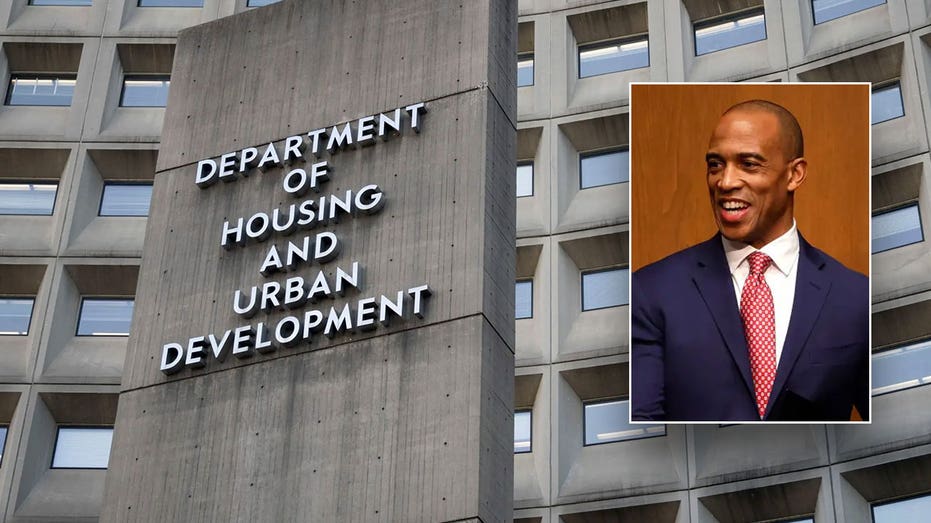
Secretary Scott Turner’s rhetoric — calling Boston’s approach a “social engineering project” and a “BIPOC bash” — is not simply legal argumentation; it’s signaling to a broader political base deeply skeptical of DEI. By blaming the prior administration’s immigration policies for housing shortages and tying Boston’s equity agenda to ideological overreach, HUD’s leadership is reframing fair housing enforcement as a defense of “merit or need” against DEI.
Overlay this with an acute housing crisis: the number of “worst-case housing needs” households — extremely low-income renters paying more than half their income in rent and/or living in severely inadequate housing — has climbed in recent HUD reports. In tight markets like Boston, where vacancy rates are low and prices high, any perception that government is managing scarce housing opportunities by race rather than income or need becomes particularly politically explosive.
What’s being overlooked in the coverage
Most quick-hit coverage will frame this as a binary fight: DEI versus colorblind law. That misses several important dimensions:
- The role of geography and history
Boston’s Black homeownership rate has long lagged far behind that of white residents. Decades of redlining, exclusion from suburban communities, and uneven mortgage lending practices produced a racial wealth gap rooted in housing. Without acknowledging this history, the legal debate over Boston’s 65% goal looks purely abstract, rather than a response to documented disparities. - The distinction between process and outcome
Equity-driven governments often set outcome targets (like “65% BIPOC”) to make agencies accountable. But from a legal standpoint, what matters is how decisions are made at the individual level. Are households actually selected because of race, or because of income, residency, and other race-neutral criteria, with outreach simply broadening the pool? That factual distinction will be central to any enforcement outcome, and it’s not captured in the headline rhetoric. - The risk of a chilling effect on data and evaluation
If HUD treats Boston’s collection and use of racial data as suspect, other jurisdictions may shy away from robust equity analysis for fear of legal exposure. That would undermine one of the main tools civil-rights agencies have used to detect discrimination: measuring it. - The missing alternative
Critics often stop at denouncing race-conscious goals, but what is the workable race-neutral alternative that still closes racial gaps in homeownership and wealth? Income-only approaches often fail to address patterns of segregation and inherited disadvantages. The investigation will force that question: if Boston cannot use explicit racial targets, what tools does HUD believe are lawful but still effective?
Expert perspectives: law, policy, and equity
Legal scholars note that Title VI and the Fair Housing Act do not absolutely ban every mention of race in policy. Instead, courts tend to scrutinize whether programs impose rigid racial quotas or make race the determinative factor for individual eligibility.
Civil-rights historian Richard Rothstein, whose work on redlining in “The Color of Law” shaped much of today’s equity conversation, has argued that addressing the legacy of state-sanctioned housing discrimination may require explicitly race-conscious remedies. Opponents of Boston’s approach, however, point to recent Supreme Court cases suggesting growing judicial hostility to any form of race-based line-drawing, even when remedial.
Housing economists also stress that in markets like Boston, where median home prices are far beyond the reach of typical working families, any homeownership assistance program—DEI-framed or not—is already dealing with extreme scarcity. The equity question becomes sharper when a relatively small number of subsidized opportunities can materially alter a family’s trajectory, but cannot meaningfully change the broader market.
Data and evidence: the structural gap Boston is trying to address
While current Boston-specific figures are not detailed in the news snippet, national data illustrate the structural gap:
- In recent years, the Black homeownership rate in the U.S. has hovered around 44–45%, compared with roughly 74–75% for white households—a gap wider than in 1968 when the Fair Housing Act passed.
- Studies by the Federal Reserve show that home equity remains the single largest source of wealth for most American families, amplifying the impact of racial disparities in access to ownership.
- In high-cost metros like Boston, local reports have consistently found Black and Latino households underrepresented among homeowners and overrepresented among renters severely burdened by housing costs.
Boston’s DEI-oriented housing strategy appears to be a direct attempt to bend these curves. HUD’s investigation will test whether federal law allows local governments to use explicit racial benchmarks to do that work, or whether they must rely on race-neutral designs that may be less targeted and slower to close the gap.
Looking ahead: what this case could change
The investigation is at an early stage, but there are several possible outcomes, each with wide implications:
- Negotiated reform
Boston could revise its housing strategy language—dropping explicit percentages tied to BIPOC households and reframing goals around underserved neighborhoods, income bands, or first-generation homebuyers—while keeping a strong equity focus. HUD would then claim a win in enforcing non-discrimination without fully delegitimizing race-aware analysis. - Adverse finding and enforcement
If HUD concludes Boston violated Title VI and the Fair Housing Act, it could threaten the city’s federal housing funds or require corrective actions. That would likely spur similar investigations elsewhere and embolden litigation against other local DEI initiatives in housing, transportation, and education. - Litigation and a new court precedent
If Boston contests HUD’s findings, the case could end up in federal court. A ruling that directly addresses the legality of race-based percentage targets in local housing policy would become a major precedent, shaping how cities across the country craft equity goals. - Policy redesign toward “race-neutral, race-conscious” strategies
Regardless of formal outcome, many jurisdictions may move toward approaches that are facially race-neutral but designed with racial impact in mind—targeting residents of historically redlined census tracts, first-generation homeowners, or families with low wealth rather than low income alone. That would represent a new phase of fair housing policy: explicitly informed by race, but legally insulated by neutral criteria.
The bottom line
HUD’s probe of Boston is not a simple referendum on DEI. It is a stress test of how far local governments can go in explicitly naming race and setting numerical racial goals when they spend federal money to address a racialized housing market.
The central policy dilemma remains unresolved: ignoring race has not closed racial gaps in homeownership and housing stability; centering race invites legal challenge and political backlash. Boston’s case will help define the narrow lane between those two extremes — a lane that every city wrestling with segregation, affordability, and equity now has to navigate.
Topics
Editor's Comments
One under-discussed aspect of the Boston case is how it exposes the gap between the rhetoric of equity and the operational reality of scarce resources. For years, local leaders have embraced ambitious language about repairing racial harm, often encouraged by federal guidance around affirmatively furthering fair housing. But the tools they have are limited: small homeownership programs, down-payment assistance, and zoning reforms that move slowly against powerful market forces. In that context, setting a 65% BIPOC target may have been as much about signaling commitment as dictating actual allocation. Yet once codified, that signal becomes a legal vulnerability. There is also a deeper tension here that neither side is fully grappling with: the country has never really articulated what a lawful, adequate remedy for state-created racial housing inequality should look like. Without that baseline, each local experiment becomes a test case, vulnerable both to political backlash and to evolving court doctrine. Boston’s experience suggests that, absent clearer national standards, equity rhetoric will continue to run faster than the legal frameworks that govern it — and communities caught in the middle will bear the consequences.
Like this article? Share it with your friends!
If you find this article interesting, feel free to share it with your friends!
Thank you for your support! Sharing is the greatest encouragement for us.