How Josef Mengele Evaded Capture in Latin America: Inside Declassified Argentine Files

Sarah Johnson
December 3, 2025
Brief
Declassified Argentine archives reveal how Josef Mengele evaded capture in Latin America, exposing systemic failures, political ambivalence, and transnational networks shielding Nazi war criminals post-WWII.
Opening Analysis
The recent release of declassified Argentine intelligence files reveals how Josef Mengele, the infamous "Angel of Death" responsible for horrific Nazi medical experiments at Auschwitz, managed to evade capture in Latin America for decades after World War II. These documents illuminate not only Mengele's ability to live openly under pseudonyms, but also systemic failures by Argentine authorities and international agencies to coordinate effective pursuit. Understanding these archival revelations offers crucial insights into postwar geopolitical dynamics, the interplay of local and global politics, and the long shadow of escaped Nazi war criminals in South America.
The Bigger Picture
Josef Mengele’s evasion of justice must be situated within a broader historical context of how many high-ranking Nazis fled Europe post-1945. Argentina, Paraguay, and Brazil became notorious safe havens for these fugitives due to sympathetic regimes and porous borders. Argentina’s government, particularly in the mid-20th century, exhibited conflicting approaches—sometimes covertly sheltering Nazi refugees through bureaucratic inertia or ideological sympathy, while at other times cooperating sporadically with Western powers.
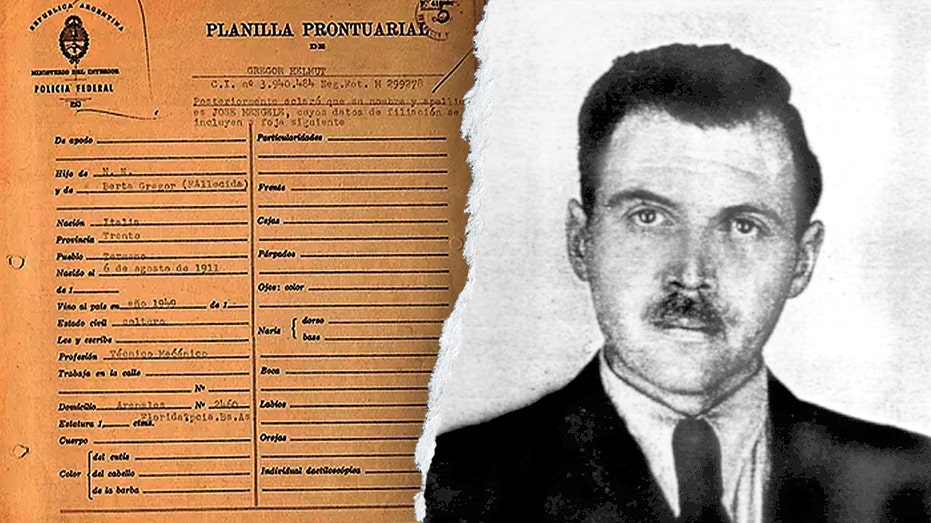
Mengele’s use of false identities, and his ability to secure legitimate documentation (such as an official ID card and birth certificate amendments), reflect wider networks of deception utilized by Nazi fugitives and their supporters. Moreover, the fragmented, multilingual nature of the Argentine archives—containing Spanish, German, Portuguese, and English documents—underscores the multinational intelligence efforts at play, both in tracking and sometimes inadvertently shielding these individuals.
What This Really Means
These newly revealed files show not merely the story of a single fugitive doctor’s escape, but rather a microcosm of postwar political complexities and moral ambiguities. Argentina’s intelligence services had actionable knowledge about Mengele’s identity, whereabouts, and social entrenchment by the 1950s. Yet bureaucratic disunity, lack of political will, and possibly ideological sympathies prevented timely arrest or extradition.
Critically, the Argentine judiciary’s refusal to honor West Germany’s 1959 extradition request on grounds of alleged "political persecution" reveals how legal frameworks were manipulated to protect war criminals. This attitude contributed to a culture of impunity, allowing Mengele not only to survive but attempt to reintegrate into society by registering business interests and resuming his real name.
Furthermore, the files expose the transnational assistance systems, including sympathizers among German diaspora communities in Brazil and Paraguay, easing cross-border movement and concealment. Mengele’s eventual death and posthumous identification in Brazil illustrates the long-delayed reckoning with these dark legacies.
Expert Perspectives
- Dr. Ben Kiernan, genocide scholar and historian, notes: "Mengele’s evasion speaks to the failure of postwar justice mechanisms and the geopolitical reluctance to confront Nazi fugitives embedded within ostensibly democratic nations. It also reveals how Cold War calculations often overshadowed moral imperatives in Latin America."
- Dr. Mariana Candia, professor of Latin American studies, observes: "Argentina’s ambivalence stemmed from conflicting nationalist narratives—on the one hand embracing German immigrants for economic development, on the other facing pressure from international powers. This duality delayed effective action against war criminals like Mengele."
- Former intelligence analyst John Mueller comments: "The fragmented intelligence and bureaucratic silos highlighted in these archives are a cautionary tale about the importance of inter-agency cooperation and political resolve in transnational criminal investigations."
Data & Evidence
- Archival documents reveal Mengele entered Argentina in 1949 using an Italian passport under the name Helmut Gregor, receiving an ID card in 1950.
- A 1956 legal amendment of Mengele’s identity via West German Embassy involvement shows unusual official tolerance or oversight.
- Despite robust satellite tracking—including photographs, border crossing records, and intelligence summaries—effective arrest attempts failed over a decade.
- Mengele’s move to Paraguay and Brazil (receiving Paraguayan citizenship under dictator Stroessner) highlights cross-border safe havens.
- Positive DNA identification of Mengele’s remains did not occur until 1992, nearly 13 years after his death, illustrating delayed forensic justice.
Looking Ahead
The Mengele files compel renewed reflection on post-conflict justice, transitional memory, and institutional accountability. For contemporary societies, the case underscores risks inherent when political expediency overrides human rights enforcement. Latin America’s historic role as a refuge for war criminals continues to reverberate in cultural memory and international relations.
Going forward, these archives may serve as a catalyst for deeper scholarly inquiry and judicial examination into the networks that protected Nazi fugitives. They also stress the importance of cross-border intelligence sharing and the rigorous prosecution of war crimes to prevent recurrences.
Moreover, uncovering these truths enriches Holocaust historiography by amplifying survivors’ testimonies like José Furmanski and confronting lingering denial or complacency within affected societies.
The Bottom Line
The declassified Argentine documents about Josef Mengele expose a troubling chapter in postwar history marked by systemic failures and complicities that allowed one of history’s most notorious war criminals to live openly for years in Latin America. This story is not only about a single fugitive’s flight but about the moral and political challenges nations face in confronting legacies of atrocity. The archives compel us to remember and learn from these failures to strengthen future justice and remembrance mechanisms.
Topics
Editor's Comments
This analysis brings into sharp relief the unsettling reality that the pursuit of justice in the postwar world was often compromised by political convenience and bureaucratic inertia. Argentina’s complex position—torn between Cold War alliances, nationalist sympathies, and international pressure—created a permissive environment for one of history’s most reviled criminals to evade capture. These revelations challenge us to reconsider widely held assumptions about postwar justice and underscore the persistent need for diligent historical accountability. The inter-agency failures and judicial reluctance exposed here remain cautionary lessons for how states address not only war crimes but other forms of transnational crime today.
Like this article? Share it with your friends!
If you find this article interesting, feel free to share it with your friends!
Thank you for your support! Sharing is the greatest encouragement for us.