When Cultural Pride Meets Political Conflict: The Complex Fallout of a Pro-Palestinian Display in a Pennsylvania School

Sarah Johnson
December 4, 2025
Brief
An in-depth analysis revealing how a Pennsylvania school's pro-Palestinian display reflects broader tensions around identity, activism, and education amid the Israeli-Palestinian conflict in American schools.
Why This Matters
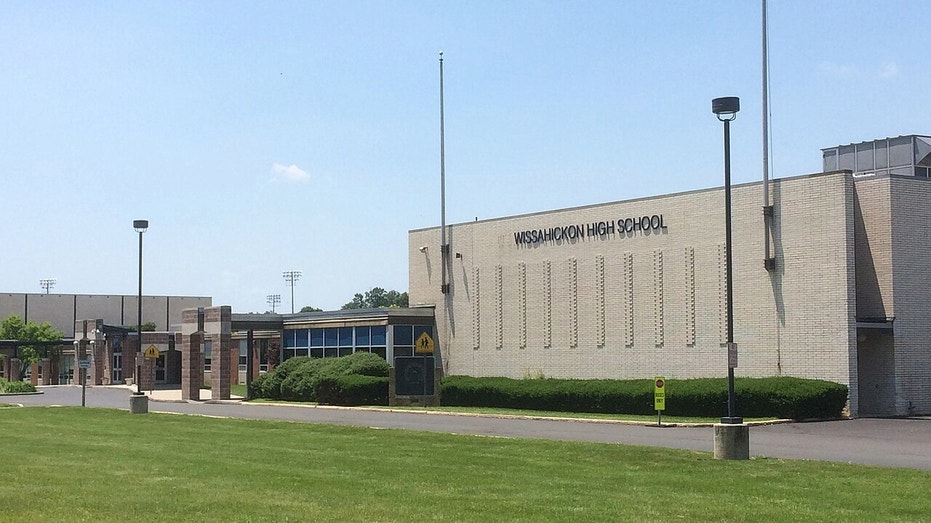
The recent controversy at Wissahickon High School over a Muslim student club's pro-Palestinian display has ignited deep tensions about identity, activism, and the role of schools in cultural education. Beyond the immediate upset among Jewish students and parents, this incident taps into longstanding, complex geopolitical and social debates playing out in microcosm within U.S. public schools. The polarized reactions speak to how global conflicts increasingly manifest in local community spaces, forcing schools to navigate challenging terrain between cultural celebration, political expression, and student safety.
The Bigger Picture: Historical and Social Context
At the heart of this controversy is the Israeli-Palestinian conflict, a decades-long struggle with profound historic, religious, and political dimensions. The keffiyeh worn by students symbolizes Palestinian identity yet also evokes political resistance, making it a charged emblem in diverse settings. In American schools, such symbols and narratives are highly contentious, especially amid rising concerns about antisemitism and Islamophobia. The tension illuminates how diaspora communities negotiate identities and historical grievances in multicultural environments.
The U.S. education system has a fraught history balancing cultural expression and political advocacy. Attempts to celebrate multiculturalism occasionally become flashpoints when social movements or geopolitical conflicts enter the classroom. This event exemplifies the ongoing debate about what constitutes appropriate cultural education versus indoctrination or political activism in schools. The fears voiced by Jewish parents about marginalization and emotional safety reflect a broader national spike in antisemitic incidents, while Muslim students emphasize their right to cultural and political expression.
What This Really Means
This episode reveals profound challenges public schools face: how to create inclusive environments that respect divergent narratives without alienating or threatening students of different backgrounds. The incident underscores the difficulty in clearly drawing lines between cultural heritage and political advocacy, particularly with issues as emotionally charged as the Israeli-Palestinian conflict.
Furthermore, the administration’s perceived endorsement of the display raises questions about institutional neutrality and responsibility. When school leaders are seen facilitating or appearing alongside politicized messages, it can erode trust among families who feel marginalized or targeted. The reported use of incentives (cash prizes, candy) to engage students in political messaging deepens concerns about coercion and the ethics of activism in educational settings.
This controversy also highlights the challenges in addressing antisemitism and Islamophobia concurrently. Some Muslim students and activists reject accusations of antisemitism, emphasizing their right to contest Israeli policies. Conversely, Jewish students and families report feeling intimidated and unsafe, fearing delegitimization of their historical connections and identity. Schools must navigate these overlapping, sometimes conflicting experiences sensitively.
Expert Perspectives
Dr. Noah Feldman, professor of law and expert on Middle East conflict, notes, "Educational environments are microcosms of international disputes. How schools handle such charged symbolism affects not only student safety but broader community cohesion. Neutrality is challenging but crucial to avoid alienation."
Ruth Messinger, former president of the American Jewish World Service, emphasizes, "While cultural expression is vital, schools bear a special obligation to prevent political advocacy that singles out or negates the identity of any group, especially minorities vulnerable to discrimination."
Dr. Maha Hilal, a scholar of Palestinian activism, insists, "Recognizing Palestinian cultural identity within educational spaces is not inherently political intimidation. Denying such expression risks silencing an entire community’s voice and overlooks important histories and grievances."
These differing viewpoints illustrate the complexity schools confront trying to respect plural narratives while protecting students from harm.
Data & Evidence
According to the Anti-Defamation League, reports of antisemitic incidents in U.S. schools rose by over 30% in recent years, fueling fears among Jewish students about safety and marginalization. Concurrently, studies show increased political activism among Muslim-American youth, with many using school clubs to explore identity and advocate for causes.
Research in education sociology suggests that politicized cultural displays, when not carefully framed, may increase intergroup tensions and decrease feelings of belonging among minority students. A 2023 study found that events blending cultural celebration with political messaging led to 18% higher reports of student discomfort in diverse schools.
Looking Ahead: What to Watch For
Wissahickon School District’s response will set an important precedent for how K-12 schools approach similar situations nationwide. The demand for transparency around event planning, clear guidelines separating cultural education from political advocacy, and safe spaces for dialogue reflect growing calls for accountability.
Future school events may face increased scrutiny to ensure balanced representation of complex issues and to safeguard all students’ emotional well-being. This incident could catalyze broader district- and state-level policy reviews on multicultural programming, anti-discrimination training, and conflict resolution.
Meanwhile, national debates about free expression versus hate speech in schools will intensify, amplified by social media and partisan media coverage. Educators will need innovative frameworks and community engagement strategies to manage these tensions constructively.
The Bottom Line
The Wissahickon case is not merely about a culture fair booth; it exposes the deep fault lines in American society over identity, history, and power. Navigating these issues in educational settings demands nuanced leadership that prioritizes inclusivity, respect, and safety. Schools must develop clear policies that recognize the political weight of cultural symbols and create platforms for honest dialogue among students from all backgrounds.
Failing to do so risks deepening divides and undermining the very goals of multicultural education — fostering understanding and coexistence within our increasingly complex, interconnected world.
Topics
Editor's Comments
This incident at Wissahickon High School serves as a microcosm of the fraught interplay between cultural identity and political expression in American education. It challenges us to rethink how schools can be truly inclusive spaces amid the spillover of global conflicts. What safeguards are necessary to ensure that activism doesn’t inadvertently silence or intimidate other student groups? And can educational institutions navigate these divisive symbols without deepening fractures? The answers will require courageous leadership and open dialogue, recognizing that the goal is not to suppress identity but to nurture coexistence. Ignoring these tensions risks leaving minority students feeling marginalized, which undercuts the very mission of public education.
Like this article? Share it with your friends!
If you find this article interesting, feel free to share it with your friends!
Thank you for your support! Sharing is the greatest encouragement for us.