
Beyond Epstein: What the Clinton Contempt Threat Reveals About the Future of Congressional Power

Sarah Johnson
December 13, 2025
Brief
The Clinton–Epstein contempt clash is not just partisan drama. It’s a pivotal test of congressional power, elite accountability, and how far oversight can go in the post-Trump era.
Why the Clinton–Epstein Subpoena Fight Is Really About the Future of Congressional Power
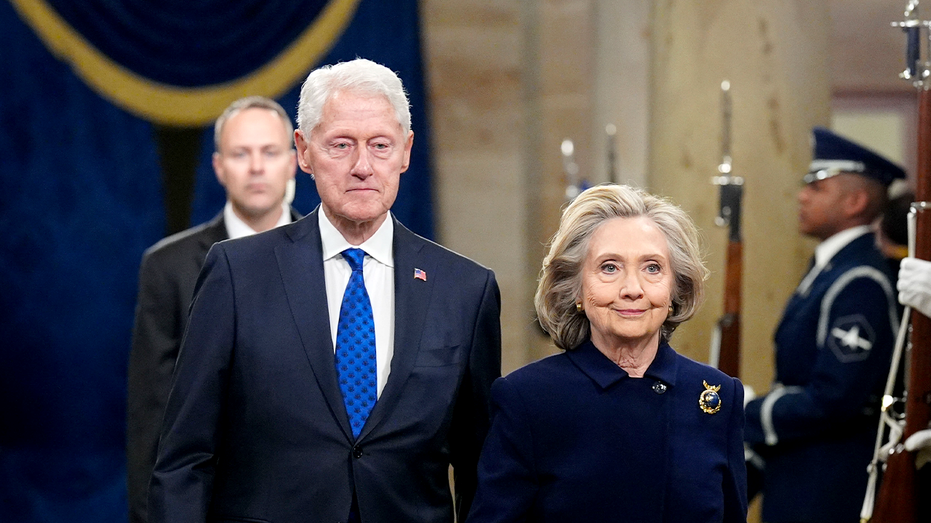
The looming move by House Republicans to pursue contempt of Congress proceedings against Bill and Hillary Clinton over the Jeffrey Epstein investigation is not just another partisan skirmish. It sits at the intersection of three extremely volatile issues: the weaponization of congressional oversight, the unresolved public trauma around Epstein’s crimes and death, and the question of whether elite accountability is even possible in a hyper-polarized America.
Understanding this moment requires looking past the headlines about subpoenas and deposition dates and asking a deeper set of questions: What is Congress actually trying to prove? What legal and political precedents are at stake? And how does this fight shape future investigations involving former presidents and cabinet officials, including Donald Trump and his administration?
The bigger picture: Oversight as a battlefield, not a guardrail
Congress’s power to investigate and compel testimony has long been one of the main checks on executive and elite power. But over the last 25 years, especially since the Clinton impeachment in the late 1990s, oversight has steadily morphed into a partisan weapon.
There is a direct lineage from those impeachment-era subpoenas to today’s controversy:
- 1990s: The Clinton Whitewater and impeachment investigations normalized the idea that oversight could be used to damage political opponents rather than just monitor policy.
- 2000s: Republican investigations into the Bush-era U.S. attorney firings and Democratic probes into the Iraq War and Katrina response hardened the idea that investigative firepower is deployed when the other party is in power.
- 2010s: The Benghazi and Fast and Furious investigations showed how hearings can function as political theater, often with little legislative follow-through.
- 2020s: Contempt battles involving Steve Bannon, Peter Navarro, Mark Meadows and others during and after the Trump presidency took the fight to a new level, testing how far Congress could go – and how much DOJ would enforce.
The Clinton–Epstein subpoenas are best read against this backdrop: an institution trying to reassert its power through one of the few remaining levers it controls – contempt – while each party accuses the other of selective, politically motivated outrage.
Why the Clintons and why now?
The House Oversight Subcommittee’s Epstein probe is formally framed as an investigation into how federal agencies, especially the Department of Justice, handled Epstein’s sex trafficking case over decades. That includes the controversial 2008 non-prosecution agreement in Florida, the conditions of his incarceration, and the security failures around his death.
But the decision to subpoena Bill and Hillary Clinton is about more than procedural oversight. It intersects with three overlapping motives:
- Symbolic accountability for elites: Epstein’s story is widely seen as a case study in how wealth and connections shield powerful men from scrutiny. Bringing in a former president and former secretary of state is a visible way to signal that “no one is above the law,” regardless of what the underlying testimony actually reveals.
- Partisan narrative-building: Bill Clinton’s documented association with Epstein (flight logs, photos, event overlaps) has been part of conservative media narratives for years. Targeting the Clintons fits a familiar political pattern: connect Democrats – and particularly the Clinton brand – to an emblem of moral and legal corruption.
- Institutional leverage over DOJ: By pairing subpoenas to high-profile individuals with demands for broad DOJ documents, the committee is also pressuring the Justice Department. The higher the political stakes, the more leverage Congress has in negotiating access to materials and concessions from DOJ.
The Clintons, for their part, appear to be treating the subpoenas as both legally negotiable and politically suspicious. Their foundation’s statement – essentially telling reporters to ask Chairman James Comer about an unanswered letter – signals they are building a record that they engaged and that the committee may be ignoring attempts at conditions or clarifications.
What’s really at stake in a contempt fight
Contempt of Congress is more than a headline; it’s a test of how much investigative power Congress actually retains in 2025 and beyond.
There are three main enforcement paths if the Clintons refuse to comply:
- Criminal contempt: Congress can vote to refer the matter to the Justice Department. DOJ then decides whether to prosecute – something it has often declined to do when separation-of-powers or political sensitivities are involved.
- Civil enforcement: The House can sue in federal court to compel compliance. That can take months or years, often outlasting the Congress that initiated the case, and courts sometimes push parties toward negotiated settlements instead of bright-line rulings.
- Inherent contempt: In theory, Congress can attempt to enforce contempt itself, including through fines, but that power is rarely used and would trigger a constitutional clash.
Each path carries risk. If the House pushes a contempt referral and DOJ, under Attorney General Merrick Garland, declines to prosecute a former president and secretary of state, Republicans will frame it as proof of a two-tier justice system. If DOJ does prosecute, it risks setting a precedent that could, in future administrations, be turned against Republican ex-officials and maybe even Donald Trump’s team.
The courts are no safer. A broad ruling that narrows Congress’s subpoena power would weaken both parties long-term. A ruling that strongly reinforces that power could make every future ex-president and cabinet official much more exposed to hostile congressional majorities.
Epstein as a prism for distrust in institutions
The Epstein case is uniquely radioactive because it is widely seen as a systemic failure – and not just of one administration.
- In 2008, Epstein secured a highly criticized non-prosecution agreement in Florida, described by a federal judge as violating crime victims’ rights by being negotiated in secret.
- Epstein’s 2019 death in federal custody – officially ruled a suicide – occurred amid documented security breakdowns, fueling conspiracy theories that someone “powerful” wanted him silenced.
- The subsequent conviction of Ghislaine Maxwell revealed extensive evidence of trafficking and abuse spanning years, but the full network of enablers, fixers, and institutional failures remains only partially understood.
For many Americans, especially younger voters, Epstein has become shorthand for “the system protects its own.” That perception cuts across party lines, even as each side emphasizes different villains. Republicans stress Bill Clinton and Democratic-aligned elites; Democrats highlight Donald Trump’s past social ties to Epstein and other wealthy conservatives in his orbit.
That cross-partisan distrust creates a strange dynamic: both sides want “the full story,” but neither trusts the other to tell it honestly. This is part of why the release of Epstein- and Maxwell-related grand jury materials has become such a flashpoint. Each new photograph or document dump can be selectively amplified, feeding narratives rather than resolving them.
The legal and political nuances of subpoenaing former top officials
Subpoenaing a former president and former secretary of state raises unique legal and constitutional questions, even if they’re not clearly settled by existing doctrine.
Key issues include:
- Scope and relevance: Are the Clintons being asked about specific, demonstrable interactions with Epstein relevant to federal decision-making – or are the requests sweeping, open-ended, and arguably more political than probative?
- Executive privilege and separation of powers: While former officials can’t simply assert blanket immunity, courts have sometimes given weight to separation-of-powers concerns when Congress seeks testimony about high-level decision-making, especially if criminal processes are also in play.
- Negotiated accommodations: Historically, high-level witnesses often negotiate terms: written responses, limited topics, closed-door depositions, or joint interviews rather than televised show trials.
The Clintons’ reference to a letter the chairman “won’t respond to” hints that such negotiations may have been attempted. If so, and if the committee refused to entertain them, courts could weigh that in any enforcement dispute.
What mainstream coverage often misses
Most daily coverage treats this as a binary story: Republicans issuing ultimatums, the Clintons allegedly stonewalling. But three overlooked dynamics deserve more attention:
- Institutional bargaining, not just defiance: High-profile subpoena fights are usually about leverage, not full refusal. Former officials try to limit scope and format; committees aim to maximize public impact. Contempt threats are often part of that bargaining, not necessarily the endgame.
- Precedent for Trump-era witnesses: Whatever standard is effectively set for the Clintons – whether via negotiation, court ruling, or DOJ’s response – will quickly be cited in fights over Trump-era and Biden-era officials. If former presidents can be dragged into broad inquiries, that cuts both ways.
- The gap between public expectation and legal reality: Many Americans assume a contempt vote means someone will be jailed or forced to testify. In practice, months of litigation, narrow court rulings, and political compromise are far more common. That gap fuels further disillusionment when “big” accountability moments quietly fizzle.
Data points: How often does contempt actually bite?
Historical data underscores how rare meaningful enforcement is:
- Since 1980, Congress has held dozens of officials in contempt, but criminal prosecutions have been limited. Many referrals were declined by DOJ, especially when executive privilege was asserted.
- Recent high-profile cases – Steve Bannon and Peter Navarro – led to convictions, but they involved private citizens no longer serving in government, and courts found no valid privilege claims.
- By contrast, contempt referrals against Eric Holder (Fast and Furious) and William Barr (Mueller report) were not prosecuted by DOJ, reflecting a long-standing reluctance to criminally pursue sitting or former top Justice Department officials.
The Clintons occupy yet another category: former top executive branch officials who also remain deeply political symbols. DOJ’s response will be scrutinized less as a legal judgment and more as a test of neutrality.
Looking ahead: Scenarios and implications
Several paths are plausible over the next few months:
- Last-minute accommodation: The most common outcome historically is a negotiated compromise. The Clintons could agree to closed-door depositions with limited topics or provide written answers. Republicans would get to claim a win; the Clintons would argue they protected institutional norms.
- Symbolic contempt, no prosecution: The House could vote to hold them in contempt, send a referral to DOJ, and DOJ could quietly decline to prosecute, citing separation-of-powers concerns or sufficiency of prior accommodations. This would deepen partisan narratives about a “two-tier system” without changing the facts on the ground.
- Protracted litigation: If the House pursues civil enforcement, courts could narrow the subpoena scope, delay resolution until a new Congress, or encourage settlement. The legal fight might matter more as precedent than as a fact-finding tool.
- Escalation to other figures: How the Clintons’ case is handled will shape how other subpoenaed officials – James Comey, Loretta Lynch, Eric Holder, Merrick Garland, Robert Mueller, William Barr, Jeff Sessions, and Alberto Gonzales – respond. If resistance appears to pay off, expect more of it.
In all scenarios, the core question remains: will this investigation produce a clearer, evidence-based account of how Epstein evaded full accountability for so long – or will it primarily produce talking points and images that reinforce preexisting beliefs?
The bottom line
The looming contempt proceedings against Bill and Hillary Clinton are less about the specific scheduling dispute and more about the structural direction of American governance. Each side is testing how far it can go in using institutions to pursue its narrative of justice.
If Congress uses its power to genuinely illuminate how institutions failed in the Epstein saga – including DOJ, federal courts, and political networks across party lines – it could restore some measure of trust. If, instead, the process devolves into selective outrage and selective enforcement, it will harden a more corrosive lesson: that even our accountability mechanisms are just another partisan battlefield.
Topics
Editor's Comments
What’s striking in this episode is how little the conversation is about Epstein’s victims and how much it revolves around elite reputations and partisan score-settling. The central policy questions – how a wealthy serial offender leveraged the justice system, what reforms might prevent similar failures, and how federal agencies should handle high-profile detainees – are frequently displaced by the more telegenic question of which famous name appears in which photograph. This reflects a deeper structural problem: Congress has powerful investigative tools but increasingly uses them in ways that prioritize political theater over sustained, bipartisan problem-solving. A genuinely victim-centered inquiry would focus less on subpoenaing big names for soundbites and more on mapping the institutional decision points where prosecutors, judges, corrections officials, and private intermediaries failed. The danger now is that, once again, we may learn a great deal about the optics of elite proximity to Epstein and remarkably little about how to close the systemic loopholes that allowed him to operate for so long.
Like this article? Share it with your friends!
If you find this article interesting, feel free to share it with your friends!
Thank you for your support! Sharing is the greatest encouragement for us.