
Beyond the 21-Point Comeback: What Bills–Patriots Reveals About the New AFC East Power Order

Sarah Johnson
December 15, 2025
Brief
Buffalo’s 21-point comeback in Foxborough wasn’t just a thriller. It exposed deep shifts in AFC East power, coaching philosophy, and quarterback development that will shape the division for years.
Bills’ 21-Point Comeback in Foxborough Signals a Power Shift – and a New AFC East Era
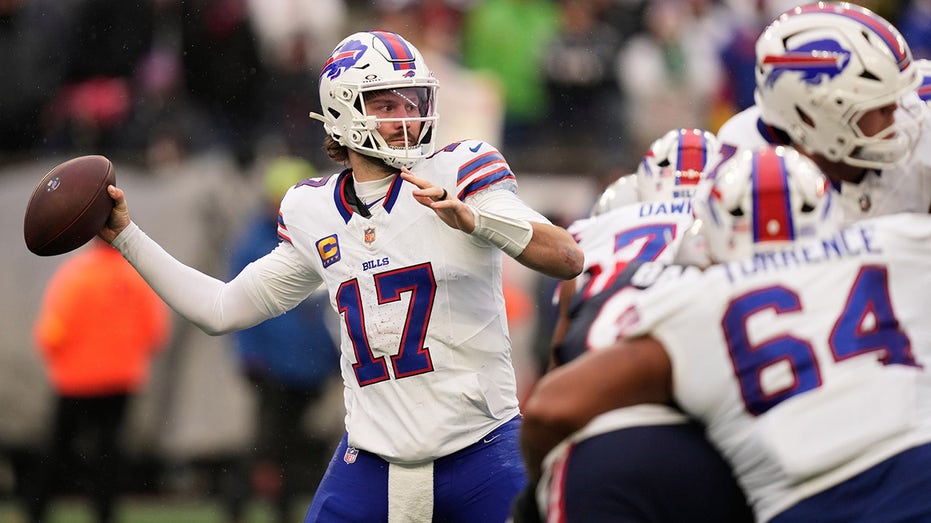
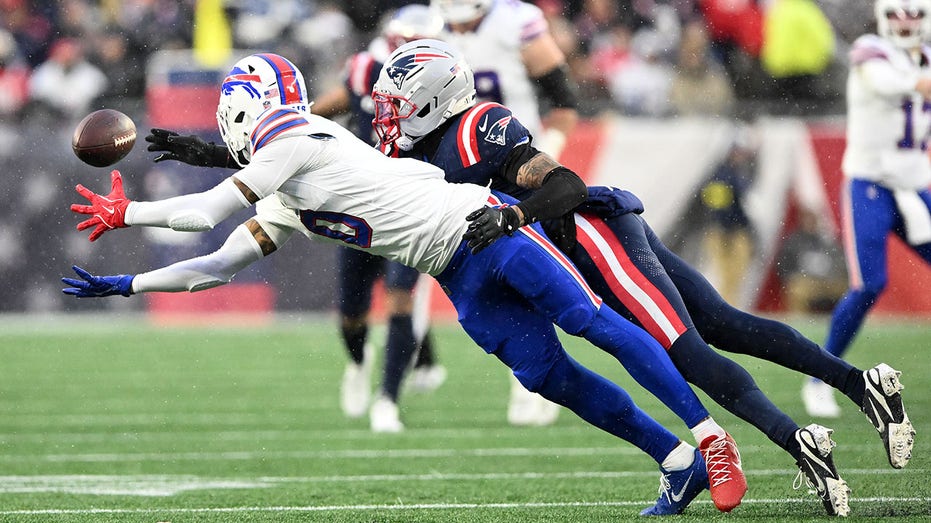
On paper, this was a classic regular-season thriller: Josh Allen erases a 21-point road deficit, the Buffalo Bills snap the New England Patriots’ 10-game win streak, and the AFC East tightens heading into the stretch. But underneath the box score, this game reads like a referendum on the division’s past, present, and future: the end of one dynasty’s operating system, the emergence of another’s, and a stark reminder that the NFL’s power structure in the Northeast has fundamentally changed.
This wasn’t just a comeback. It was a live-action demonstration of how team-building philosophy, quarterback development, and in-game decision-making have evolved since the height of the Brady–Belichick era — and why New England can no longer count on its old formula to win the division by default.
From Brady vs. the World to Allen vs. Maye: The New AFC East Landscape
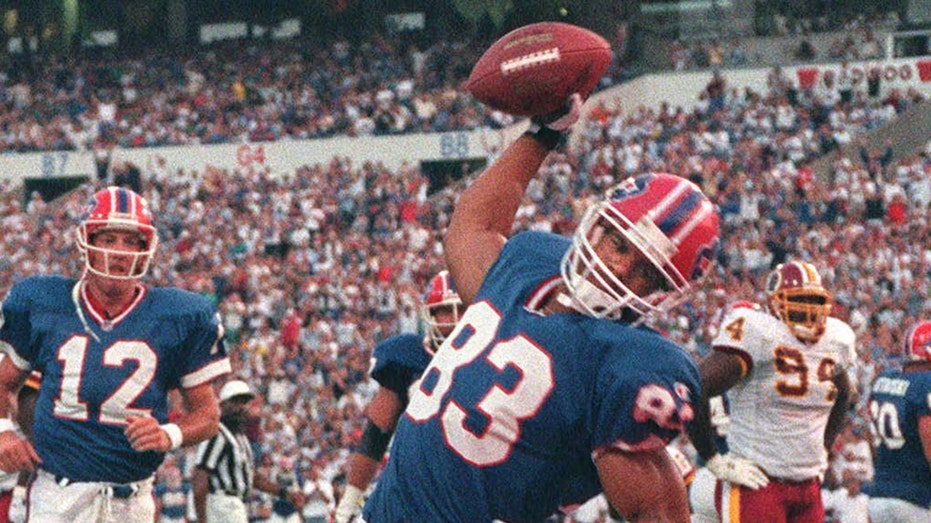
For nearly two decades, “AFC East race” was a polite fiction. From 2001 through 2019, the Patriots won the division 17 times in 19 seasons. Tom Brady’s combination of pre-snap mastery, surgical efficiency, and Belichick’s defensive wizardry made most divisional games feel like formalities.
Buffalo, meanwhile, spent that same era cycling through coaches and quarterbacks — from J.P. Losman and Trent Edwards to E.J. Manuel and Tyrod Taylor. The organizational identity was reactive, not intentional: patch the roster, hope a mid-tier quarterback overperforms, and pray New England eventually declines.
That changed with two hinge decisions:
- Buffalo trading up in the 2018 draft to take Josh Allen — a raw, inaccurate prospect with elite tools — and committing to building an offense around his strengths rather than forcing him into a pre-existing system.
- New England drafting Drake Maye as its next franchise quarterback, signaling a grudging acceptance that post-Brady stopgaps were not a sustainable strategy.
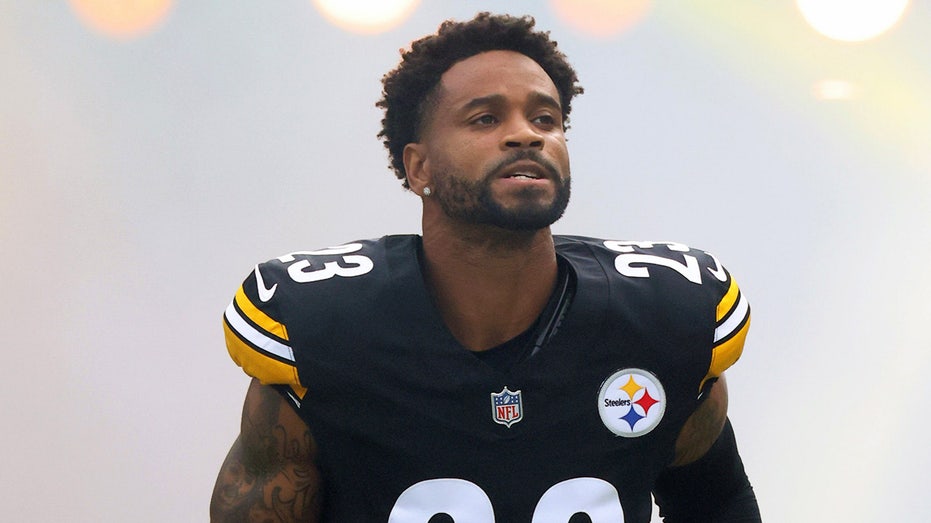
This game was the clearest on-field evidence yet that Buffalo is in its mature-contender phase of that transition, while New England is still in the experimental stage. Allen engineered multiple high-leverage, multi-play scoring drives on the road. Maye flashed MVP-level talent early, then made the kind of high-variance mistake — the deep interception to Tre’Davious White — that often separates experienced elites from ascending hopefuls.
Why the Comeback Matters More Than the Score
Large comebacks aren’t rare anymore in an era of pass-heavy offenses and analytics-informed aggressiveness, but a 21-point comeback on the road against a defense-driven team still carries weight.
Historically, teams trailing by 21 or more points at any stage of an NFL game win less than 5% of the time. On the road, that probability is even lower. For Buffalo to flip that script against a Patriots team riding a 10-game win streak isn’t just about resilience — it’s about systemic capacity. The Bills have an offensive structure that can meaningfully change game state in 2–3 possessions; New England, despite its strong start, showed it still doesn’t quite know how to protect big leads in the post-Brady era.
The turning point was not merely Drake Maye’s interception. It was the sequence around it:
- Buffalo emerging from halftime with a clear, scripted plan to attack the middle of the field and quicken Allen’s decision time.
- The Bills’ defense tightening on early downs, forcing Maye into more obvious passing situations.
- Buffalo converting the White interception into a 91-yard, 13-play drive — not a quick strike, but a grinding, demoralizing march that said: we can play your style and beat you at it.
That sequence — stop, long drive, lead change — is exactly how the Patriots used to suffocate opponents. Seeing Buffalo execute that template in Foxborough is symbolic: the pupil has mastered the old master’s script.
Mike Vrabel’s Patriots: Toughness Without the Old Margin for Error
Mike Vrabel’s New England Patriots are not Bill Belichick’s Patriots — and that difference was visible in the game’s architecture.
Vrabel’s teams, historically, emphasize physicality, ball control, and multiplicity on both sides of the ball. You saw it in the early script: two quarterback rushing touchdowns from Maye, a 94-yard drive capped by TreVeyon Henderson’s explosive 52-yard touchdown, and a defense that forced three straight punts to open the game. That’s textbook “get ahead, then squeeze” football.
But the second half exposed the limits of that model when paired with a developing quarterback and a roster that isn’t yet talent-dense across all phases:
- Conservative shift with the lead: After going up 21-0, New England’s offense skewed more conservative, leaning heavily on the ground game and shorter concepts. Against a veteran defense that adjusted, it reduced Maye’s rhythm and capped the offense’s ceiling just when Buffalo started scoring.
- Defensive fatigue and depth: The Bills ran three extended touchdown drives in the second half (6 plays, then 11, then 13). That kind of sustained pressure exposes defensive depth issues and tests communication — areas where New England’s post-dynasty roster is still rebuilding.
- High-leverage decision-making: The 4th-and-5 incompletion with the game on the line underscores a broader question: does this version of New England have a reliable late-game identity — the go-to concept, the mismatch, the bread-and-butter play — the way Brady’s teams once did? So far, the answer appears to be no.
This is not a coaching crisis story. It’s a margin story. Under Belichick and Brady, New England could win even when Plan A faltered because their situational excellence and talent density created extra cushions. Vrabel’s Patriots don’t have that luxury yet. When they get conservative with a lead and the defense bends, those cracks now become losses.
Buffalo’s Offensive Evolution: Less Hero Ball, More System
For years, one of the most consistent critiques of Buffalo’s offense was its overreliance on Allen’s improvisation. The Bills could blow teams out or implode in high-leverage moments, depending on how much of the burden fell solely on their quarterback’s shoulders.
This game suggests a quiet evolution.
James Cook’s 107 rushing yards and three total touchdowns were not cosmetic. They were structural. Buffalo repeatedly trusted the run game in high-leverage moments — including on the go-ahead touchdown — instead of defaulting to Allen-centric heroics.
Equally important was the distribution of targets: eight different Bills players caught passes, with Khalil Shakir leading the team in receiving yards (65). This is precisely the kind of diversified, less-Stefon-Diggs-dependent approach that analysts have argued Buffalo needed to become less predictable in playoff-caliber games.
The key strategic shift: Buffalo used the run game not just as a clock tool, but as a primary driver of the comeback in the third and fourth quarters. That’s a philosophical departure from earlier versions of the Allen era, where pass volume was the default answer to any deficit.
What We’re Learning About Drake Maye and TreVeyon Henderson
For New England, the narrative could easily be “rookie QB costs team the game with late INT.” That’s not the full story.
Drake Maye’s early performance — two rushing touchdowns, efficient use of his legs (43 rush yards) and a 21-0 lead — highlights why he’s an MVP candidate this early in his career. The designed runs near the goal line show the staff trusts him as a dual-threat weapon, not just a pocket passer.
The deep interception to White was part misread, part aggressive mindset. Coaches often accept one or two of those “arm punts” per game from young quarterbacks if the upside (explosive plays, stress on the defense) outweighs the downside. The problem wasn’t the interception in isolation. It was that New England lacked a counterpunch once momentum flipped.
TreVeyon Henderson is the other key data point. Fourteen carries, 148 yards, two long touchdowns (52 and 65 yards). Those numbers scream “explosive feature back,” but the low carry total raises a strategic question: did New England underuse its most dangerous weapon when trying to protect the lead, or did game script and field position limit his traditional touches?
Either way, Henderson’s performance underscores a trend across the league: the reemergence of the explosive, home-run back as a viable counter in a pass-centered ecosystem. You don’t build around a 30-carry workhorse anymore; you build around 12–18 touches that can produce 100+ yards and multiple scores.
The Hidden Story: Mentality and Organizational Memory
One of the under-discussed levers in modern NFL success is organizational memory — the shared, lived experience of playing in, and surviving, high-leverage moments.
Buffalo’s core — Allen, the offensive line, Tre’Davious White and other defensive leaders — has been through playoff collapses, overtime classics, and brutal losses. That collective scar tissue seems to be reshaping the way they handle in-game adversity. Down 21-0 on the road, earlier versions of the Bills might have leaned into volatile shot plays and self-inflicted errors. This version methodically stacked drives, trusted the run, and played situational defense late.
New England, by contrast, is in a memory reset phase. The institutional knowledge of how to close games, once embodied by Brady, Devin McCourty, Matthew Slater, and others, isn’t directly transferable to a roster dominated by newer faces and a first-time Patriots head coach in Vrabel. You can’t shortcut that process. Games like this — painful as they are — become the raw material out of which the next decade’s version of “Patriot Way” is either built or exposed as myth.
What This Game Signals for the AFC East Race
With the Patriots now 11-3 and the Bills 10-4, the division is far from decided. But the psychological and tiebreaker implications are massive.
- Buffalo now owns: proof it can walk into Foxborough, take New England’s best shot, fall behind by three scores, and still win. That matters in any potential playoff rematch.
- New England now carries: the knowledge that a three-score lead at home isn’t safe against a divisional rival. That seeds doubt — in players, coaches, and fans — that can affect aggressiveness in future high-stakes situations.
- Tiebreaker layers: Depending on earlier matchups, this win could swing head-to-head or common-opponent tiebreakers that decide home-field advantage or even the division title. The difference between hosting a January playoff game in Buffalo versus traveling as a Wild Card is enormous, especially for a weather-adapted team like the Bills.
Looking Ahead: What to Watch
Several long-term storylines emerge from this game that go beyond next week’s injury report.
- Buffalo’s identity balance: Does this run-pass balance and diversified target tree persist, or does the offense regress into Allen-centric heroics when the stakes rise further in the postseason?
- New England’s late-game script: Can Vrabel and his staff develop a reliable, repeatable late-game offensive identity that doesn’t depend on Maye pulling off something spectacular in improvisation mode?
- Henderson’s role: Will New England recalibrate to ensure that a back capable of 150 yards on 14 carries is consistently given enough usage to influence game flow, not just produce isolated highlight runs?
- Psychological bounce-back: For a young Patriots core, the response to this kind of loss is almost as important as the loss itself. Do they tighten up in big games, or does this become the game they reference years from now as the beginning of their maturation?
The Bottom Line
This wasn’t just Buffalo snapping New England’s 10-game win streak. It was a microcosm of the AFC East’s transition from a one-team dynasty to a genuine two-power struggle, with the Bills operating as the established contender and the Patriots as the talented, volatile challenger.
Josh Allen’s calm orchestration of a 21-point comeback, supported by a real run game and a flexible defense, signals that Buffalo’s window as a true Super Bowl threat remains very much open. Drake Maye and TreVeyon Henderson’s explosive but uneven performances show that New England’s window is opening — but still framed by inexperience and strategic growing pains.
In a division once defined by inevitability, this game is a marker of something new: nothing in the AFC East is automatic anymore. And that, more than the final score, is why this Sunday in Foxborough will matter long after the standings reset.
Topics
Editor's Comments
What’s easy to miss in the postgame noise is how much this single contest challenges lingering myths about both franchises. For years, narratives around Buffalo framed the Bills as emotionally volatile: capable of spectacular peaks, but prone to unraveling under pressure, particularly in games with playoff overtones. This comeback, built on patience and structure rather than desperation and chaos, runs directly counter to that stereotype. On the New England side, there’s still a reflexive belief among some fans and commentators that the ‘Patriot Way’ is a permanent, transferrable asset — that culture alone can bridge gaps in experience, roster talent, and schematic cohesion. This game suggests otherwise. Culture can set standards, but it doesn’t automatically translate into late-game execution for a new core that hasn’t yet lived those crucible moments. The more interesting question going forward isn’t which team is ‘for real’ — that feels resolved in Buffalo’s favor — but whether New England is willing to evolve its risk tolerance and offensive identity fast enough to keep pace in a division that no longer bends around Foxborough.
Like this article? Share it with your friends!
If you find this article interesting, feel free to share it with your friends!
Thank you for your support! Sharing is the greatest encouragement for us.