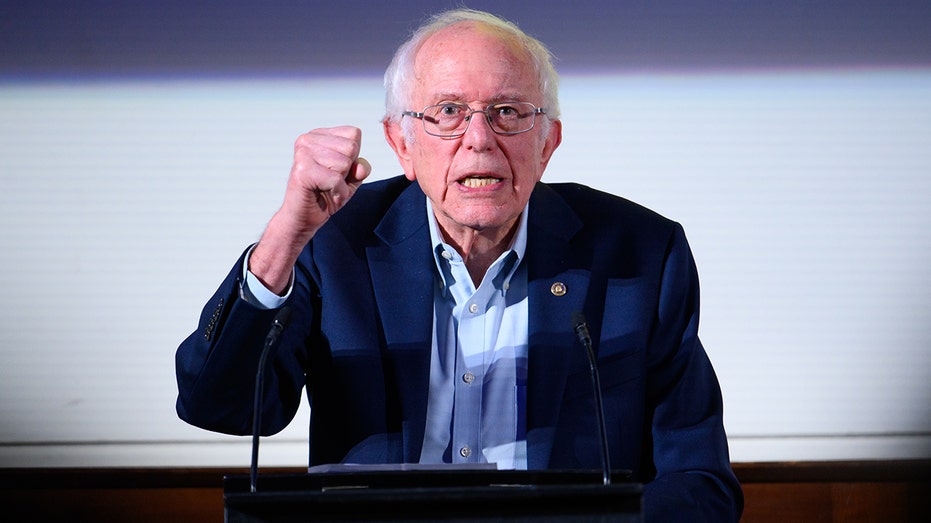
Bernie Sanders' 2028 Decision: A Turning Point for the Progressive Movement?

Sarah Johnson
August 10, 2025
Brief
Analysis of Bernie Sanders' 2028 presidential run comments and what it portends for the future of the progressive movement in the U.S.
Opening Analysis
Senator Bernie Sanders' recent remarks addressing his potential 2028 presidential run, while seemingly straightforward, signal a pivotal moment for the progressive movement. His effective non-denial, citing age and focusing on grassroots mobilization, points to a strategic shift: building a foundation for the next generation of progressive leaders rather than leading the charge himself again. This analysis examines the broader implications of this decision, the historical context, and the future landscape of progressive politics in the United States.
The Bigger Picture
Bernie Sanders' impact on American politics extends far beyond his presidential campaigns. Historically, he revitalized the concept of democratic socialism, making it a viable and increasingly popular ideology within the Democratic Party. His 2016 and 2020 runs, though unsuccessful in securing the nomination, forced the party to address issues such as income inequality, universal healthcare, and climate change. Even though these policies were not new ideas in the US, he popularized and somewhat moderated them, making them palatable for mainstream democrats. His "Fighting Oligarchy Tour" is consistent with his long-standing focus on economic justice, an argument that resonates in a country increasingly concerned about wealth concentration. Sanders' influence can be seen in the policy debates and platforms of many current and aspiring Democratic leaders, like Alexandria Ocasio-Cortez, who are committed to some of the same issues he focused on.
What This Really Means
Sanders' decision not to pursue the presidency in 2028 does not necessarily mean a retirement from progressive activism. Rather, what it really means is the need for his movement to survive without his leadership. By emphasizing the importance of grassroots movements and organized working-class people, Sanders is signaling that the future of the progressive agenda relies on decentralized power and collective action. This approach acknowledges that lasting change requires more than just electing a progressive president; it requires sustained engagement and activism at all levels of society. With his age and experience he sees the problems in a top-down strategy without changing the minds of the working class.
Expert Perspectives
Dr. Theda Skocpol, Victor S. Thomas Professor of Government and Sociology at Harvard University:"Sanders' focus on grassroots movements aligns with successful social change strategies throughout history. Transformative changes require broad-based support and sustained pressure from below."
Professor Cornel West, Philosopher, Political Activist, and Social Critic: "The progressive moment now faces the challenge of institutionalizing it's wins and ensuring those gains are not rolled back in response to the current administration. It is only through this continued effort that true and effective change is possible. "
Data & Evidence
According to the Pew Research Center, support for progressive policies like Medicare for All and free college tuition has steadily increased over the past decade, particularly among younger voters. A Gallup pole stated that democratic socialism has become more agreeable to the general population as it sits at a 40% approval rating in 2024, compared to 36% approval rating in 2014. Sanders' campaigns played a significant role in popularizing these ideas, and his "Fighting Oligarchy Tour," with venue upgrades to accommodate larger crowds, demonstrates the continued interest in his message. Data on campaign contributions also shows a shift towards small-dollar donations, reflecting a desire for more inclusive and participatory politics.
Looking Ahead
The progressive movement faces the challenge of consolidating its gains and identifying the next generation of leaders. Following Sanders' lead, it will be crucial to focus on building strong grassroots networks, supporting progressive candidates at all levels of government, and continuing to advocate for policies that address income inequality, climate change, and social justice. With the Democratic party taking back the executive branch in 2024, this means it is time for progressives to prove they are not just populists but good politicians.
The Bottom Line
Bernie Sanders' non-candidacy for 2028 is not an end but a transition point for the progressive movement. It signals a shift towards decentralized organizing and empowering the next generation. The success of this movement will depend on its ability to build strong grassroots networks, translate popular support for progressive policies into concrete political action, and develop new leadership that can carry the torch forward.
Topics
Editor's Comments
While Sanders' influence has been transformative, questions remain about whether the progressive movement can maintain momentum without a figurehead of his stature. The challenge lies in fostering collective leadership and empowering local activists to drive change from the ground up. The current focus on divisive identity politics may be hurting the chances of progressive ideas and movements.
Like this article? Share it with your friends!
If you find this article interesting, feel free to share it with your friends!
Thank you for your support! Sharing is the greatest encouragement for us.